SAEDNEWS: A paint sprayer is another useful tool for painting both the exterior and interior surfaces of buildings, as well as decorative items. It consists of a paint reservoir, a tube, and a specialized nozzle designed for efficient and even application.
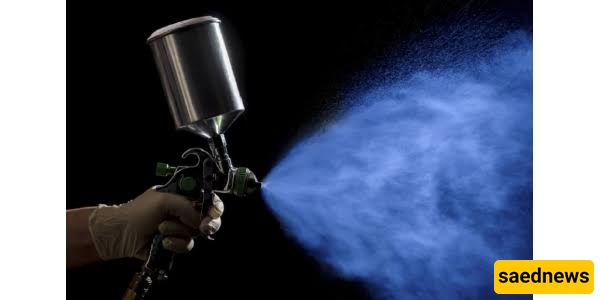
According to Saednews, These days, various tools are available for painting and coating different types of surfaces. One of these tools is the paint spray gun, which generally consists of an air compressor, a paint container, and nozzles with different diameters.
Some spray guns use a compressed-air reservoir, while others operate using a mechanism similar to an air pump.
A paint spray gun is a useful tool for painters and artists. It usually consists of a cylindrical body, a paint container, an air passage, and a nozzle.
In addition to conventional paint, spray guns can be used to apply various materials such as varnish, primer, watercolors, and inks in different colors.
A tube connected to the gun supplies compressed air from an external source. A trigger operated with the index finger controls the airflow and, consequently, the amount of material being sprayed.
When the trigger is activated, the compressed air carries the paint or other liquid toward the surface, producing a fine spray.
Spray guns are widely used for watercolor-style artwork, particularly in model painting and fashion illustration. Fine spray guns, also known as airbrushes, are also used for detailed artwork and retouching enlarged photographs, including work associated with advertising and graphic applications.
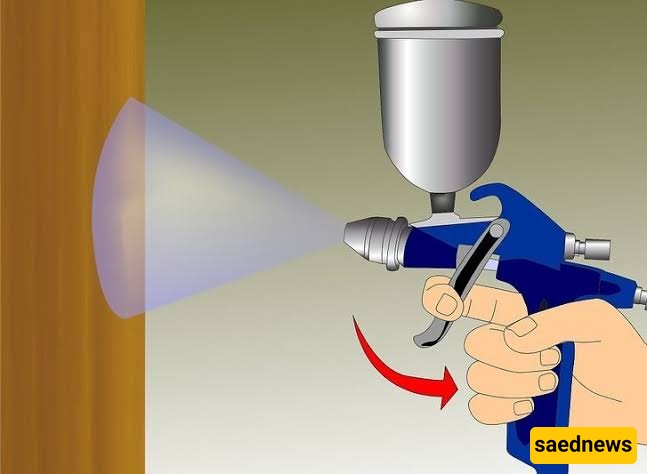
Other applications include spraying textured coatings such as Kenitex, multicolor coatings, fast-drying paints, and protective or finishing materials. Spray guns can also be used for painting complex metal railings and for applying materials such as sealer, clear coat, and polyester coatings.
Modern paint spray guns are commonly connected to an air compressor. The compressed air forces the paint through the nozzle and distributes it evenly over the target surface.
Compared with a brush or roller, a spray gun can cover a surface more quickly and produce a more uniform finish. However, the paint must normally be diluted to the appropriate viscosity before spraying.
Paint spray guns are commonly classified according to their power source and operating system. The main types are electric, pneumatic, and cordless spray guns.
Electric spray guns use an electric motor and an integrated spraying mechanism housed in a plastic or metal body. The device uses air movement to atomize the paint into small particles and spray them onto the surface.
A typical electric spray gun stores paint in a built-in container and uses its internal mechanism to convert the liquid into fine droplets before spraying.
These devices are equipped with a specialized nozzle and needle assembly that controls the flow and distribution of the paint.
Before using an electric spray gun, the paint or liquid should be thoroughly mixed and uniform. It should not contain undissolved lumps, foreign particles, or fibers that could block the nozzle.
The paint may need to be diluted before filling the reservoir. Many paints are formulated for brush application and therefore require adjustment of their viscosity for spray application.
A viscosity cup or similar measuring funnel can be used to determine whether the paint has the appropriate consistency. The time required for the liquid to flow through the cup provides an indication of its viscosity.
Some products, such as certain wood antiseptics and stain-removing materials, may not require dilution.
The appropriate thinner should always be selected according to the paint manufacturer's instructions. Using an incompatible or aggressive solvent can damage components such as O-rings, seals, needles, and nozzles.
A pneumatic, or air-powered, spray gun requires an air compressor to operate.
Pneumatic spray guns are generally available in professional and household models.
The appropriate spray gun should be selected according to factors such as spraying accuracy, maximum operating pressure, and paint viscosity.
The material used for the body and nozzle should also be considered. Corrosion-resistant materials such as stainless steel can improve the durability of these components.
Small nozzles, generally up to approximately 1.6 mm, are commonly used for metal surfaces, while larger nozzles, such as 1.7 or 1.8 mm, are often suitable for woodworking and other applications involving thicker coatings.
Pneumatic spray guns are often supplied with several accessories, such as a wrench for removing components, a small cleaning brush, and a filter installed between the paint container and the spray gun.
The filter helps prevent small particles and foreign objects from entering the spray gun.
After each use, the appropriate components should be removed and thoroughly cleaned. Proper cleaning helps prevent paint buildup and nozzle blockage.
With pneumatic spray guns, paint viscosity is often adjusted based on the user's experience and by testing the spray pattern on a sample surface. Therefore, the operator's ability to adjust the paint consistency can have a significant effect on the final result.
The thinner or solvent used must be compatible with the particular coating and spray-gun components.
Paint spray guns can also be classified according to the method used to deliver paint to the nozzle.
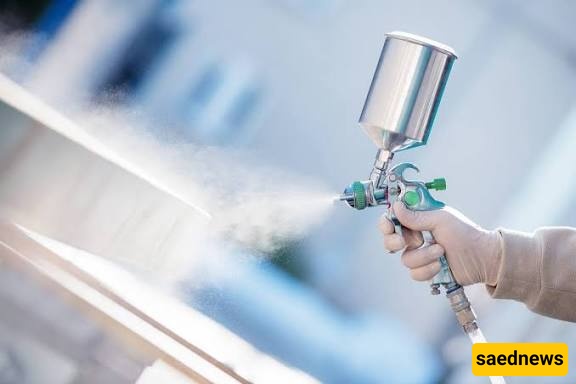
In a gravity-feed spray gun, the paint cup is located above the gun.
The paint moves downward under gravity while compressed air helps draw and atomize it at the nozzle. This design is widely used because it can provide good control over paint flow and is suitable for many painting applications.
In a siphon-feed spray gun, the paint container is positioned below the gun.
When air passes rapidly through a narrow passage, it creates a pressure difference that draws paint upward from the container.
The paint is then mixed with the compressed air and atomized through the nozzle. Siphon-feed systems can be useful for certain vertical and overhead spraying applications.
In a pressure-feed system, the paint container is sealed and pressurized.
The air pressure inside the container forces the paint through the delivery tube and toward the spray gun. Because the paint is supplied under pressure, this system can be used for thicker coatings and for applications requiring a continuous supply of material.
Some spray guns are designed for specific materials or specialized applications.
These tools are designed to produce narrow, controlled lines and are useful for detailed painting work.
An airbrush is a small and highly precise type of spray gun designed for fine artistic work. It is commonly used for narrow lines, detailed illustrations, model painting, decorative work, and other applications requiring precise control.
These spray guns are used with an air compressor to apply textured wall coatings such as Kenitex. Depending on the nozzle and material consistency, they can produce fine, medium, or coarse textures.
Specialized spray guns can be used to apply diesel fuel, grease, or lubricating oils for maintenance, lubrication, and cleaning of mechanical components.
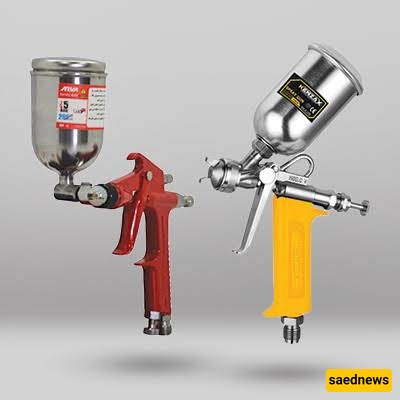
Bitumen spray guns are designed for applying diluted bitumen solutions. They normally require a compressed-air source such as an air compressor.
They are used in applications such as automotive underbody protection and certain vehicle body-repair processes.
The most important application of paint spray guns is the coating and finishing of interior and exterior building surfaces, as well as furniture and decorative objects.
A typical spray gun consists of a paint reservoir, an air and material passage, and a specialized nozzle. Compared with a brush or roller, it can cover large areas quickly and produce a relatively consistent coating.
However, spray guns also have some disadvantages. They may consume more paint because of overspray, and paint particles can be lost around the target surface.
Despite this limitation, spray guns are particularly useful when speed, uniform coverage, and the ability to coat certain difficult or complex surfaces are important. They are therefore widely used in construction, automotive work, furniture finishing, industrial coating, decorative painting, and artistic applications.