SAEDNEWS: Learn about 7 common resume mistakes that can reduce your chances of getting invited to an interview and landing a job.

According to Saednews, You may have enough experience and skills for a job, yet never make it to the interview stage. The reason is not always a lack of experience or expertise. Sometimes, a few simple mistakes in your resume can cause an employer to move on after the first glance.
Your resume is the first impression an employer gets of you. Before you have a chance to explain your abilities, it needs to communicate your professional value clearly. That is why creating a resume is not simply about filling in sections with personal, educational, and work information. Choosing the right information and presenting it effectively matter just as much.
Here are seven common resume mistakes that can reduce your chances of getting invited to an interview.
One of the biggest mistakes is creating one standard resume and sending the same file to every company. For example, you might apply for both a Sales Specialist position and a Customer Relationship Manager role. Although some of the required skills overlap, employers will be looking for different strengths in each position.
Before submitting your resume, read the job description carefully and highlight the skills, experiences, and achievements that are most relevant to the role. You do not need to rewrite your entire resume every time. Simply adjust the emphasis and order of your information to match the position.
Writing that you were “responsible for sales” or “managed social media” only tells employers what your duties were. It does not show how successful you were in that role. Whenever you have reliable information, include the results of your work as well.
For example:
Customer support and response
does not provide much information about your performance.
A stronger version would be:
Handled and followed up on daily requests from more than 30 customers, helping reduce response times.
Numbers, results, and measurable achievements give employers a clearer picture of your experience and the value you brought to your previous workplace.
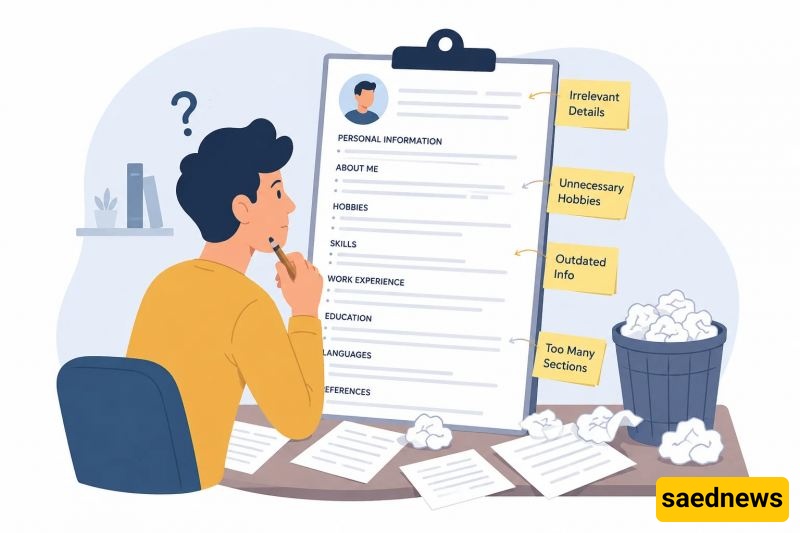
Your resume does not need to document every detail of your professional life. Its purpose is to quickly show why you are a suitable candidate for a specific position.
Unrelated courses, very basic skills, outdated experience that has no connection to your target role, and lengthy descriptions of every previous position can make important information harder to find.
Before adding anything, ask yourself:
“Does this information help the employer evaluate me for this position?”
If the answer is no, removing it may make your resume more focused and professional.
Phrases such as “team player,” “responsible,” “organized,” and “excellent communication skills” appear on countless resumes. The problem is not that these qualities are unimportant. The problem is that without evidence or examples, they do little to demonstrate your actual abilities.
If you have strong negotiation skills, mention an experience where you used them successfully. If you have team management experience, explain how many people you managed or describe a project you led.
The more effectively you connect your skills to real experiences, the more credible your resume becomes.
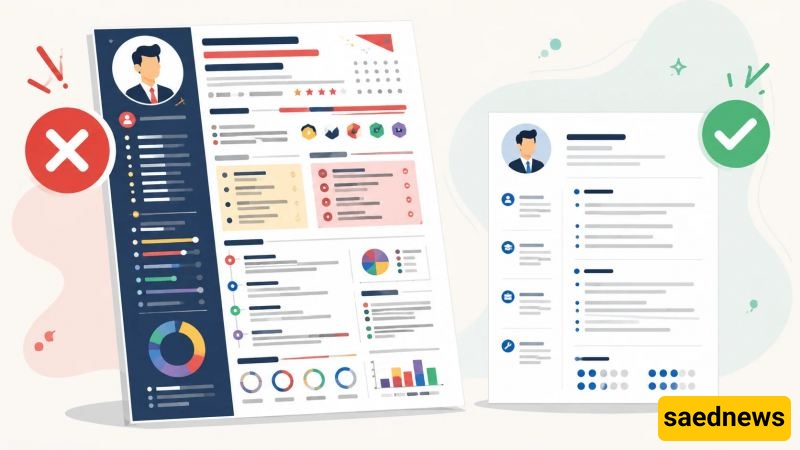
The design of your resume should make information easier to scan, not distract the reader from the content. Using too many fonts, excessive colors, dense blocks of text, or unclear sections can make it difficult for employers to find the most important details.
For most positions, a clean format with clearly defined sections for work experience, education, and skills is a safe choice.
If you are unsure how a standard resume should be structured, reviewing a professional resume template can help you understand which sections are essential and how the information should be organized. A good template should not make your resume more complicated; it should make it easier to read.
A small typo may seem insignificant, but several spelling or grammar mistakes can affect an employer's perception of your attention to detail. This is particularly important for jobs involving writing, customer communication, reporting, or careful review of information.
After finishing your resume, do not send it immediately. Read it from beginning to end and carefully check the dates, company names, job titles, spelling, and contact information.
Having someone else review your resume can also reveal mistakes that you may overlook after reading the same text several times.
After reading your resume, an employer should be able to understand what field you have worked in, what skills you have developed, and what type of position you are suited for.
If your resume consists of unrelated experiences with no clear connection, your professional direction may be difficult to understand.
You do not necessarily need to remove different types of experience. Instead, focus on the aspects of each role that relate to your current career path.
For example, someone moving from sales into digital marketing could emphasize skills such as customer understanding, audience behavior analysis, negotiation, and effective communication—skills that remain valuable in the new field.
Before sending your resume, take a few minutes to complete a final review:
Make sure your target job title is clear.
Ensure your most relevant skills and experiences are easy to find.
Check that your contact information is accurate and up to date.
Make sure the resume is not unnecessarily long or cluttered.
Check for spelling and grammar mistakes.
Read it from the perspective of someone seeing your profile for the first time.
After a quick review, can the employer immediately understand what you do and what you are capable of?
Tools such as Karli can also make the process of preparing a resume and choosing an appropriate format easier. However, the quality and relevance of the information you put into the resume ultimately matter most.
A strong resume does not need to tell the entire story of your professional background. It needs to highlight the most important reasons you are a strong candidate for the position you want.
Tailoring your resume to each job, focusing on achievements, removing unnecessary information, supporting your skills with real examples, choosing a readable format, checking for writing errors, and presenting a clear career direction are seven simple changes that can significantly improve the quality of your resume—and potentially increase your chances of getting an interview.