SAEDNEWS: Home lifts are affordable, space-saving systems for moving between floors in duplex and older homes. They install easily without a shaft or machine room and offer low energy use, simple maintenance, and increased property value.
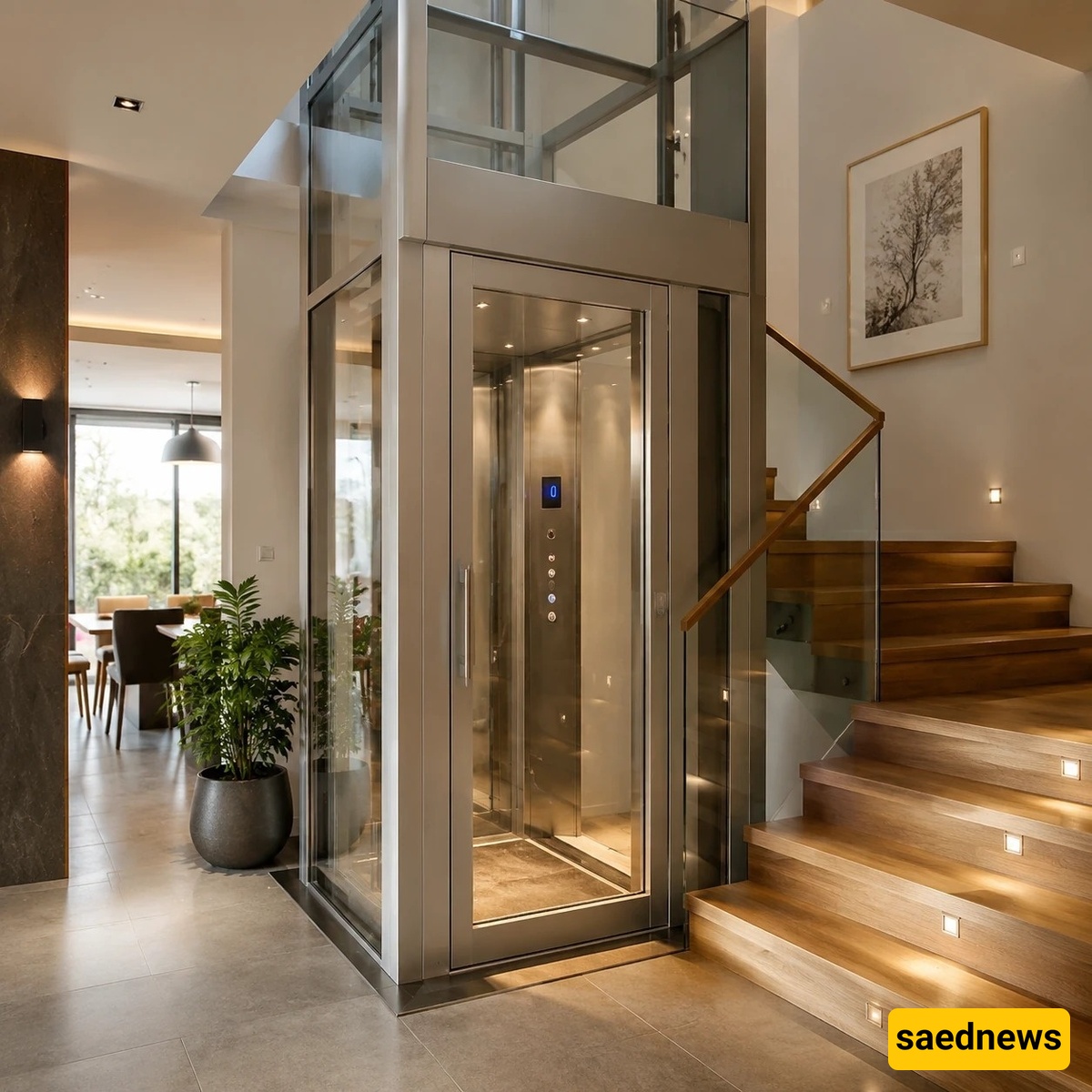
According to Saednews, In many duplex homes, villas, or older multi-story buildings, installing an elevator is not possible due to space limitations or very high costs. In such situations, a home lift is introduced as a practical and cost-effective solution. Compared to conventional elevators, this device has a simpler design, allows vertical transportation between floors, and can be installed without the need for a deep shaft or a large machine room, with significantly lower costs.
In the following sections, we will examine the advantages of these systems and why they can be a suitable alternative to elevators in small homes or older buildings.
A home lift is a type of vertical transportation system designed for residential use. Unlike elevators, which require complex structures, machine rooms, and large spaces, these systems are typically installed with simpler construction and smaller dimensions.
These lifts are commonly used to move people between two- or three-story homes and can be installed inside the building, next to staircases, or even outside the house on the building façade. Some models operate hydraulically, while others are designed with electromechanical or screw-driven systems.
The main goal of these systems is to improve accessibility and comfort in homes where installing a traditional elevator is not possible due to limited space or budget constraints.
One of the most important reasons for the popularity of home lifts is their minimal space requirement. In many buildings, it is not possible to construct an elevator shaft or machine room, but home lifts can be installed in very small spaces, and some models do not require a pit at all.
In addition, installation is usually faster and less expensive compared to standard elevators. In many cases, the process can be completed in a short time without major structural changes to the building.
From an energy perspective, these systems are generally more efficient and require lower maintenance costs. For this reason, they are considered a practical option for private homes, villas, and low-rise buildings.
Both devices are designed to facilitate movement between floors, but their structure and usage differ.
A home lift works like a cabin or platform that vertically transports users between floors, similar to an elevator. It is more suitable for multi-story homes or buildings where multiple people or items need to be moved at the same time.
In contrast, a stair lift is a chair or platform that moves along a rail installed on the staircase. It is mainly designed for elderly or disabled individuals who have difficulty climbing stairs and usually cannot transport multiple people or heavy loads.
Overall, stair lifts are not a replacement for elevators, while home lifts are a much more suitable alternative.
Home lifts are produced in different models, each suitable for specific conditions:
Hydraulic Lift:
One of the most common types. The cabin moves using oil pressure in a hydraulic cylinder. Smooth operation and high safety are key features of this system.

Traction Lift:
This model works using a motor, steel ropes, and counterweights. It is known for smooth movement, good speed, and energy efficiency, making it a popular choice for residential buildings.

Screw or Winch Lift:
These are mostly used in simple projects or duplex homes. The appropriate type is usually selected based on available space, number of floors, and budget.
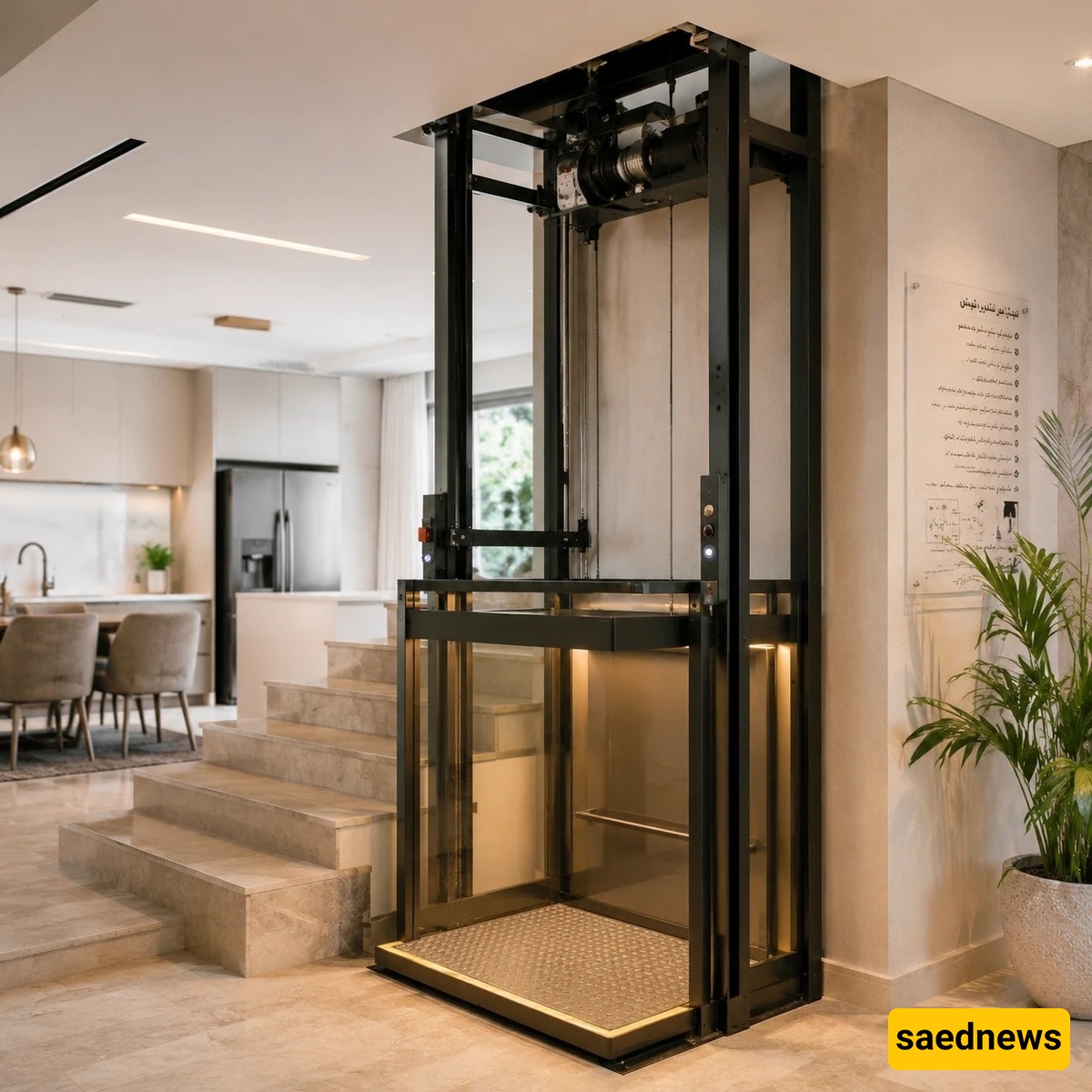
Using home lifts in residential environments offers several benefits:
Improved comfort, independence, and safety for elderly people, children, and individuals with mobility challenges
Increased property value due to improved accessibility and modern appearance
Flexible installation in stairwells, patios, interior spaces, or even exterior walls depending on design needs
Easier maintenance and lower service costs compared to traditional elevators
Before choosing and installing a home lift, several factors should be evaluated:
Accurate measurement of available space to determine the appropriate system type
Load capacity and number of stops, which play a key role in system selection
Compliance with safety standards such as EN 81-41, including emergency braking systems and safety sensors
Choosing a reliable installation company to ensure long-term performance and safety
The type of system, number of floors, load capacity, and cabin design are among the main factors affecting the final cost of a home lift.
In general, home lifts are more affordable than standard elevators because they do not require complex infrastructure or large spaces. In many projects, selecting the right model can significantly reduce costs.
For this reason, many owners of duplex houses or older buildings prefer installing a home lift instead of a traditional elevator.
In homes where there is not enough space for an elevator, a home lift can be a smart and efficient solution. These systems require less space, cost less to install, and offer high flexibility, making vertical movement between floors easier.
They can also increase property value and improve accessibility for all family members. Therefore, if you face space or budget limitations for installing an elevator, choosing a safe and standard home lift can be the best alternative for your home.