SAEDNEWS: Explore the Blue Grotto’s fascinating history, brilliant blue waters, visitor access, best visiting times, and essential travel tips.
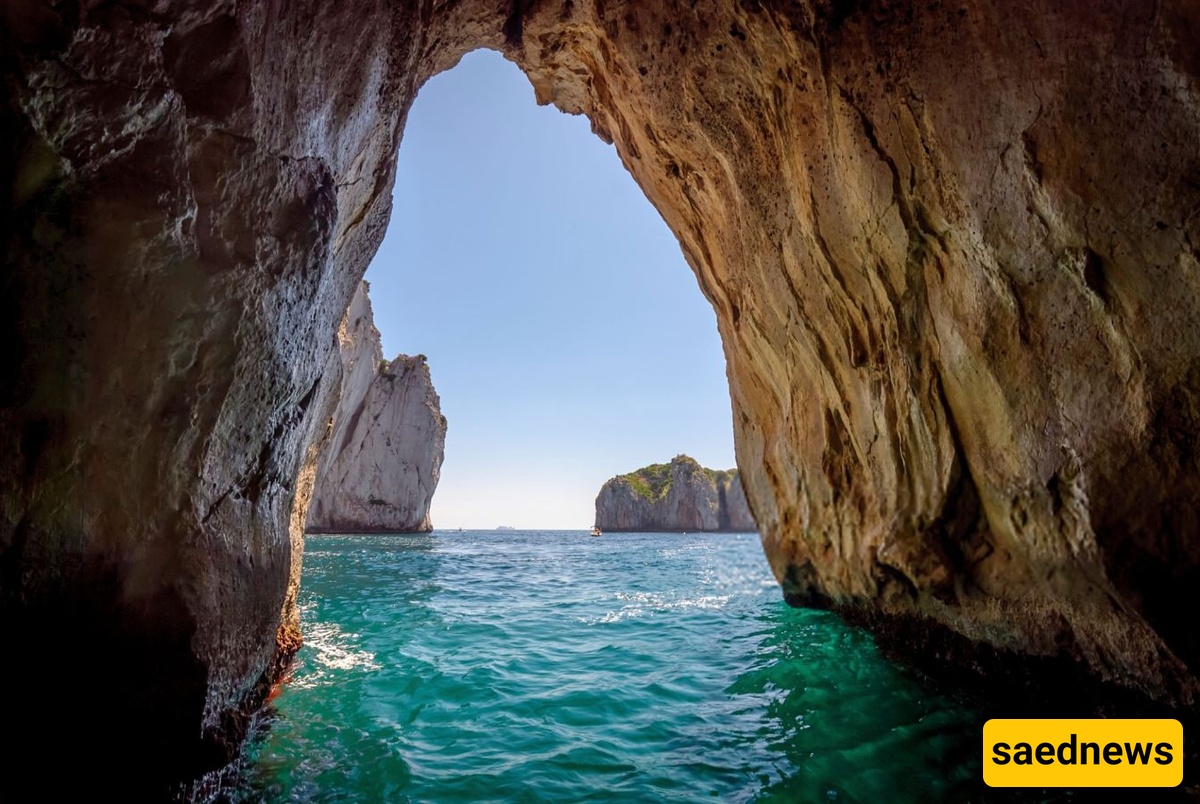
According to Saednews, Imagine gliding slowly across the water in a wooden boat through a tunnel of complete darkness. Passengers lower their heads to pass through a narrow entrance, and suddenly, the surrounding walls illuminate in a brilliant turquoise blue. The water beneath the boat shimmers like molten crystal, while anything submerged beneath its surface takes on a silvery glow. This is the extraordinary spectacle that attracts millions of visitors from around the world to the island of Capri in southern Italy every year.
Capri’s Blue Grotto, known in Italian as Grotta Azzurra, is one of Europe’s most famous natural attractions and a symbol of tourism in the Bay of Naples. Yet many visitors spend only a few minutes inside, unaware of its ancient history, the scientific explanation behind its extraordinary blue light, and the practical details that can make a visit more enjoyable.
Beyond the familiar photographs, this guide explores everything worth knowing about this natural wonder, from its geography and history to the best visiting season, transportation options, costs, and essential travel tips.
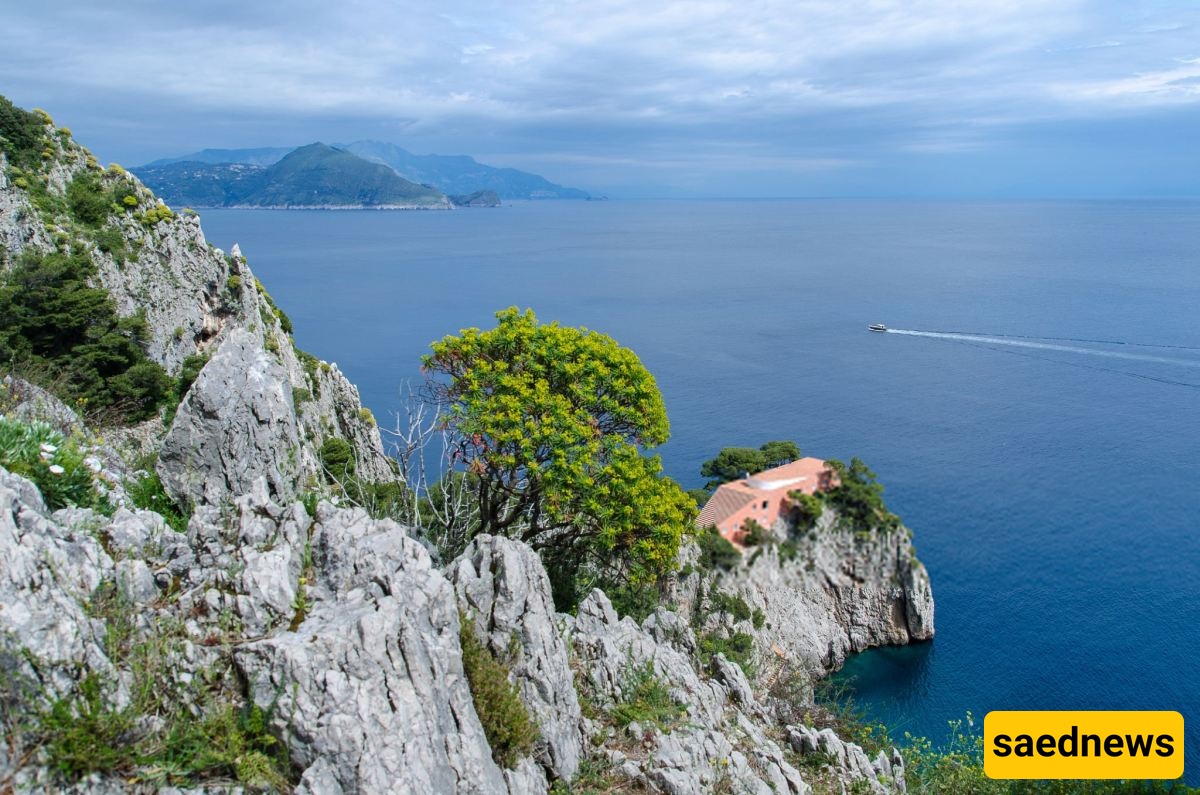
The island of Capri lies in the Tyrrhenian Sea, at the entrance to the Bay of Naples. This rocky island is approximately six kilometers long and three kilometers wide, with two main towns: Capri to the east and Anacapri to the west.
The Blue Grotto is situated along the island’s northwestern coastline, within the Anacapri area, near the point where the road known as Via Grotta Azzurra reaches the sea.
The grotto forms part of Capri’s limestone coastline, which has been shaped over millions of years by seawater erosion and the gradual dissolution of limestone rock. Although similar sea caves can be found throughout the Mediterranean, the combination of the grotto’s dimensions, entrance orientation, and water depth makes Capri’s Blue Grotto an exceptional natural phenomenon.
Its proximity to Marina Grande, the island’s main harbor, and its accessibility by land from Anacapri provide two distinct ways to reach this remarkable destination.
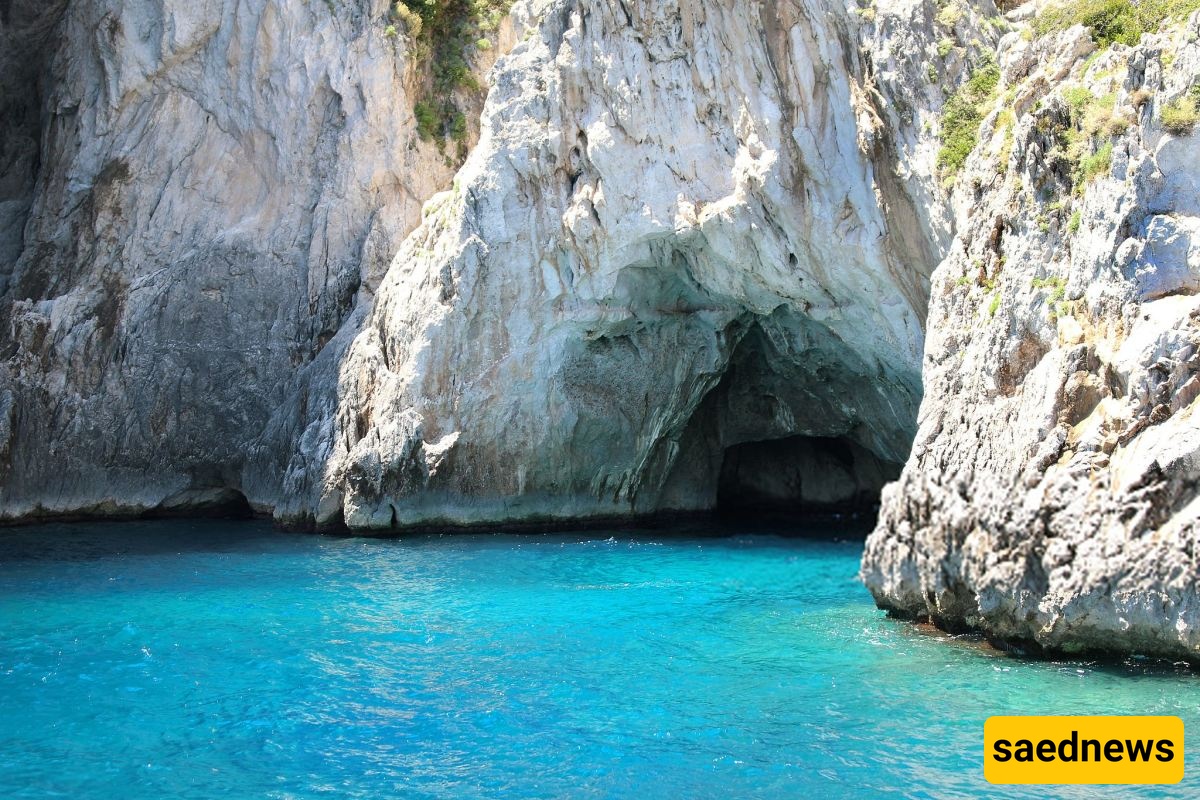
Contrary to the common belief that the Blue Grotto was discovered in the nineteenth century, the cave was already well known in ancient times. Roman historians, including Suetonius and Pliny the Elder, mentioned the location in their accounts.
According to historical records, Emperor Tiberius, who spent the final years of his life on Capri, transformed the grotto into a private nymphaeum—a sanctuary dedicated to water nymphs.
Statues of Roman sea deities, including Neptune and Triton, once stood on the cave floor, while its walls were decorated with paintings and ornamental features.
During the twentieth century, archaeological excavations and underwater investigations uncovered several stone statues. These artifacts are now preserved in the National Archaeological Museum of Naples. Their discovery confirmed that the Blue Grotto was not merely a natural attraction during the Roman era but also formed part of the island’s ceremonial and architectural heritage.
Following the collapse of the Roman Empire, the grotto gradually disappeared from historical accounts. For centuries, only local fishermen knew about its existence. Superstitious beliefs discouraged people from entering, as the cave was associated with spirits and sea monsters.
Its modern rediscovery took place in 1826, when German writer and painter August Kopisch entered the grotto with a young fisherman named Angelo Ferraro from Anacapri. Kopisch published a detailed description of its extraordinary blue light, sparking interest among European artists, aristocrats, and travelers.
These accounts helped transform the Blue Grotto into an internationally celebrated tourist destination.
The secret behind the grotto’s remarkable color lies in the behavior of light rather than the water itself.
Seawater is naturally transparent, but when sunlight enters the Blue Grotto, a fascinating optical phenomenon takes place.
Sunlight enters through the cave’s main opening, which is approximately 1.5 to 2 meters high, and reaches the water's surface. There is also a second, underwater opening through which additional light enters.
As sunlight travels through the water, longer wavelengths, such as red, orange, and yellow, are absorbed by water molecules. Shorter wavelengths, particularly blue and some green light, penetrate more effectively.
Light reflected from the cave floor travels upward through the water once again, intensifying the blue appearance and filling the grotto with an extraordinary azure glow.
Another important factor is the reflection of light from the cave’s pale limestone walls, which enhances the overall brightness.
This explains why submerged objects, including boat oars and passengers’ hands, appear to have a silvery coating.
The effect is generally strongest around midday, when the sun reaches a higher position in the sky and sunlight enters the cave at a favorable angle.
The Blue Grotto is a relatively large limestone cavity, measuring approximately 60 meters in length and 25 meters in width. In its central sections, the water reaches depths of more than 20 meters.
Its entrance is exceptionally narrow and low, a natural feature that has historically prevented larger vessels from entering and helped preserve the cave's secluded atmosphere.
Once visitors pass through the entrance, the ceiling rises dramatically, revealing a spacious interior.
The cave walls are irregular and covered with limestone deposits, while small secondary passages can be seen in certain areas. Much of the interior remains relatively dark, with a narrow band of sunlight illuminating the water near the entrance.
As a result, the visitor experience is largely centered on the entrance area and the spectacular reflections dancing across the water.
Traces of Roman structures can also be found along the interior walls, including remnants of a stone platform that may once have supported the ancient statues.
There are two main ways to reach Capri’s Blue Grotto.
1. By Boat from Marina Grande
Marina Grande, located on the eastern side of Capri, is the island’s main harbor.
Tourist boats of various sizes depart from the harbor and travel toward the grotto. They stop near its entrance, where passengers transfer to smaller traditional rowing boats specifically designed to enter the cave.
This is the easiest and most popular option, often combined with a sightseeing cruise around the island.
2. By Land from Anacapri
Visitors can take a bus or taxi from Anacapri to the end of Via Grotta Azzurra. From there, a series of steps leads down to a small landing area where the rowing boats depart.
This route is particularly suitable for travelers who prefer to avoid the crowds around Marina Grande.
Access to the Blue Grotto is permitted only through small rowing boats operated by local guides. Motorboats are not allowed inside.
Each rowing boat typically accommodates three to five passengers, and the actual visit inside the grotto usually lasts only a few minutes.
Choosing the right time can make a significant difference to the overall experience.
Season: Late spring through early autumn, particularly May to October, generally offers the best visiting conditions. During winter, rough seas often cause the grotto to close.
Time of day: Between 11 a.m. and 2 p.m., sunlight usually produces the most intense blue illumination.
Sea conditions: Calm seas and low tides are essential for safe entry. During storms or high tides, the entrance can become submerged, resulting in temporary closures.
Crowds: Early mornings and late afternoons are generally quieter, although the blue illumination may be less intense. Visitors must decide whether they prefer shorter queues or more spectacular lighting.
Visiting the Blue Grotto generally involves two separate costs: the rowing boat fare and the grotto entrance ticket.
Prices are reviewed periodically and may vary depending on the season. Travelers should therefore check the latest official rates or confirm prices with local boat operators before visiting.
Payments are generally made in cash and in euros, so carrying some small denominations is recommended.
Tipping the boat operator is optional, although it is a common practice among visitors.
A little preparation can make your visit more comfortable and enjoyable.
Swimming is prohibited: Entering the water inside the grotto is not permitted because of the darkness, considerable depth, and conservation regulations.
Photography: Flash photography is ineffective and can disturb other visitors. Since natural light is limited, capturing good photographs requires a steady hand and a camera or smartphone capable of longer exposure times. Manual camera settings can produce particularly impressive results.
Wear appropriate clothing: Water may splash into the small rowing boats, so lightweight clothing that dries quickly is a practical choice.
Keep belongings to a minimum: Valuable items and unnecessary luggage are best left on the larger tourist boat, as space inside the rowing boats is extremely limited.
Be prepared for waiting times: During peak tourist season, queues for the rowing boats can become quite long. Allow plenty of flexibility in your schedule.
Consider claustrophobia: The narrow, dark entrance may be uncomfortable for visitors who experience claustrophobia. It is worth considering this before deciding to enter.
A visit to the Blue Grotto can easily be combined with a sightseeing tour around Capri.
Boat excursions around the island pass the famous Faraglioni rock formations, natural arches, and secluded coastal coves, offering spectacular views of Capri’s rugged shoreline.
In Anacapri, visitors can take a chairlift to the summit of Monte Solaro, the island’s highest point, for breathtaking panoramic views.
Walking along Anacapri’s charming stone streets and exploring its historic villas can also make for a memorable day.
If your schedule allows, consider staying overnight on the island. An early morning visit may offer a more relaxed experience before the arrival of large numbers of day-trippers.
The Blue Grotto is far more than a beautiful sea cave. It is a remarkable combination of natural optical phenomena, ancient Roman heritage, and Mediterranean coastal scenery.
From the mysterious stories surrounding its ancient past to the extraordinary light that transforms its waters into a glowing blue spectacle, the grotto offers an experience unlike almost anywhere else in the world.
Whether you visit as part of a boat excursion or approach it from Anacapri, a journey into Capri’s Blue Grotto is an opportunity to witness one of Italy’s most extraordinary natural treasures.