SAEDNEWS: This article explores the reasons behind airline restrictions on mobile phones, the scientific evidence behind potential risks, and the regulations that apply today, particularly with the growing availability of in-flight Wi-Fi.
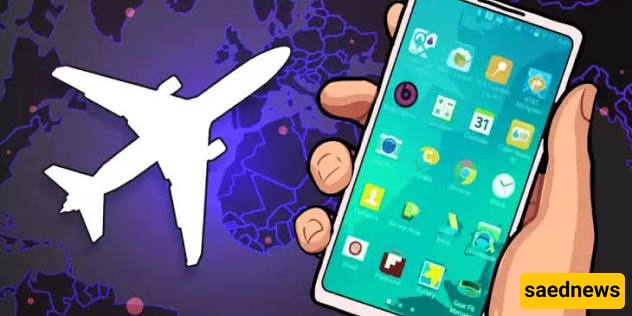
According to Saednews, Every time you board an aircraft, one of the first instructions you hear from the cabin crew is: “Please switch off your mobile phones or enable airplane mode.” For most passengers, this has become a routine part of flying. However, few people know the actual reasons behind this rule. Can mobile phones really interfere with an aircraft’s sensitive systems, or is this simply a precaution left over from an era when technology was less advanced?
The answer involves a combination of technical concerns, aviation regulations, and safety precautions.
Airplane Mode is a feature on mobile devices that disables their wireless transmitters, including cellular networks, Wi-Fi, and Bluetooth.
When activated, your phone stops sending and receiving cellular signals, effectively disconnecting it from mobile networks.
However, the device remains fully functional. You can still take pictures, listen to music, play games, and access downloaded files. On modern smartphones, Wi-Fi and Bluetooth can also be switched back on independently, allowing passengers to use an aircraft's onboard Wi-Fi without activating cellular connectivity.
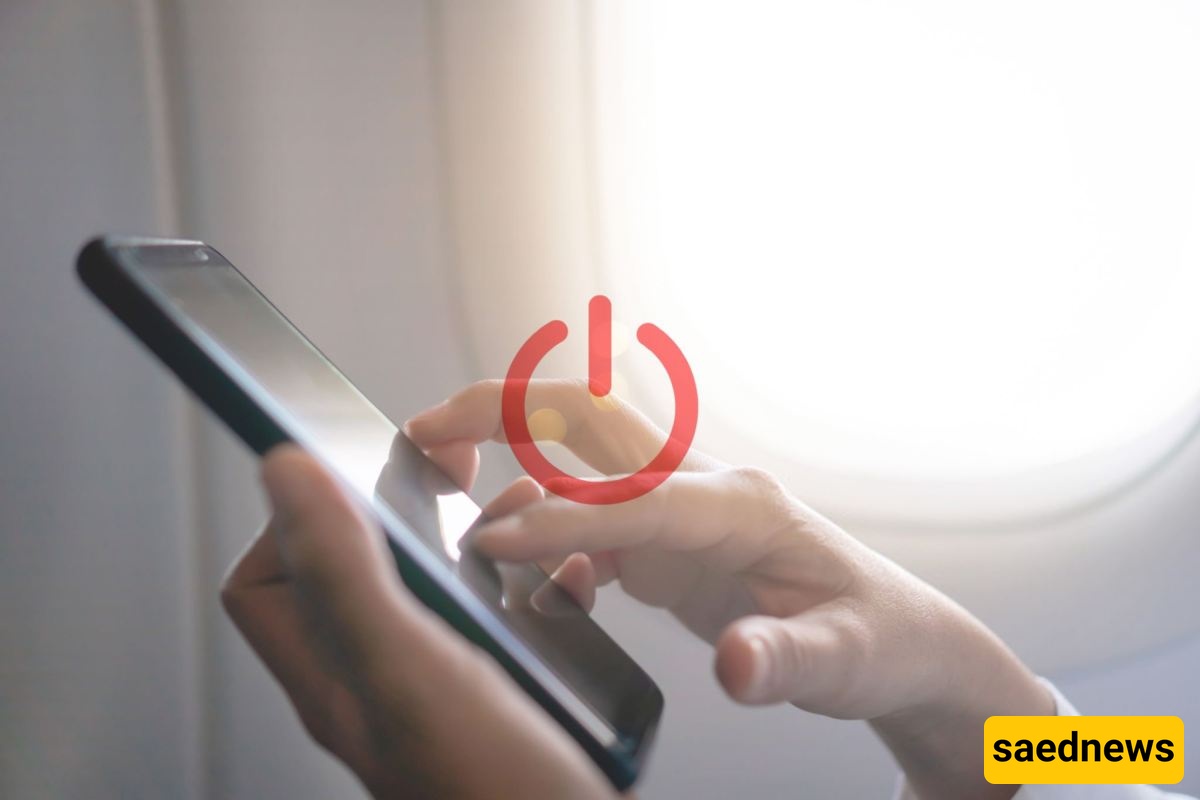
One of the main reasons behind airplane mode regulations is the possibility of electromagnetic interference.
Mobile phones communicate using radio waves, while aircraft rely on sophisticated electronic systems, including navigation equipment, communication systems, weather radar, and automatic landing technology.
The concern is that signals transmitted by passengers' phones, particularly when devices are searching for mobile networks and transmitting at higher power levels, could potentially interfere with sensitive aircraft equipment.
This concern is particularly relevant during takeoff and landing, when pilots require maximum precision and operational safety margins are especially important.
Older mobile phones, particularly those commonly used during the 1990s, generally transmitted at higher power levels. Some of their operating frequencies were also relatively close to frequency bands used by aviation equipment.
These concerns led aviation authorities around the world to introduce strict regulations.
Although modern smartphones transmit at lower power levels and aircraft systems have become more resistant to interference, precautionary measures remain in place.
Another important reason, which is often overlooked, concerns mobile networks on the ground.
When an aircraft flies thousands of metres above the ground, a mobile phone may receive signals from numerous cellular towers simultaneously.
As a result, the device may repeatedly attempt to connect to different towers, switching between networks at high speeds. This can potentially disrupt the operation of ground-based cellular networks.
In 1991, the US Federal Communications Commission (FCC) prohibited the use of mobile phones during flights, primarily because of concerns about their potential impact on terrestrial mobile networks.
With the development of 4G and 5G technologies, these concerns have changed to some extent. Nevertheless, they remain part of the reasoning behind airplane mode recommendations.
Beyond technical considerations, there is also a regulatory reason for airplane mode requirements.
Aviation authorities worldwide, including the International Civil Aviation Organization (ICAO), the US Federal Aviation Administration (FAA), and the European Union Aviation Safety Agency (EASA), have established guidelines governing the use of electronic devices onboard aircraft.
In Iran, the Civil Aviation Organization has similar regulations. Airlines are required to inform passengers about switching off their phones or activating airplane mode before departure.
Cabin crew members are responsible for enforcing these safety procedures. Ignoring their instructions may result in a warning or, in certain circumstances, further legal consequences.
A common question among passengers is: Has an aircraft ever crashed because someone used a mobile phone?
The straightforward answer is that no confirmed aviation accident has been conclusively attributed to mobile phone use by passengers.
This has led some people to believe that airplane mode is simply an unnecessary formality.
However, the reality is more complicated.
Pilot reports recorded in aviation safety databases, including NASA's Aviation Safety Reporting System (ASRS), have documented various minor equipment irregularities occurring alongside the use of electronic devices onboard. These reports include temporary display disturbances and communication system anomalies.
Such reports do not establish a direct cause-and-effect relationship. However, they illustrate why aviation authorities continue to take a precautionary approach.
In simple terms, aviation safety is based on preventing potential risks rather than waiting for definitive proof that a hazard can cause an accident.
It is similar to wearing a seat belt: we do not wear one because an accident is certain to happen, but because the possibility exists.
Since 2013, regulatory changes introduced by the FAA and subsequently by EASA have allowed greater use of personal electronic devices during all stages of flight, provided they are used in accordance with airline policies and applicable restrictions.
This means passengers can generally use onboard Wi-Fi while keeping cellular connectivity disabled.
The difference lies in how these connections operate.
Aircraft Wi-Fi uses an onboard communication system connected to satellite networks or ground infrastructure. Its transmission power and operation are controlled and designed for use in flight.
Cellular connectivity, on the other hand, involves communication with terrestrial mobile towers and can create unnecessary interference concerns.
That is why passengers may be allowed to use Wi-Fi during a flight while still being asked to keep their cellular networks switched off.
To comply with airline safety requirements and enjoy a comfortable flight, keep the following points in mind:
When to activate airplane mode: Passengers are generally expected to activate airplane mode once instructed by the cabin crew, often before departure, and keep it enabled until permitted otherwise.
Other electronic devices: Tablets, laptops, smartwatches, Bluetooth headphones, and e-readers may also be subject to airline-specific restrictions.
Power banks and batteries: Spare lithium batteries and power banks must be carried according to airline and aviation safety rules. They are generally prohibited in checked baggage because of the risk of battery fires.
During an emergency evacuation: Passengers should remain attentive to cabin crew instructions. Wearing headphones or concentrating on a screen could prevent someone from hearing important emergency announcements.
When crew members request a complete shutdown: Turning off the screen is not the same as switching off the phone. If instructed to turn off the device completely, passengers should follow that instruction.
Several misconceptions about mobile phone use during flights continue to circulate.
One common belief is that a mobile phone can directly cause an aircraft to crash. This is an exaggerated claim that is not supported by confirmed scientific evidence.
Another misconception is that airplane mode exists purely to satisfy aviation regulations and serves no technical purpose. In reality, concerns about electromagnetic interference, terrestrial mobile networks, and precautionary safety measures all contribute to these rules.
A third misconception is that putting a phone on silent mode is sufficient. This is incorrect because silent mode only disables audible notifications. It does not turn off the phone's wireless transmitters.
Airplane mode is not simply an outdated aviation tradition. It is a practical precaution shaped by technological limitations, regulatory requirements, and the aviation industry's commitment to safety.
Although modern aircraft and smartphones are considerably more advanced than their predecessors, following cabin crew instructions remains essential.
The next time you board a plane, remember that activating airplane mode takes only a few seconds, but it helps maintain a safer and more controlled environment for everyone onboard.