SAEDNEWS: Foreign Minister Seyyed Abbas Araghchi says that Iran’s uranium reserves is in compatible with the country's needs, emphasizing that his country seeks an honorable, lasting and a sustainable agreement with the United States.
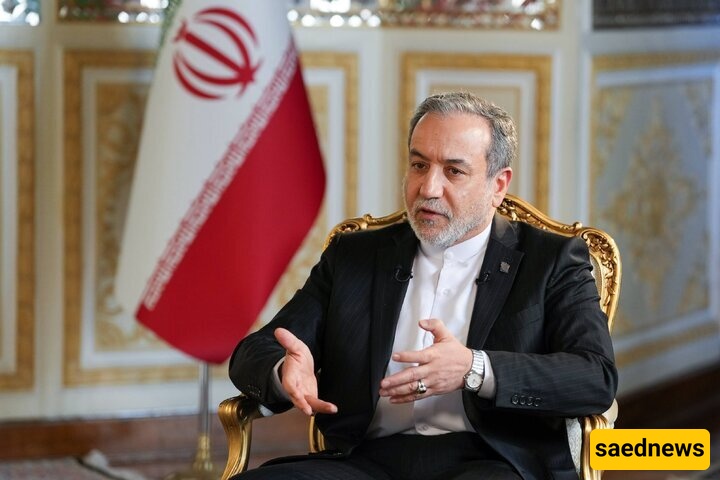
According to Saednews, Iranian Foreign Minister Abbas Araghchi has outlined a proposed two-day framework aimed at reopening the strategically vital Strait of Hormuz and paving the way for final negotiations with the United States. In an exclusive interview with IRAN newspaper, he stressed that any potential agreement must be based on mutual respect, remain sustainable, and prevent the outbreak of another conflict.
Araghchi said Tehran had introduced the simplified proposal to accelerate diplomatic efforts, replacing an earlier seven-day framework.
According to the latest proposal, the United States would fulfill its required commitments on the first day, followed by Iran reopening the Strait of Hormuz on the second day. This would create the conditions necessary for launching final negotiations.
The Iranian foreign minister described the proposal as a potential foundation for further dialogue, while emphasizing that Tehran expects Washington to explicitly demonstrate its willingness to reach an agreement and take practical steps to build mutual trust.
He said the United States had yet to respond to Iran's proposal and must reconsider its current approach if it genuinely seeks a diplomatic settlement. Araghchi also reiterated that the Strait of Hormuz would remain closed until Washington fulfills the seven conditions established by Tehran.
"If Iran's demands are fulfilled, the Strait will be reopened, and Tehran is ready to negotiate the practical arrangements for implementing those conditions," he stated.
Discussing the broader political situation, Araghchi highlighted divisions within the United States over whether to pursue military confrontation, diplomatic negotiations, or continued economic pressure against Iran.
He confirmed that indirect communications between Tehran and Washington through mediators are continuing. However, he stressed that the memorandum of understanding previously discussed in Islamabad is no longer being considered.
Araghchi characterized the existing situation of "neither war nor peace" as unacceptable, emphasizing that Iran seeks a comprehensive, dignified, and lasting agreement.
He added that any settlement must provide guarantees against renewed conflict and must not include concessions that Washington could subsequently present as a political victory.
On the issue of Iran's stockpile of uranium enriched to 60 percent, Araghchi said a fair solution could be negotiated, but firmly ruled out transferring the material outside Iran.
He stressed that the nuclear issue must be addressed as part of a broader agreement that fully safeguards Iran's national interests.
The foreign minister also reaffirmed that Iran's official nuclear doctrine has not changed, despite ongoing debates and discussions among experts.
Finally, Araghchi confirmed that diplomatic messages and proposals continue to be exchanged between Tehran and Washington through mediators in Qatar and Pakistan, under the direct supervision of Iran's relevant authorities.