SAEDNEWS: The southeastern Nablus village of Qasra has become a major flashpoint in the West Bank, where settler attacks, the encirclement of Palestinian homes and electricity cuts are intensifying pressure on residents. The developments are unfolding alongside wider settlement expansion and infrastructure projects around the village.
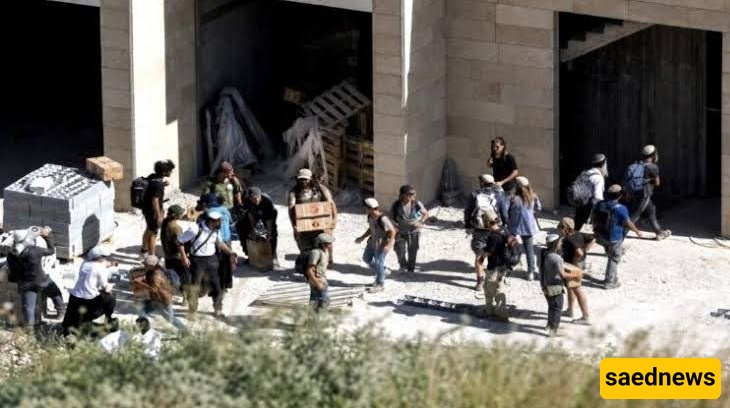
According to SaedNews: Over the past two weeks, the village of Qasra, southeast of Nablus, has emerged as one of the main centers of developments in the West Bank. Attacks by extremist Israeli settlers aimed at forcing Palestinians out of the village are part of the broader dispute between Palestinians and Israelis over the expansion of settlements in the West Bank. Qasra is now surrounded by several Israeli settlements amid what has been described as Israel’s gradual annexation of the territory.
The mountainous village has an economy largely dependent on agriculture, particularly farmland and olive orchards. Following the Oslo Accords, the land in the area was divided between Areas B and C. This distinction has become particularly important in the recent developments because parts of Qasra located in Area B fall under Palestinian civil administration while remaining under Israeli security control under the Oslo framework.
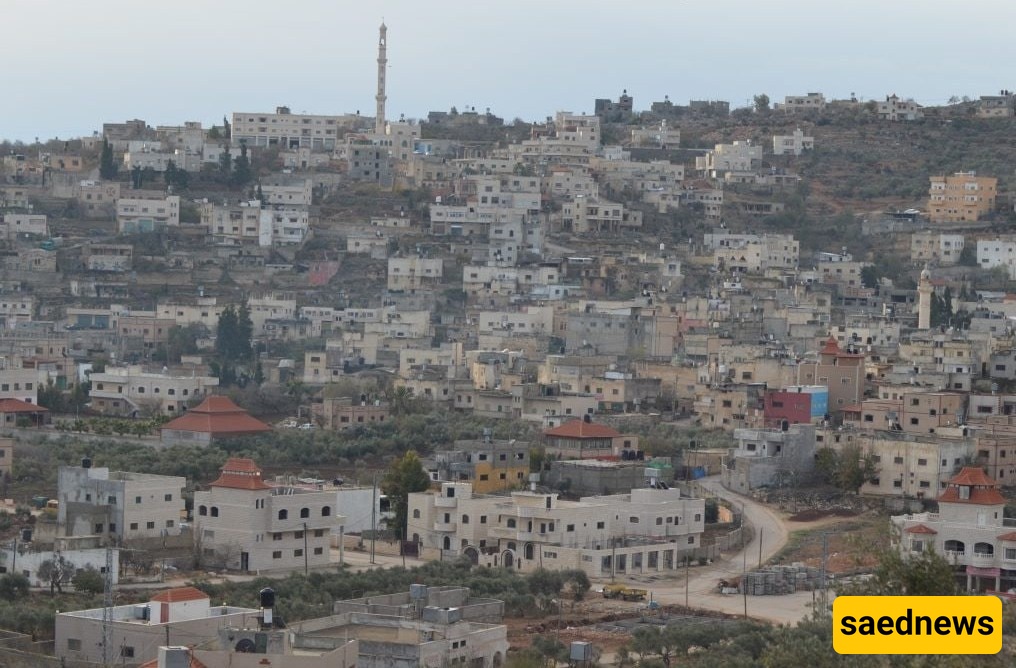
The expansion of settlements around Qasra has placed the village under growing geographical pressure. The surrounding settlements are not limited to residential areas; they also encompass networks of roads and agricultural fields, creating repeated local disputes between settlers and Palestinian residents. For years, confrontations in Qasra have taken various forms, including attacks on farmland, the destruction or cutting of olive trees, assaults on homes, stone throwing, arson against property, attempts to establish settlement outposts near Palestinian houses and, in some cases, shootings that have killed Palestinians.
The situation has intensified following budgetary measures by the cabinet of Israeli Prime Minister Benjamin Netanyahu to increase construction and expand roads in the West Bank. One of the most significant incidents in Qasra occurred on March 14 (Esfand 23, 1404), when a group of armed settlers entered the western part of Qasra and opened fire toward Palestinian homes and residents. Several Palestinians were wounded, while a 28-year-old man was killed by gunfire.
Another incident took place on July 25 (Mordad 3), when Al-Rahma Mosque in Qasra, which had not yet been fully opened, was set on fire. Palestinian sources said Jewish settlers had torched the mosque, while Hebrew inscriptions were reportedly found around the site.
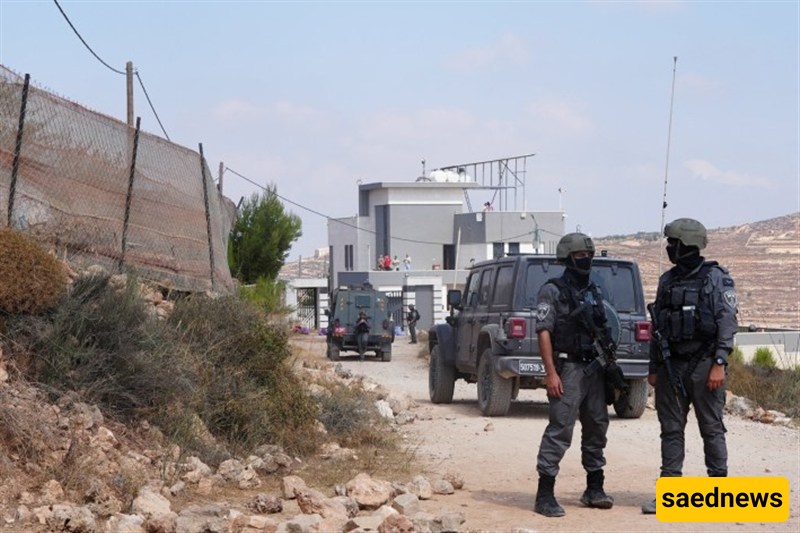
The latest escalation occurred in an area known as Ras al-Ain on the outskirts of Qasra. On August 9 (Mordad 18), a group of settlers positioned themselves around several Palestinian homes. What initially began as the encirclement of one house expanded to include three Palestinian homes. To pressure the residents, the settlers cut off electricity to the houses. They later erected a temporary structure near one of the homes and maintained a continuous presence around it, severely restricting the family’s ability to move in and out of the area.
A key element of the incident is that the targeted house is located in Area B. The expansion of Israeli settler presence inside or next to Palestinian residential areas is different from the development of formal settlements in Area C. This distinction has led to the conclusion that the settlers’ objective in this case was to seize the homes themselves.
As the situation continued, the Israeli military became involved. The military appeared to take some measures to remove settlers from in front of the houses, and access routes to the Ras al-Ain area were temporarily blocked. In practice, however, these steps did not end the siege of the three homes. On Mordad 24, dozens of extremist and rebellious settlers returned to the village, entered Palestinian residents’ homes and subsequently prevented repairs to a water line that they had previously deliberately damaged.
Soldiers from the 51st Battalion of the Golani Brigade stationed in the area were unable to stop such actions and did not arrest any of the Israeli settlers. As a result, the Palestinian residents of the besieged homes have now spent more than 12 days under siege. Notably, the occupying army has in effect supported the settlers, while images have also emerged showing Israeli soldiers alongside the individuals involved in the unrest.
Palestinians in the West Bank are now facing what appears to be a different form of land seizure. The current method is not limited to constructing settlements on vacant land or on Palestinian residential and agricultural property, nor to destroying Palestinian farmland. Instead, settlers, with military backing, are directly surrounding Palestinian homes and setting up tents and temporary structures beside them in an effort to force residents to leave the area. This emerging approach has also been discussed by some Hebrew-language media.
In this context, because the Israeli military’s role in the West Bank is described as being limited to “security control,” with the handling of order and confrontations with Israeli settlers supposedly outside its responsibilities, the role of border police and regular police forces becomes more prominent.
Against this backdrop, Israel’s Defense Minister Israel Katz, a member of Netanyahu’s cabinet, called for some personnel from civil administrative and executive bodies to be transferred to the police to strengthen its manpower in dealing with the issue. The Israeli publication Maariv, however, described the proposal as “nothing more than an electoral tactic,” arguing that Katz was using the statements to advance the practical annexation of occupied territory in the West Bank.
The developments in Qasra therefore form part of a broader pattern across the West Bank. Reports indicate that settlement-related infrastructure is expanding around the village. In late Tir, Palestinian sources reported that the Israeli cabinet had ordered the seizure of land south of Nablus to establish a connection between settlement blocs. Israeli Finance Minister Bezalel Smotrich has also approved substantial budgets since the beginning of the current year for roads, communications links and infrastructure serving settlements in the area.
Continuing along the same path, the Israeli newspaper Israel Hayom reported two months ago on a plan prepared by settlement movements in the West Bank, led by the “Havita” association. The plan seeks to significantly alter the map of Palestinian-populated areas. According to the report, the proposal has reached senior Israeli officials and calls for the establishment of roughly 100 strategic points deep inside Area A, territories that have been under the Palestinian Authority’s full civil and security control since the Oslo Accords.