SAEDNEWS: Iranian Foreign Ministry spokesman Esmail Baghaei said Tehran is continuing diplomatic efforts to determine the status of four Iranian pilots, while addressing issues including regional security, negotiations, sanctions, and relations with neighboring countries.
According to SaedNews:
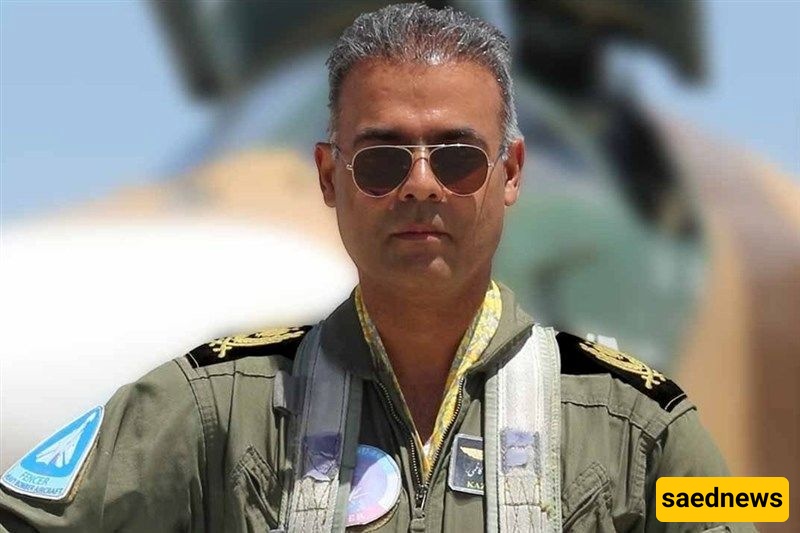
Iranian Foreign Ministry spokesman Esmail Baghaei said Tehran is following up on the situation of four Iranian military pilots through diplomatic channels, stressing that efforts to clarify their status began immediately after officials were informed of the matter.
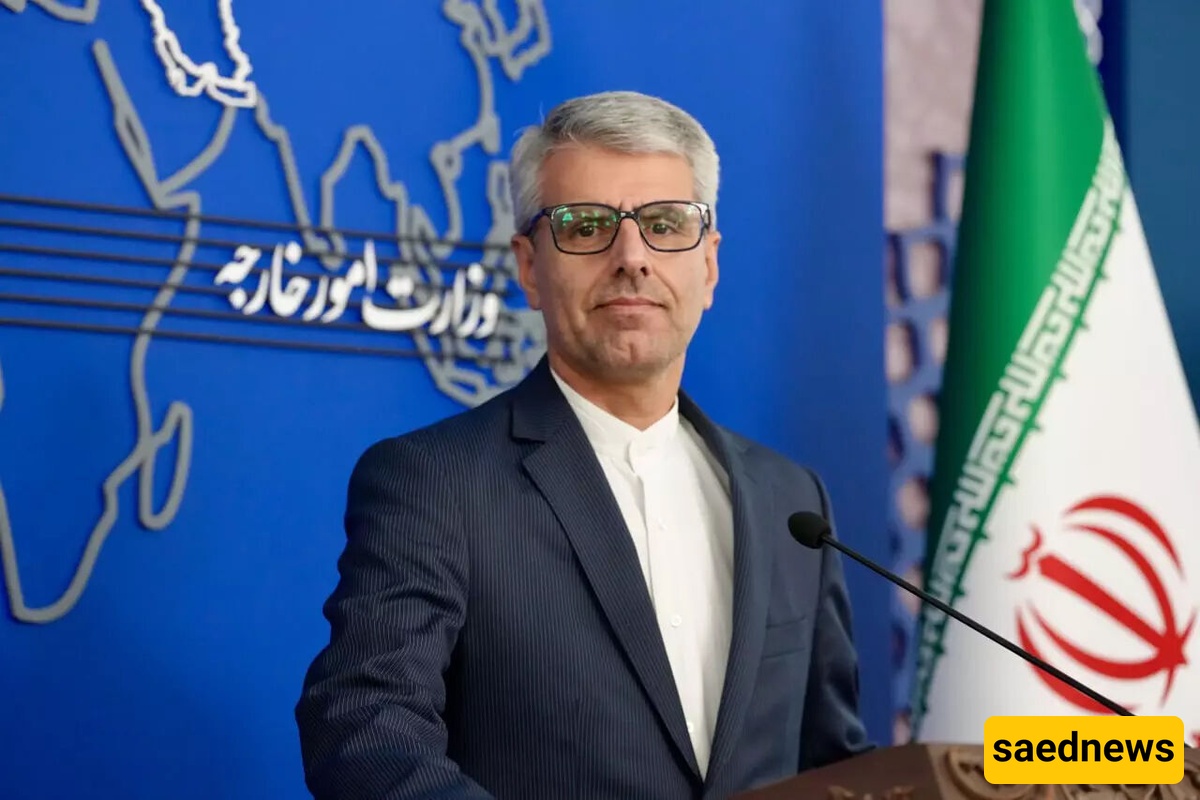
Speaking at his weekly press conference on Monday, August 17, Baghaei also marked the anniversary of the return of Iranian prisoners of war, honoring those who endured years of captivity and describing their return as a symbol of resilience.
He said Iran’s dignity and independence were achieved through generations that refused to allow the country’s future to be tied to others.
Referring to the August 19, 1953 coup in Iran, Baghaei described it as one of the most painful examples of foreign intervention in a country’s internal affairs. He said the consequences of US interference continued to affect Iran’s foreign relations and later developments.
Baghaei said one of the major mistakes regarding Iran is the belief that today’s Iran is the same as the country of the past and that political will can be imposed on it.
He said similar miscalculations were seen during the two recent wars, adding that such errors had serious consequences for the region and the world. According to him, Iran today has accumulated experience of resistance and perseverance and has a different society with a strong determination to defend its sovereignty, dignity, and independence.
Commenting on reports that Iranian pilots had been captured by Qatar, Baghaei said Tehran maintains regular communication with Doha and has conveyed its concerns and considerations.
He said the demand to clarify the fate of the four Iranian pilots who were heading toward a defensive operation against what Iran described as the source of US aggression remains serious.
Baghaei said he was with Foreign Minister Abbas Araqchi when officials were informed of the issue during the first nights of the war, and that efforts to follow up on the pilots’ situation immediately became a priority.
He added that Iran sent its first correspondence to the International Committee of the Red Cross on March 16 and that the country’s embassy had begun following the issue from the early days.
Baghaei said that until their status is confirmed, Iran considers them to have been captured and will use all available capacities to determine their situation. He emphasized that tracking the fate of the four pilots has been on the agenda since the beginning and that they had been carrying out a defensive mission.
Regarding the parliament’s strategic action plan for the security of the Strait of Hormuz, Baghaei said the Foreign Ministry had not sent a letter to parliament on the issue.
He said the government respects parliamentary decisions and is required to cooperate with lawmakers during the legislative process.
Baghaei added that the ministry has already expressed its views on the proposal and that existing laws concerning the security of the Strait of Hormuz continue to be considered alongside current developments.
Addressing the status of a memorandum of understanding on its expiration date, Baghaei said there was no provision in the text referring to a 60-day deadline.
He stated that Iran does not shape its policies under pressure or according to imposed timelines, but instead makes decisions based on national interests and assessments.
According to Baghaei, the document mentioned holding nuclear talks within 60 days, but Iran never began such negotiations. He accused the United States of violating the understanding from the beginning and said the 60-day issue was no longer relevant.
He added that Iran’s armed forces are closely monitoring all movements and that strengthening relations with regional countries remains part of Tehran’s activities.
Discussing talks between Iran and Oman and the preparation of a framework, Baghaei said he had not referred to it as a “road map,” explaining that an agreement had been reached regarding a route for maritime movement, while the two sides were working to finalize a package including that issue and a joint statement.
He identified three major factors affecting the continuation of the process. The first, he said, was the complexity of the issue, noting that insecurity in the Strait of Hormuz had been imposed on Iran due to what he called aggression by the United States and Israel.
The second factor was the number of parties involved in the process. He described the third and most important factor as the destructive efforts of certain parties that, according to him, do not value peace.
Baghaei said these factors had made the process time-consuming. He added that the process began on March 9 and later led to developments on June 18, before the United States allegedly violated commitments.
He said discussions between Iran and Oman are continuing and that both sides have shown determination to move forward.
Responding to claims by US sources about contacts between Washington and Tehran through Iraq’s Kurdistan Region, Baghaei said no meeting with the United States had taken place there.
He described such reports as media tactics aimed at creating the impression of divisions among Iran’s decision-making institutions, saying they reflected desperation.
Baghaei said the past six months had demonstrated unprecedented unity among Iran’s relevant authorities. He added that the negotiating team enjoys the confidence of all parts of the system, including defense sectors.
According to him, decision-making in Iran is institutional, and different bodies make decisions after considering all relevant factors.
Commenting on Bahrain’s letter to the United Nations Security Council regarding Iran, Baghaei said he had not mentioned any country by name in his previous post and that anyone who considered themselves addressed was a separate matter.
He said Iran respects the national sovereignty and territorial integrity of all regional countries, including the country that interpreted his remarks as being directed at it.
Baghaei said he reminded the Bahraini side that a United Nations resolution was adopted in 1970 regarding the settlement of disputes between Iran and Britain.
He said raising such issues was linked to the failure of some regional countries to follow principles of good neighborliness and to properly consider geographical realities.
He questioned whether allowing one’s territory to be used by an adversary could be considered respect for a neighboring country.
Regarding claims that Europe was mediating between Iran and the United States, Baghaei said Pakistan is the mediator and Qatar is also making efforts.
He added that it is natural for European officials to express their views, but the core issue between Iran and the United States is not mediation.
According to Baghaei, the issue is related to Washington’s approach and repeated miscalculations based on methods that have failed hundreds of times.
Addressing US threats of increased economic pressure on Iran, Baghaei said sanctions have had no impact.
He said that since the 1953 coup, the United States has followed a path that has produced nothing except the accumulation of resentment between the two sides.
Baghaei said over the past five decades, Washington has trapped itself in a cycle of sanctions and pressure, repeatedly using the concept of “crippling sanctions.”
He questioned what results these policies had achieved, saying they only demonstrated what he described as Washington’s anti-humanitarian behavior.
He added that methods previously tested without success would not produce different outcomes in the future.
Baghaei said Iran will use all available tools to respond to any hostile action.
Speaking about environmental damage in the Persian Gulf and oil pollution, Baghaei said the harm caused to the Persian Gulf and the Gulf of Oman did not begin only in recent days.
He said the US military presence in the region was not aimed at security and that repeated use of weapons had caused extensive damage over the past five decades.
According to him, the consequences imposed on the region have been extremely large and worth trillions of dollars.
He added that these issues intensified over the past two years due to both US and Israeli attacks against Iran and the continuation of the US military presence.
Baghaei said Iran is pursuing the matter and that addressing these problems is the responsibility of all parties.
Regarding actions by French diplomats against Iran, Baghaei said that regardless of individuals’ legal status, what matters for Tehran is the position expressed by a government.
He said Iranian authorities expected French officials to apologize over the incident, adding that they themselves said the individuals involved were not diplomats but agents.
According to Baghaei, they claimed the two people were helping Iranian civil society, which he said was not consistent with international law.
He described this as an admission that the Vienna Convention had been violated.
Baghaei said the French ambassador was summoned from the beginning and Iran submitted its protest. He added that the two individuals involved had left Iran and would not be allowed to return.
Commenting on reports that Trump escaped through a food transport truck from Turkey, Baghaei said the development should increase pride in the fact that the Iranian people remained in their country under the most difficult circumstances.
He said Iranians faced danger without fear and defended Iran’s dignity.
Baghaei said the events of the 40-day period, especially those beginning on March 9, would be recorded as points of pride in Iran’s history.
He said the opposing side’s actions were clear, accusing it of committing numerous crimes.
Baghaei said Iran would not forget incidents including the attacks on Shajareh Taybeh School and Lamerd, adding that fear would continue to accompany those responsible.
In response to a question from Tasnim about the visit of Pakistan’s interior minister to Tehran and a message from Prime Minister Shehbaz Sharif to President Masoud Pezeshkian, Baghaei said relations and exchanges between Iran and Pakistan are continuing.
He said Pakistan’s interior minister traveled to Tehran at the invitation of Interior Minister Ahmad Vahidi, and discussions covered both bilateral issues and regional developments.
Baghaei said Pakistan is seeking to use its capabilities to play a mediating role.
He added that there was no specific or special message in that sense, but rather it was part of Pakistan’s continued mediation efforts, including its role in helping establish the Islamabad understanding.
He expressed regret that repeated US violations had damaged Pakistan’s mediating role.
Regarding Iran’s conditions for recognizing the Taliban, Baghaei said relations between Iran and Afghanistan remain positive in various fields.
He said the two Muslim countries share numerous cultural connections and, for clear reasons, should be able to consider each other’s concerns.
Baghaei stated that regardless of the issue of official recognition, Iran will continue its relations with Afghanistan.
He added that any decision regarding recognition will be announced whenever it is made, but this does not mean Tehran will stop maintaining relations with Afghanistan.
Speaking about consultations between Iran and Tajikistan, Baghaei said the visit of two Tajik ministers was important for Tehran.
He said they held meetings with their Iranian counterparts as well as a separate meeting with the foreign minister.
Baghaei said relations between Iran and Tajikistan are developing further and that linguistic and historical ties should be used as a foundation for expanding cooperation.
He added that there is political will at the highest levels of both countries to continue this path.
Addressing the decline in the water level of the Caspian Sea, Baghaei said the five Caspian countries have a joint environmental treaty dating back to 2001.
He described the agreement as an important document and said meetings are held periodically within its framework.
Baghaei said the reduction in the Caspian Sea’s water level is a significant issue.
He added that factors including climate change and reduced water inflows into the Caspian Sea require further examination.
According to him, a meeting of the governments participating in the Caspian Convention will be held in Iran in October.
Regarding claims that the United States has changed its priorities toward Iran, Baghaei said this reflects continued confusion and proves, according to him, that the imposed war had no basis other than satisfying the interests of a regional regime.
He said the reason given for launching the war was countering an alleged imminent threat from Iran, but the Pentagon rejected that claim and said there was no such danger.
Baghaei stated that the United States had trapped itself and was forced to change its objectives to justify its failures.
He said the current concern of Washington has become a strait that was open before what Iran describes as aggression.
Baghaei said the best option for the United States is to end its involvement before becoming further entangled.
He added that admitting mistakes could be the beginning of making the right decision, but said he doubted such courage existed among US officials.
Discussing the most important outcome of the two recent wars, Baghaei said the key lesson was that the region realized the United States is an unreliable partner.
He said US presence in the region has not been a factor creating security.
Baghaei added that Iran has invited regional countries to rely on themselves.