SAEDNEWS: Israeli researcher Uzi Rabi has warned that Israel should dramatically reduce its reliance on Washington, arguing that the United States and President Donald Trump are facing an exceptionally weak position. He also raised questions about Trump’s strategy and suggested that Israel must focus primarily on its own interests.
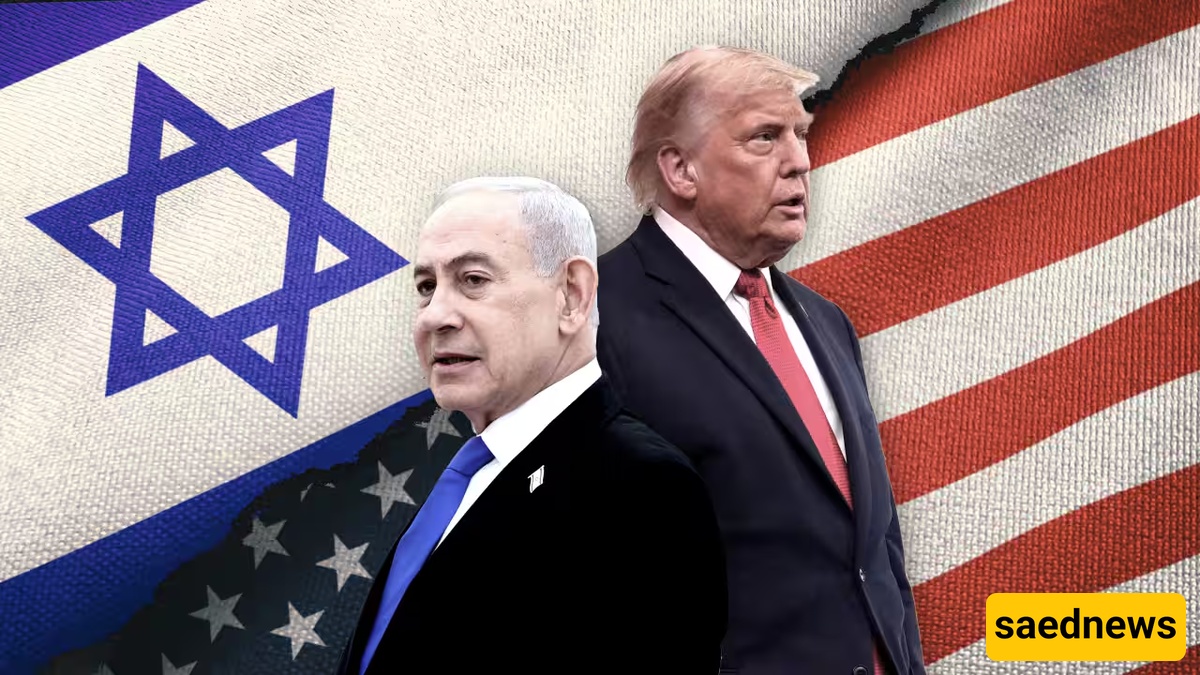
According to SaedNews: An Israeli Middle East researcher has delivered a striking warning about one of the assumptions that has long shaped Israel’s strategic thinking: the belief that it can rely heavily on the United States.
Uzi Rabi, a researcher and expert at the Moshe Dayan Center for Middle Eastern and African Studies at Tel Aviv University, said in an interview with Radio FM 103 that the United States and President Donald Trump are now facing what he described as an exceptionally weak position.
His argument goes beyond criticism of one policy or one political decision. Rabi’s central message was that Israel should be much more cautious about depending on Washington and should increasingly act according to its own interests.
The warning is particularly notable because it comes from an Israeli analyst discussing the country’s strategic calculations at a time when the behavior and intentions of the Trump administration are attracting close attention.
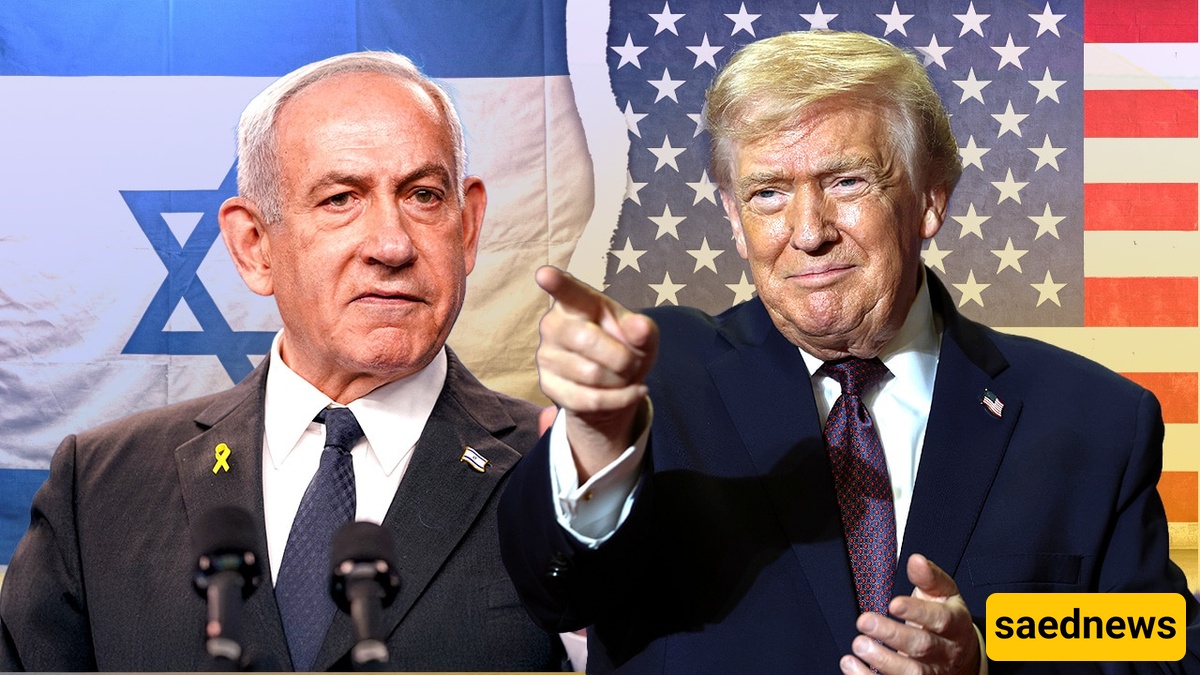
Rabi argued that it has become clear to many observers, including Iran, that the United States and its president are operating from a position of weakness.
He said Israel should carefully monitor and examine U.S. and Trump administration behavior rather than automatically assume that Washington will act in ways that serve Israeli interests.
The researcher also suggested that some of Trump’s recent behavior cannot simply be explained by the approaching November election.
That distinction is important to his analysis.
According to Rabi, Trump may be pursuing objectives that extend beyond electoral considerations. He said there is a concern that Trump could be envisioning a different form of “victory” for himself and potentially choosing it as a way out.
Rabi did not elaborate publicly on exactly what he believed that alternative outcome could look like. Instead, he left the possibility open while emphasizing that Israeli decision-makers should pay close attention to Trump’s actions.
The Israeli researcher acknowledged that he does not know exactly what Trump is doing.
But that uncertainty, rather than reassuring him, appears to be part of the reason for his warning.
Rabi said he hoped Trump knew what he was doing, while stressing that Israel should not place too much reliance on him.
The message represents a significant strategic caution: even if the United States remains an important partner, Israel should not build its future decisions around the assumption that Washington will always provide the support or direction it expects.
Instead, Rabi called for Israel to concentrate on achieving its own national interests.
That approach would require Israeli officials to assess developments independently and prepare for outcomes that might not match their expectations of American policy.
Rabi specifically urged Israeli officials to depend primarily on themselves under current circumstances.
His argument was not simply that the United States is facing political difficulties. He portrayed the situation as one in which American weakness could have direct consequences for Israel’s strategic calculations.
For Israel, the implications are potentially significant.
The country has historically placed enormous importance on its relationship with Washington. Any perception that American political power or willingness to act is weakening could therefore force Israeli decision-makers to reconsider how much weight they assign to U.S. positions when planning their next moves.
Rabi’s comments suggest that Israel should prepare for a more uncertain relationship in which American policy cannot be taken for granted.
Perhaps the most striking element of the interview was not Rabi’s assessment of American weakness itself, but his uncertainty over Trump’s ultimate intentions.
He said he did not know precisely what Trump was doing, while expressing hope that the U.S. president understood his own strategy.
At the same time, he warned that Israel should not rely heavily on Trump.
That combination—uncertainty about Washington’s direction and a call for greater Israeli independence—forms the core of his message.
It also raises a broader question about how Israel should respond when its most important international partner appears unpredictable.
If Trump’s actions are being driven by calculations that go beyond the November election, as Rabi suggested, Israeli leaders may need to consider scenarios in which U.S. policy develops in unexpected directions.
The analyst therefore urged Israel to place its own interests at the center of its decision-making rather than assuming that American priorities will necessarily align with them.
Rabi’s comments do not amount to a prediction that the U.S.-Israel relationship is about to collapse. Nor does the interview establish what Trump’s next move will be.
Instead, the researcher is making a strategic argument about risk.
His concern is that Israel could become overly dependent on a U.S. administration whose intentions and calculations are not always easy to predict.
That is why his advice is straightforward: watch Washington closely, but do not rely on it too heavily.
For Israeli decision-makers, such a position would mean placing greater emphasis on independent assessments, national priorities and the ability to act without assuming that American backing will always be available in the form expected.
The warning also reflects the uncertainty surrounding Trump’s political and strategic behavior. Rabi deliberately stopped short of explaining what he believes Trump may ultimately seek, leaving that possibility as an unresolved concern rather than a confirmed scenario.
Ultimately, the researcher’s message is less about predicting Trump’s next move than preparing Israel for the possibility that it may not be able to anticipate it.
And that may be the most consequential point of his warning: if Washington is becoming less predictable and, in Rabi’s assessment, weaker, Israel may have to think increasingly about what it can do on its own.