Saed News: The Economist reported that Gulf rulers want to reduce their dependence on Western weapons. In a tense and unstable region, security comes at a high price.
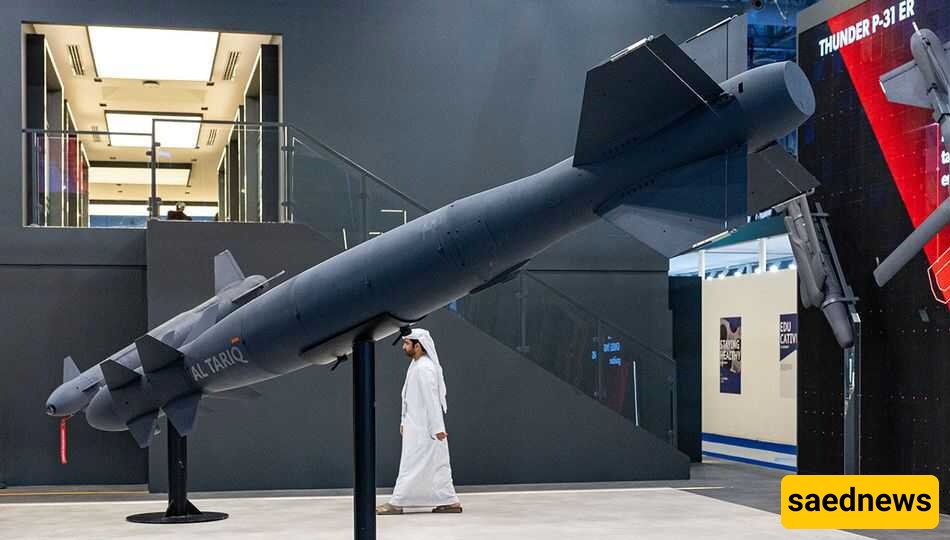
According to SAEDNEWS, as conflict in the region intensifies, Gulf countries have stepped up efforts to build and expand domestic defense industries, aiming to reduce reliance on Western arms imports and strengthen national security.
The Economist wrote:
The oil-rich monarchies of the Gulf are famous for their lavish spending, and Western defense industries have been among the biggest beneficiaries. Their oil wealth finances roughly one-fifth of global arms imports, with purchases ranging from advanced fighter jets to military frigates. In such a volatile region, security is expensive.
Now, however, these wealthy states are strengthening their domestic defense industries to reduce dependence on the West. The war involving Iran has, as expected, made this objective even more urgent. Saudi Arabia aims to spend half of its defense budget domestically by 2030, compared with about one-quarter today. It also wants the Saudi Arabian Military Industries (SAMI) company to rank among the world's top 25 defense firms by revenue. However, the state-owned company, which cooperates with Boeing, currently mainly produces spare parts for American fighter jets and a few armored vehicle models. Qatar’s Barzan Holdings also has ambitious plans, though it still operates on a relatively limited scale.
The fastest progress, however, is taking place in the United Arab Emirates. In 2019, around 25 Emirati companies were merged into EDGE Group to create a national defense giant. Since then, the company has acquired controlling stakes in several foreign firms and, in May, signed an agreement to purchase 80% of the Italian diesel-engine manufacturer Costruzioni Motori Diesel.
EDGE Group also owns 51% of joint ventures with the Italian companies Leonardo and Fincantieri and collaborates with Germany’s Rheinmetall in air-defense systems. Last November, it formed a joint venture with Anduril Industries, an emerging American defense-technology company, to produce drones for use by the UAE and its allies.
EDGE Group’s revenue exceeded $5 billion last year, and executives say it generated healthy profit margins. New contracts worth about $8 billion have increased its order backlog to more than $20 billion. CEO Hamad Al Marar estimates that fulfilling these contracts could increase company revenue by around 20% over the next two years. The company is already among the world’s three largest producers of precision-guided munitions.
EDGE Group does not aim to localize everything. Instead, it focuses on systems and components that are strategically critical or vulnerable to supply-chain disruptions. Nevertheless, its ambitions continue to grow. While it initially focused on acquiring intellectual property rights, it is now increasingly investing in developing its own technologies and expertise.
The expansion of EDGE Group has reduced the UAE’s share of global arms imports. According to data from the Stockholm International Peace Research Institute (SIPRI), the UAE’s share of global arms imports fell from 3.5% during 2016–2020 to 2.7% in the 2021–2025 period.
The company is not producing solely for the domestic market. Nearly three-quarters of its products are exported to customers in Latin America, Africa, and Asia. Al Marar says that despite increasing regional competition, global geopolitical conditions are creating more export opportunities. Earlier this year, the company signed a joint-venture agreement with Barzan Holdings and has also transferred military-vehicle technology to Saudi Arabia’s SAMI.
The UAE’s growing defense capabilities have also proven useful during the war. Iran has reportedly targeted the UAE more frequently than Saudi Arabia or Qatar. Emirati officials claim that around 80% of the Shahed drones launched toward the country were intercepted or neutralized by systems developed in the UAE. EDGE Group’s electronic-warfare systems have also detected incoming missiles and drones, conducted jamming and deception operations, and worked alongside American ballistic-missile defense systems.
Al Marar says a major advantage of the conflict has been that EDGE technologies were tested under real battlefield conditions. The war has also created challenges, however. Disruptions to shipping through the Strait of Hormuz have delayed the delivery of some components and affected production schedules.
Nevertheless, the UAE’s years-long effort to localize defense manufacturing now appears farsighted. Even for a country with powerful allies and friendly neighbors, greater self-sufficiency remains a significant advantage. This rising defense-industry champion may provide the strategic edge the UAE seeks for the years ahead.