SAEDNEWS: Iran’s Communications Minister has revealed plans to place three satellites from the Shahid Soleimani constellation into orbit in a single launch, as Tehran shifts its space strategy toward practical services, satellite communications and economic applications.
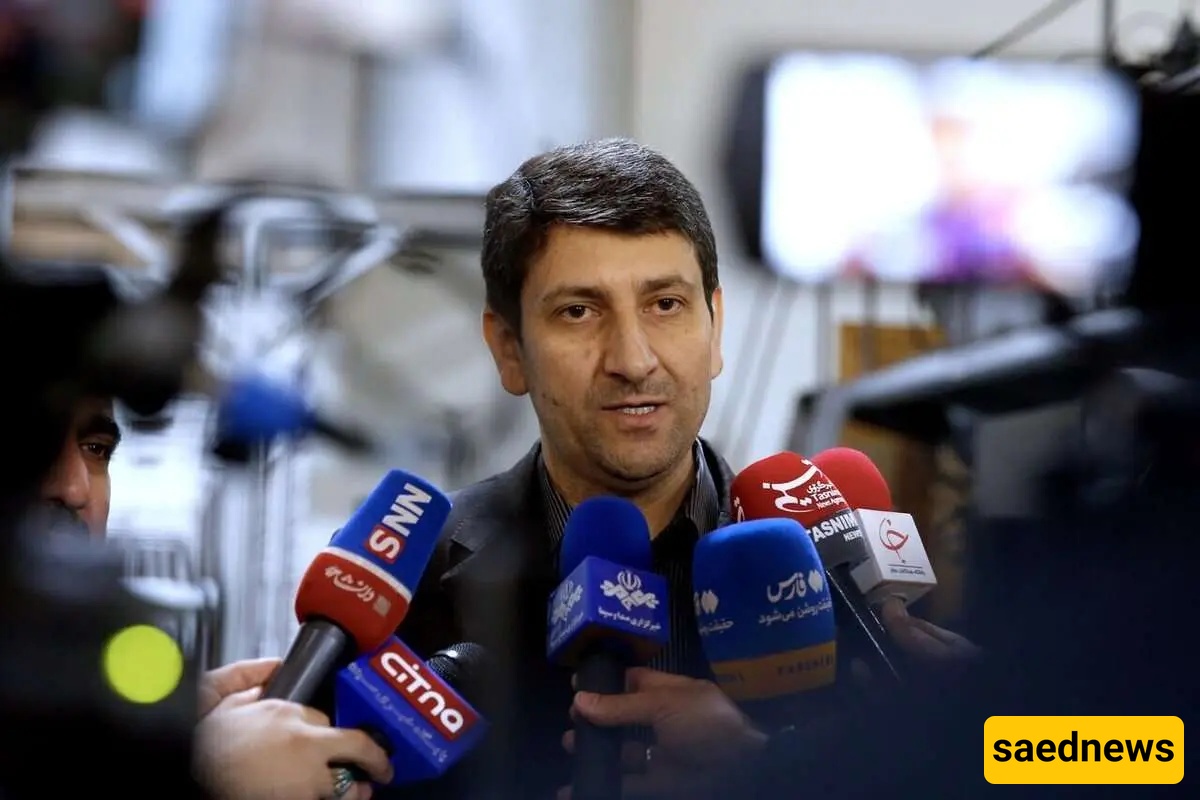
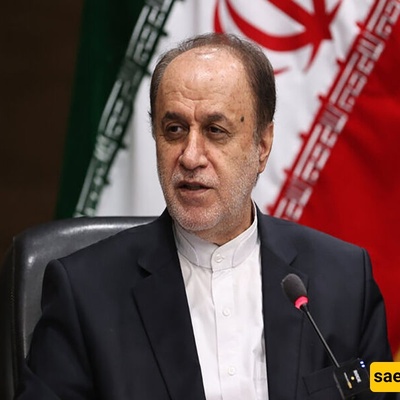
According to SaedNews: Iran is preparing for a potentially significant milestone in its space program, with Communications and Information Technology Minister Seyed Sattar Hashemi saying that three satellites from the Shahid Soleimani constellation are expected to be placed into orbit in a single launch.
The plan is part of a broader shift in Iran’s space strategy: instead of treating space technology primarily as an achievement in itself, the government says it wants satellites and related infrastructure to directly address practical needs on the ground.
Hashemi discussed the strategy during a visit to Tasnim News Agency on the occasion of Iran’s Journalist Day commemorations. His comments offered a detailed look at the government’s priorities for the country’s space sector, including satellite communications, remote sensing, rural connectivity and the development of a more economically sustainable space industry.
The Shahid Soleimani project stands out as one of the most ambitious elements of the current strategy.
According to Hashemi, the constellation is planned to include 18 operational satellites and six reserve satellites, for a total of 24 spacecraft. The government hopes to place three of them into orbit during a single launch before the end of the current Iranian year, with the broader project intended to strengthen communications and other satellite-based services.
The significance of the project lies partly in the type of orbit being considered.
Hashemi pointed to the different characteristics of geostationary and low-Earth orbits. GEO satellites operate at an altitude of about 36,000 kilometers and can maintain a stable position relative to the Earth, but communications through such satellites face greater signal latency.
LEO satellites, by contrast, operate much closer to Earth. At an altitude of around 500 kilometers, they can provide lower latency and potentially higher-quality communications. Their high orbital speed, however, means they cannot remain fixed over one country.
That limitation is one reason Iran is pursuing a constellation rather than relying on a single satellite.
A network of satellites can help maintain continuity of coverage as individual spacecraft move across the sky. For Iran, Hashemi described this approach as a strategic step toward providing more stable communications and continuous services.
The minister emphasized that the government wants to change how Iran measures success in the space sector.
He highlighted several recent developments as signs of the government's focus on the industry, including the placement of the Nahid-2 telecommunications satellite into a 500-kilometer orbit, simultaneous satellite launches and greater use of private-sector capabilities.
But technological milestones are no longer enough on their own, according to Hashemi.
The new approach is centered on “application-oriented” development. In practical terms, this means government resources and space capabilities should be directed toward solving identifiable problems, rather than remaining confined to research or technological demonstrations.
One example is rural connectivity.
Under Iran’s Seventh Development Plan and Article 65, villages with more than 20 households are expected to be connected to the internet and the National Information Network. Yet conventional terrestrial infrastructure cannot economically or technically reach every remote location.
Hashemi said a small percentage of villages are located in areas where terrestrial coverage is not feasible. In such cases, satellite communications could provide an alternative.
The idea is to use the space sector not simply as a technological showcase, but as a tool for delivering connectivity where conventional infrastructure cannot reach.
Hashemi also described a planned transition in the economic structure of Iran’s space industry.
The government, he said, is seeking to move away from a traditional STI model toward a DUI model, in which applications and actual demand help generate the financial resources needed to sustain technological development.
The objective is to make the space industry more economically driven and service-oriented.
That philosophy extends beyond communications. Hashemi pointed to cooperation with the Ministry of Industry, Mine and Trade in managing water bodies and natural resources, including potential investment in those areas.
He also referred to cooperation with Iran’s judiciary on land management, saying that satellite-based capabilities could contribute to efforts designed to prevent problems and legal disputes affecting citizens.
The minister also spoke about damage suffered by Iran’s space infrastructure during what he described as the Ramadan war.
Facilities of the Iranian Space Research Center in Tehran, including the complex located along Sheikh Fazlollah Nouri Expressway, as well as research centers in several provinces and space stations in Salmas and Qeshm, were reportedly hit.
Hashemi said the attacks did not result in loss of life, describing Iran’s specialized human resources as the sector’s most important asset.
He said teams have been relocated to new facilities and work has resumed, with universities expected to remain central to the development of space technologies. The Iranian Space Research Center, meanwhile, is expected to play a coordinating and guiding role.
Iran’s growing interest in low-Earth-orbit constellations reflects a wider focus on satellite networks rather than isolated spacecraft.
Hashemi said the space industry now has a multidimensional role, covering telecommunications, remote sensing and the management of terrestrial resources. The development of remote-sensing satellites and LEO constellations, he argued, is strengthening space’s position as a key infrastructure sector.
He also cited a strategic analysis prepared by MTN, the international partner of Iran’s mobile operator Irancell. According to Hashemi, the report, prepared with the assistance of international consultants, recommended special investment in satellite constellations and viewed them as serious competitors to terrestrial and mobile infrastructure development.
That observation helps explain the government’s urgency around projects such as Shahid Soleimani.
The emerging strategy is therefore not simply about putting more satellites into orbit. It is about creating a system capable of turning space assets into usable communications, connectivity and resource-management services.
If the planned triple launch goes ahead, it could become an important early test of that strategy. More importantly, the success of the Shahid Soleimani constellation will ultimately be judged not only by what reaches orbit, but by whether those satellites can deliver the stable, practical services Iran says it needs.
For a country seeking to expand connectivity into hard-to-reach areas while building a more economically sustainable space industry, that may be the most consequential part of the story.