SAEDNEWS: Iran’s Communications Minister has outlined a new infrastructure strategy that places private companies at the heart of artificial intelligence services while reporting major growth in fiber-optic connections, e-government users and rural connectivity.
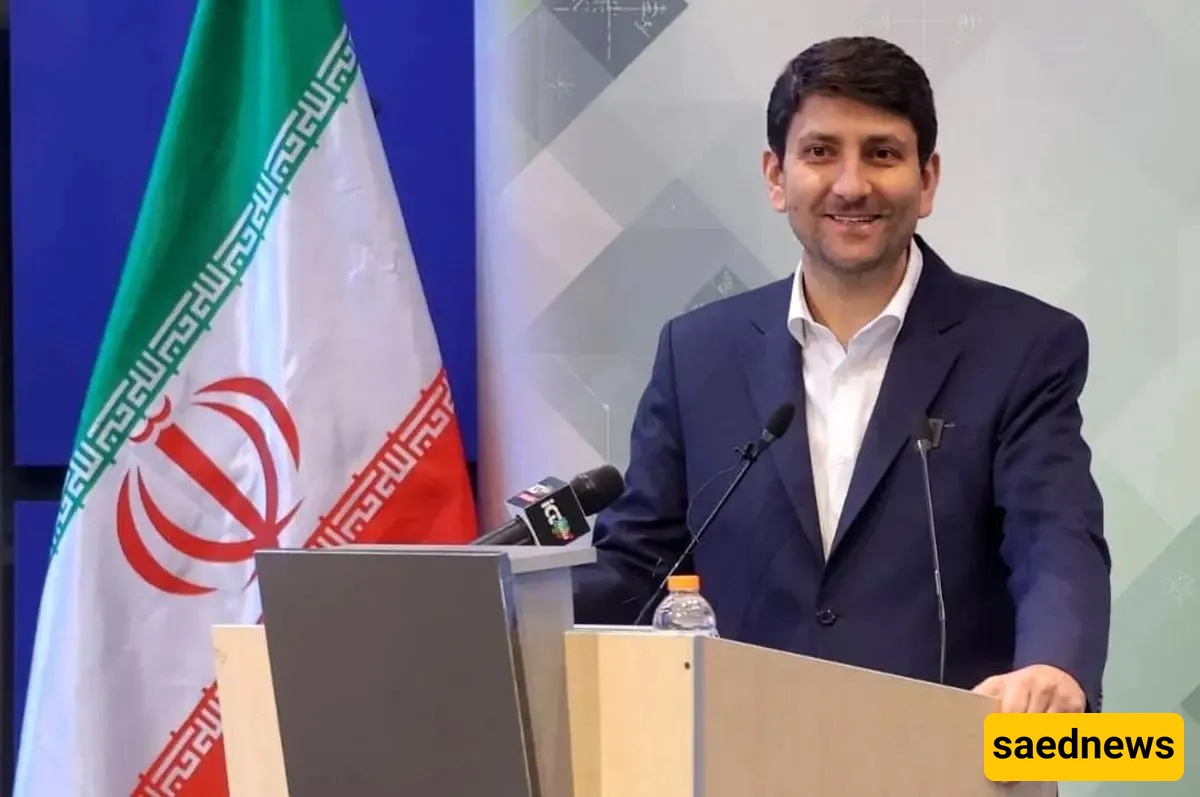
According to SaedNews: Iran’s digital infrastructure strategy is entering a new phase, and one of its most significant changes may be the decision to let private companies take a leading role in building and delivering artificial intelligence infrastructure.
Speaking to Tasnim during a visit to the news agency on Journalists’ Day, Communications and Information Technology Minister Seyed Sattar Hashemi described a model that would move much of the burden of AI infrastructure away from individual businesses and toward specialized “AI operators.”
The idea is straightforward but potentially significant: instead of every company purchasing expensive GPUs, building server farms and maintaining complex infrastructure, businesses could buy computing capacity as a service. Hashemi referred to the concept as “AI as a Service,” or AIaaS.
The proposal comes as the government works on a broader institutional framework for artificial intelligence. Hashemi said AI is too broad to be managed entirely by one organization. A coordinating headquarters led by the First Vice President’s office has therefore been established, with responsibilities divided among institutions according to their expertise.
Under that division of responsibilities, the Communications Ministry has been assigned a central role in infrastructure development and facilitation.

Hashemi said the government spent more than a year developing the framework for an AI operator license. The plan attracted criticism during its preparation, but officials held discussions with opponents and stakeholders before the document was eventually approved by the government.
Following the approval, 12 companies expressed interest in obtaining licenses.
Applicants initially receive preliminary approval and have nine months to complete the process required to obtain their licenses. The licenses also contain investment requirements, development targets and minimum service levels.
The government’s reasoning is that AI infrastructure cannot operate like an ordinary office service. AI applications are increasingly becoming part of essential business and public services, meaning the underlying infrastructure must remain available around the clock.
Hashemi compared the proposed model with the experience of Iran’s telecommunications operators. The objective, he said, is to create an environment in which private operators can provide reliable services seven days a week, 24 hours a day.
The model also addresses a practical problem facing companies that want to use advanced AI. A logistics or healthcare company, for example, should not have to become an infrastructure operator simply to access computing power.
Instead, an organization could request the processing capacity it needs through a cloud platform while the AI operator handles the underlying infrastructure.
That infrastructure is expected to include at least three basic components: a high-quality fiber-optic connection, electricity supplied through more than one route to improve resilience, and standardized cooling systems.
The Communications Ministry would act as regulator and facilitator, with the aim of ensuring service continuity.
The AI plan is being developed alongside another major infrastructure transition: replacing traditional copper cables with fiber optics.
Hashemi described the migration from copper to fiber as essential, arguing that copper networks that have served communications for more than nine decades in Iran are gradually reaching the end of their technological life.
He said international experience suggests that replacing copper with fiber can reduce energy consumption to roughly one-eighth while increasing communication speeds by between 10 and 100 times or even more.
But the transition is not simple. According to Hashemi, such projects can take between seven and 15 years. Authorities must expand fiber coverage while ensuring that existing services do not disappear before a stable replacement is available.
Municipalities are one of the biggest obstacles. Excavation and road restoration require coordination with city administrations, and disagreements over excavation fees have slowed progress in some areas.
Mashhad and Razavi Khorasan have emerged as examples of stronger progress. Hashemi said fiber coverage in Mashhad is almost complete or could be completed by the end of the year, allowing residents who request the service to receive it within roughly a month.
One of the most revealing changes in the government’s approach concerns the definition of fiber coverage.
At the beginning of the current administration, Iran had roughly eight million fiber-optic “covered” premises. But Hashemi argued that coverage figures alone could be misleading because a location might technically fall inside a coverage radius while still being practically impossible to connect.
He gave the example of a highway cutting through a nominal coverage area. A resident on the other side could still be unable to receive service.
The government therefore moved toward what Hashemi called a “polygon” model. Instead of simply drawing a circle around an area, operators identify defined zones where actual connectivity is available.
The distinction matters because connection, rather than theoretical coverage, is ultimately what customers experience.
At the beginning of the administration, Iran had approximately 400,000 actual fiber connections. That number has now surpassed 1.6 million. Coverage has also risen from around eight million to more than 11 million.
Hashemi described the fourfold growth in connections as a major achievement, while acknowledging that public demand and awareness remain important parts of the equation.
Iran’s digital government has also expanded significantly.
According to Hashemi, the number of national identification records registered through the unified smart-government services portal has increased from around 51 million at the beginning of the administration to more than 82 million.
The number of electronic government services has also climbed from approximately 3,500 to 5,300.
Yet the minister acknowledged that these numbers do not mean the transformation is complete.
In one striking example, he said one billion transactions were recorded through the country’s information exchange center during 40 days of the Ramadan war. Despite the scale of that activity, he said the government has still not fully achieved its goal of satisfying citizens.
One reason is the maze of government systems.
A citizen may start a request through a unified portal but then find that the application enters a separate bureaucratic system, where it can become stalled. The person may eventually have to visit the relevant agency, identify the responsible official and follow up personally.
Hashemi said he believes individual organizations may have more than 50 systems of different sizes. Multiplied across 19 ministries, that produces a complicated digital landscape rather than the seamless experience citizens expect from e-government.
The government is therefore developing a different concept: 16 specialized “service ecosystems.”
Instead of forcing every service into a single giant portal, each ecosystem would serve a particular field, such as healthcare, taxation, education or cross-border trade. These ecosystems would remain beneath the broader smart-government portal but would function as specialized service operators.
The same philosophy behind AI operators is being applied to digital government.
Under the proposed ecosystem model, a citizen would submit a request to an operator. The operator would coordinate with the relevant government agencies, collect the necessary responses and return the final service to the citizen without forcing the user to navigate multiple government systems.
Hashemi said this model would effectively transfer the burden of integration away from citizens.
The government is working with the Administrative and Employment Organization and the Planning and Budget Organization to establish an appropriate tariff structure that could make the model economically attractive to private companies.
The broader argument is one of continuity. Governments and ministers change, but private operators can remain in place and continue providing services.
Rural connectivity is another major part of the ministry’s agenda.
Hashemi said more than 13 trillion tomans has been invested in rural communications during the current administration, with more than 3,200 villages connected to communication networks at what officials consider an appropriate level of quality.
But the minister emphasized that his ministry does not want to rely solely on dashboard statistics.
He said “statistical fabrication” is unacceptable and that village connectivity must be verified in the field. Local officials, including village heads, should confirm that the connection exists and that the quality of service is satisfactory.
That emphasis reflects a broader message running through Hashemi’s comments: infrastructure is meaningful only when people can actually use it.
The ministry is also expanding its focus beyond connectivity itself by targeting schools.
Hashemi described smart-school development as an important part of educational equity, particularly in underserved regions where students may have limited access to teachers and high-quality educational resources.
Through the “Iran Digital” program, students are being introduced to new technologies in ways adapted to their age and educational level.
More than 5,000 schools have already been connected, with boarding schools receiving particular attention. Where fiber is feasible, it is being used; elsewhere, alternative communication technologies are being considered.
But again, the ministry says internet access is only the beginning.
Schools are also expected to receive smart panels and educational content so that students can actually benefit from the connectivity.
For Hashemi, the ultimate goal is not simply to produce better infrastructure statistics. It is to create an environment in which technology can expand access to education, digital services and advanced computing.
The same principle runs through the ministry’s fiber, AI, e-government and rural connectivity plans: infrastructure must eventually translate into a service that people can see, use and depend on.
Whether the new AI operator model can deliver on that promise remains to be seen. But with 12 companies already expressing interest and a regulatory framework approved, Iran is clearly attempting to move its AI strategy beyond government planning and toward a private-sector infrastructure market. The coming stages will show whether that model can produce the always-on, scalable services that businesses and citizens increasingly expect.