Saed News: The Economist wrote that Trump had predicted that Iran’s blocked oil facilities would “explode” within 3 days — a deadline that, like many of his other predictions, passed without anything happening.
According to SAEDNEWS, in a report titled “Has the Gulf War Once Again Reached a Deadlock?”, the weekly magazine The Economist wrote:
Donald Trump, with great publicity, announced a plan to allow commercial ships to pass through the blocked Strait of Hormuz, but suspended it only two days later. Iran also violated the ceasefire by attacking the United Arab Emirates, one of the United States’ closest allies in the region; however, the U.S. downplayed the attack. Now Trump is once again speaking of the possibility of an imminent diplomatic breakthrough.
The short-lived plan, dubbed the “Freedom Project” by Trump, emerged out of desperation. More than three weeks have passed since the United States announced a blockade of Iranian ports and effectively choked its oil exports. However, the results for Iran were not as disastrous as Trump had expected. For instance, on April 26 (6 Ordibehesht 1405), he predicted that Iran’s blocked oil facilities would “explode” within three days — a deadline that, like many of his predictions, passed without any outcome.
Nevertheless, the blockade has damaged Iran. Iran has been forced to reduce oil production and use inactive oil tankers as floating storage. The country’s economy is in a chaotic state. However, the United States has still not achieved its goal of forcing Iran into major concessions.
Therefore, efforts began to break the deadlock in the Strait of Hormuz. U.S. destroyers managed on May 4 (14 Ordibehesht 1405) to escort two American-flagged ships through Hormuz. But from the beginning, the project was unlikely to help hundreds of other stranded ships. Shipping companies still consider passage through the strait an unacceptable risk, especially after Iranian attacks this week that targeted an oil tanker belonging to the UAE National Oil Company and a South Korean vessel.
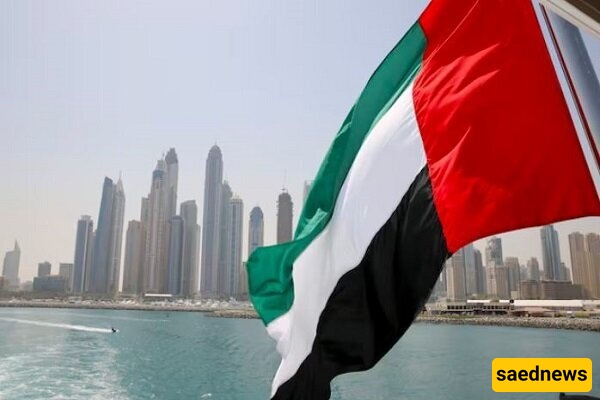
What the plan actually achieved was providing Iran with a pretext to resume attacks on its neighbors. On May 4 (14 Ordibehesht 1405), Iran launched at least 19 missiles and drones toward the UAE — the first such attacks since the April 8 ceasefire (19 Farvardin 1405). The drones caused a fire at the Fujairah oil terminal, the UAE’s only major port outside the Persian Gulf and therefore its only export route in wartime conditions. Emiratis were understandably angry, and many Gulf officials expected a U.S. retaliation. However, the U.S. downplayed the attacks. Trump quickly announced the suspension of the “Freedom Project,” apparently at Pakistan’s request, which is mediating between the U.S. and Iran.
The U.S. president spoke of a “major breakthrough” toward ending the war. This claim is almost certainly exaggerated. At best, the two sides may be approaching a general framework for future negotiations. It is planned that over a 30-day period, the blockade of Hormuz will be gradually lifted, while talks continue on Iran’s nuclear program, Tehran’s request for sanctions relief, and other issues. However, there is no guarantee of success, and fears of failure and renewed war could continue to disrupt oil, gas, and other trade flows.
Many Gulf observers noted that Iran specifically targeted the UAE in its recent attacks, whereas in earlier stages of the war it had targeted all six members of the Gulf Cooperation Council. Iran likely had two motives: treating the UAE as an Israeli proxy and deepening divisions between it and its neighbors, especially Saudi Arabia.
The UAE established official diplomatic relations with Israel in 2020 under the “Abraham Accords,” becoming the first of four Arab states to do so. This was part of a broader effort by the UAE to pursue an independent foreign policy from the GCC dominated by Saudi Arabia. Although other Gulf states maintain unofficial ties with Israel, only Bahrain and the UAE joined these accords. Israel’s devastating campaign in Gaza since October 2023 has made it difficult for Arab governments to openly maintain such relations. The UAE is the only country that has openly strengthened this alliance.
Even before the war began on February 28 (9 Esfand 1404), the UAE had deployed Israeli missile defense systems. With the start of Iranian missile and drone flights, Israel sent an Iron Dome system along with Israeli forces, sensors, and advanced laser systems—some still in prototype stages—to strengthen the UAE’s defenses. One Israeli defense official described the level of cooperation as “unprecedented.” This relationship extends beyond defense. The UAE has in recent years signed a series of bilateral economic partnership agreements, first with India and then with Israel.
The two sides share similar geopolitical views. With the weakening of Iran’s proxy network, both are concerned that a new Turkey-led axis could expand its influence in the region, especially in Iraq, Lebanon, and Syria, previously within Iran’s sphere of influence. An Israeli diplomat based in the Gulf said: “The UAE has made a strategic choice. From their perspective, Israel is part of both their security and economic-diplomatic planning.”
Meanwhile, relations between the UAE and Saudi Arabia have deteriorated. The UAE’s decision to leave OPEC on May 1 (Ordibehesht) was partly driven by commercial considerations; it seeks to produce far more oil than its assigned quota. However, after months of bitter disagreements over foreign policy in Sudan, Yemen, and elsewhere, the move was widely interpreted as a jab at Saudi Arabia.
Some commentators close to the UAE government have even spoken of leaving the GCC and the Arab League. Leaving the Arab League would be mostly symbolic, as it is largely ineffective. However, leaving the GCC would be more significant, as the bloc allows free movement of goods and people. Even if the council remains, the Saudi-UAE split has effectively paralyzed it politically.
From Iran’s perspective, all these developments present exploitable divisions. Saudi Arabia, once eager for Trump to continue the war, has adopted a more cautious stance after the ceasefire. Worried about further attacks on its oil fields (or worse), the Saudis are now urging the U.S. not to resume the war, while also being concerned about the terms of any U.S.-Iran deal. Iran’s focus on the UAE creates tension between Abu Dhabi’s desire for retaliation and Riyadh’s preference for calm.
This tension may ease if the U.S. and Iran reach an initial understanding. However, more than two months after the war began, lasting peace still appears out of reach.