SAEDNEWS: These types of vessels are made in Isfahan, similar to Kashan and Qom. Most of them are produced in the city of Qom and are sold to pilgrims who travel there to visit Hazrat Masoumeh.
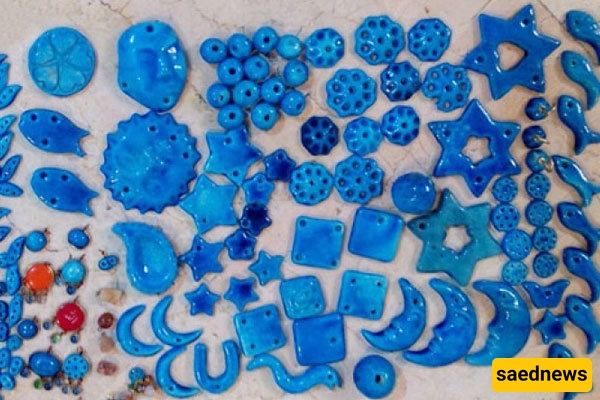
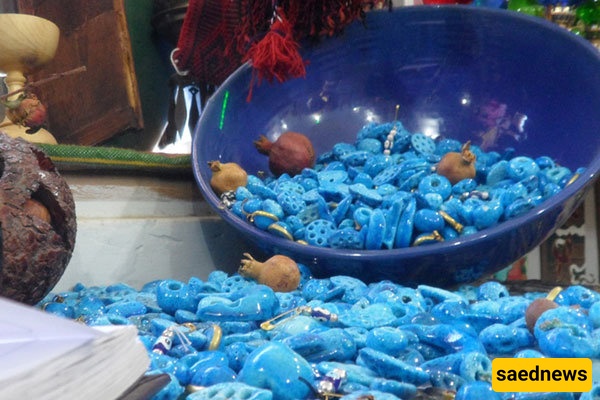
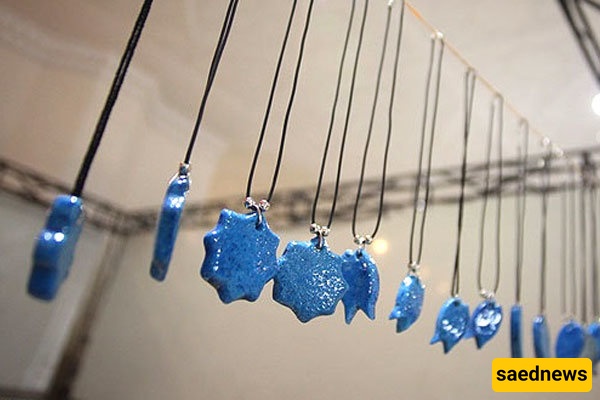
According to Saednews, The art of making vessels using this method is still practiced today, and those who carry it out are called antique makers or stoneware makers (sangineh-saz). These types of vessels are produced in cities such as Isfahan, Kashan, and Qom, with most being made in Qom. They are sold to pilgrims who travel to the city to visit the shrine of Hazrat Masoumeh. It has become a tradition for pilgrims to buy a vase or bowl from Qom and take it with them. It should also be noted that clay turquoise beads (khormohreh) are also purchased for good luck.
The clay used in this type of pottery consists of 70–80% white mountain stone or flint, 10–20% very fine soil known as gol-e boteh or white clay (so soft that modern potters call it soft clay), and 10% glass paste with the same composition used in glaze making. The best type of clay is Chah Risseh, obtained from villages about 80 kilometers from Isfahan, where there are abundant mines. After digging, water is added to the soil to create a slurry, which is then filtered through cloth to remove coarse particles. Flint is used to prepare the glass paste in the same way as described in glaze production.
All the materials are carefully weighed and mixed, then kneaded by foot. The resulting clay does not have the elasticity of ordinary clay, but it can still be shaped on a potter’s wheel. Ordinary potters usually form their vessels in a single piece, while stoneware makers find it easier to create them in two or even three separate sections. Each section is shaped individually on the wheel and left to dry.
When sufficiently dry, the edges are moistened and joined together using extra clay. After further drying, the joints are smoothed with a knife. To create a uniform and dense surface, the entire vessel is dipped into a liquid slip coating process known as layering, or alternatively, the slip is poured over it.
This coating consists of 90% very fine white flint, 7–9% fine clay, and 1% tragacanth gum (katira). For decoration, the main design outlines are drawn with a brush using pigments made of chromite, manganese, and magnesium silicate, obtained from mines near Natanz. This technique is known as black line drawing.
After the outlines are completed, colored enamel glazes are applied between the black lines. Finally, the entire vessel is dipped into an alkaline glaze composed of 90% glass essence, 9% crushed glass, and 1% tragacanth gum. Once dried, the vessel is fired in a tube kiln. The melting of the glaze can be observed through a small opening at the top of the kiln, and afterward, the kiln is gradually cooled over three days to prevent the glaze from cracking. With proper care, the glaze adheres well to the surface of the vessel, mainly due to the presence of glass essence in both the body and the glaze.