SAEDNEWS: In an unprecedented response, Kazem Gharibabadi sharply criticized Rafael Grossi, describing him as a tool of the United States. He argued that while Iran's nuclear facilities are under attack, the International Atomic Energy Agency has no standing to make demands of Tehran.
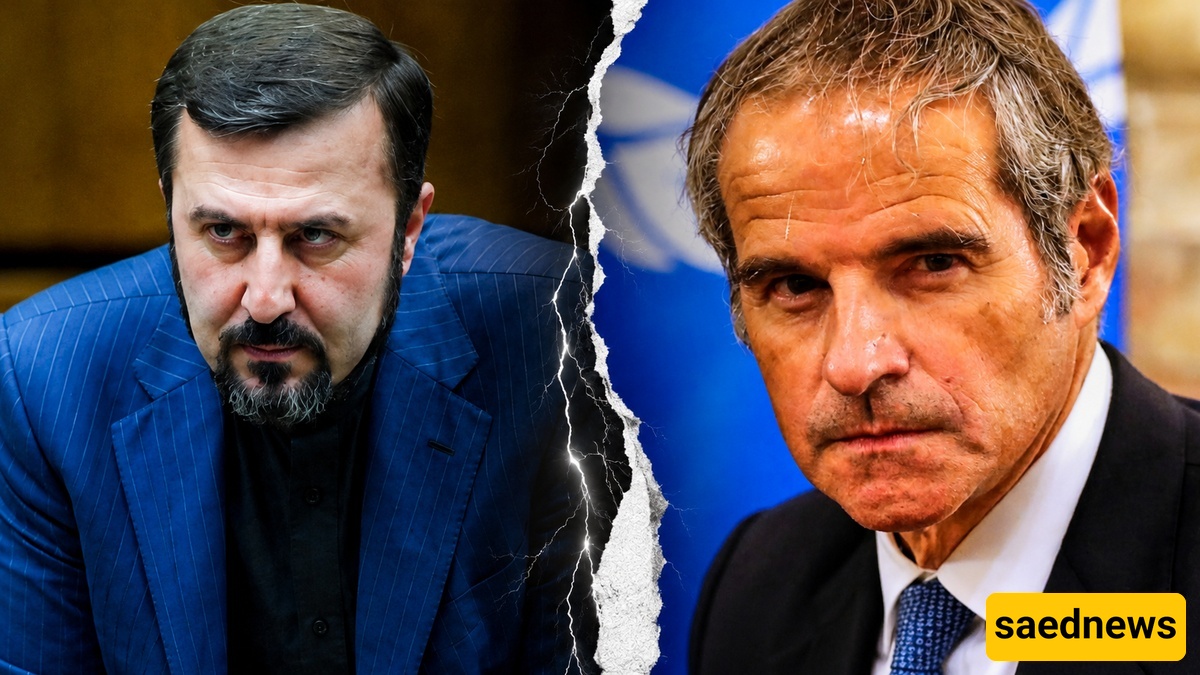
According to Saed News political desk, a new diplomatic dispute has emerged between Iran and the International Atomic Energy Agency (IAEA). The controversy began after the head of the agency recently claimed that the IAEA's access to Iran's nuclear program had been reduced, limiting its ability to conduct effective monitoring. In response, Iran's Deputy Foreign Minister, Kazem Gharibabadi, strongly rejected the criticism.
Iran's argument is straightforward: the United States and Israel have carried out military attacks against Iranian nuclear facilities, damaging monitoring equipment and restricting inspectors' access. Tehran argues that, instead of condemning such attacks, IAEA Director General Rafael Grossi has focused his criticism on Iran. Iranian officials contend that it is unreasonable to expect normal monitoring conditions after military strikes have disrupted the facilities in question.
Another key issue in the dispute concerns Iran's 60-percent uranium enrichment activities. Gharibabadi dismissed the agency's concerns, stating that no international law sets a specific limit on enrichment levels and emphasizing that Iran's nuclear program remains peaceful. He also accused Grossi of politicizing technical reports, alleging that the IAEA chief is seeking political support from Western countries as part of broader international ambitions. Tehran maintains that pressure, threats, and resolutions will not resolve the current disagreements.
According to Saad News' analysis, the dynamics of the nuclear dispute have shifted significantly. Iran is no longer willing to remain solely in a defensive position, responding to what it describes as politically motivated reports. Recent statements suggest that Tehran has decided to challenge the neutrality of the agency itself, arguing that the IAEA's silence regarding military attacks on nuclear facilities undermines its claim to impartiality. Iranian officials assert that the reduction in monitoring capabilities is the result of external actions rather than decisions made by Tehran.
Looking ahead, Iranian authorities say their message is clear: they will not accept what they view as one-sided expectations or pressure. Tehran insists that meaningful cooperation requires recognition of its legal rights and condemnation of attacks on its facilities. Iranian officials argue that international organizations should not be used as political tools and maintain that genuine progress can only be achieved through fair and balanced negotiations rather than through resolutions and pressure campaigns.