SAEDNEWS: Basketball has changed considerably since James Naismith invented the sport in 1891, including the color of the ball. The familiar bright orange basketball was introduced to make the fast-moving game easier for players and spectators to see.
According to SaedNews: Basketball began in Springfield, Massachusetts, in 1891, when YMCA physical education instructor James Naismith created a new indoor game. He was looking for a team sport that could be played during autumn and winter and would offer some of the enjoyment of football without being as rough or dangerous. The result eventually became one of the most popular team sports in the United States and around the world, with almost half a billion people playing it globally.
The equipment, however, looked very different in the beginning. Naismith’s original baskets were actual peach baskets attached high on poles. The first ball was not specially designed for basketball either. It was a dark brown, laced leather soccer ball that had been repurposed for the new game.
A purpose-built basketball arrived two years later. It was somewhat larger and lighter than a soccer ball, but it retained several of the earlier ball’s shortcomings. It was made from dark leather and held together with fabric laces. Those laces could produce an irregular, unpredictable bounce. At the same time, the lack of consistent rules and equipment standards across the United States meant that balls used at different locations and by different teams could vary in size.
As basketball developed, greater consistency in equipment became necessary. The major change came in the late 1940s, when rubber, leather, and synthetic molded balls began replacing the older laced versions. By 1949, the basketball had a standardized size and weight.
Another change followed in the next decade, and this one affected the ball’s appearance. Chicago physical education teacher Paul “Tony” Hinkle became closely associated with the idea. Hinkle had been a successful player and coach in several sports and had taken charge of Butler University’s basketball program in Indianapolis in 1926. By the 1950s, he was part of the university’s coaching staff.
Hinkle recognized that the dark brown basketballs then in use could be difficult to follow. The molded rubber balls had replaced leather soccer balls, but their color had remained a relatively dull dark brown. On a crowded court, the ball could be hard to distinguish among the players, while spectators in the stands could also struggle to see it.
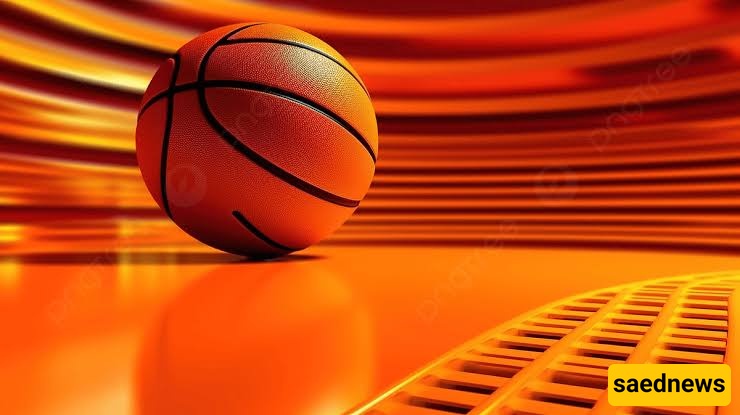
Hinkle’s solution was straightforward: make the ball bright orange. The stronger color was intended to improve visibility during the rapid action of a game, helping both players on the court and spectators watching from the stands.
The change proved successful, and the orange basketball soon became the standard used by teams, venues, and competitions in the United States and elsewhere. Some leagues, franchises, and individual competitions have experimented with other colors and patterns over the years, but orange remains the familiar standard.
So the basketball’s distinctive color is largely the result of a practical problem rather than decoration. As the sport became faster and its equipment evolved, making the ball easier to see became an important improvement.