Saed News: Female genital mutilation is still practiced in some countries around the world, and each time it results in painful suffering for girls.
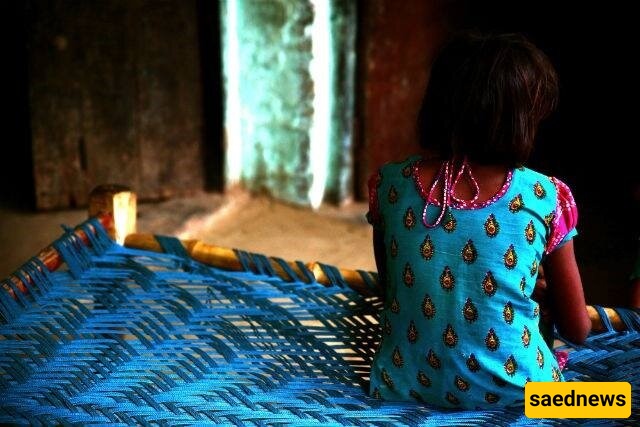
According to SAEDNEWS, everyone knows that boys are circumcised at a young age. However, far fewer people have heard of the circumcision of girls, and many find it shocking. In this procedure, parts of the girls’ genitalia are cut, and the upper part of the genital area is then stitched.
Shilan, a shy 7-year-old Kurdish girl, went to her neighbor’s house looking for the party her mother had promised her. But there was no celebration, no sweets, and no guests—only pain, fear, and a bitter memory that would haunt her forever.
For Kurdish girls, especially in northern Iraq, an ancient and long-standing pain—one that many people believe is linked to religious beliefs—has become a childhood nightmare.
Female circumcision is a practice that is widespread in some African and Southeast Asian countries, but in northern Iraq? No one knows exactly how this tradition found its way to this part of the world. What Kurdish women in Iraq experience resembles a nightmare more than a symbol of purity or virtue.
Shilan was only seven years old when she was circumcised in a closed room with a razor blade. She underwent the procedure while her screams echoed throughout the neighborhood and agony filled her innocent face.
In northern Iraq, around 60 percent of women are circumcised, and the parliament has shown little enthusiasm for ending this tradition. Interestingly, Kurdish leaders in Iraq have also shown little practical opposition to the practice.
Shilan Anwar Omar, the seven-year-old Kurdish girl, went to her neighbor’s house smiling and excited, expecting the party her mother had promised. When she arrived, there were no guests and no celebration. The confused girl became frightened when her mother sternly ordered her to remove her underwear.
Shilan began to cry. Her body trembled with fear. Her mother forced her onto the floor and, with the help of other women, held her legs apart. Shilan struggled desperately to close them.
A woman responsible for performing the circumcision appeared before her holding a stainless-steel razor blade. She raised the blade and loudly declared, “I do this for God!” Then Shilan’s screams were heard throughout the neighborhood.
After it was over, as Shilan cried in her mother’s arms while being carried home, her mother smiled with satisfaction. Shilan’s mother does not truly know why Kurdish girls are circumcised; she believes it is God’s command and that it must be obeyed.
A 91-year-old Kurdish woman from Iraq said: “I would not eat food prepared by a woman who has not been circumcised.”
Pakshan Zangana, head of the Women’s Committee of the Kurdistan Parliament, has spoken of efforts to ban female circumcision in northern Iraq and to impose prison sentences of up to ten years on those responsible. However, such punishment seems more like a dream than a reality, as the proposed legislation has remained stalled for a year. Some Kurdish leaders believe that parliament and government officials should not concern themselves with such “minor” issues.
Girls like Shilan say: “If they do not want to eat food prepared by me, then let them not eat it. I only wish I had never endured all that pain.”
One intellectual reportedly said: “We do not know why we do this, but we will never stop because Islam and our elders consider it necessary.”
Kurdistan is the only widely recognized region in Iraq—and one of the few places in the world—where female circumcision is still widely practiced. More than 60 percent of women in Kurdish regions of northern Iraq have undergone the procedure. According to one study conducted in a Kurdish area, at least 95 percent of women had been circumcised. Human rights groups consider the practice a destruction of women’s dignity and well-being.
This practice constitutes violence against women. Unfortunately, those who perform it often attribute it to Islam, although many scholars reject that claim. The practice is not common among Shiite Muslims worldwide, and a large proportion of Sunni Muslims do not practice it either. The weakness of this claim becomes clear when it is compared with male circumcision, whose health benefits and role in preventing certain infections have been documented.
What is important is that this practice is not a form of spiritual purification for women. Rather, it is promoted by strict patriarchal societies. The real question is: when will Shilan’s parents understand that she was not spiritually purified, but psychologically traumatized?