Saed News: Most people think a thick and expensive mattress means better sleep and a healthier back. However, Japanese people sleeping on 5 cm futons on the floor experience 7% less back pain. Research in The Lancet confirms that medium firmness—not luxurious softness—is the key to reducing chronic back pain.
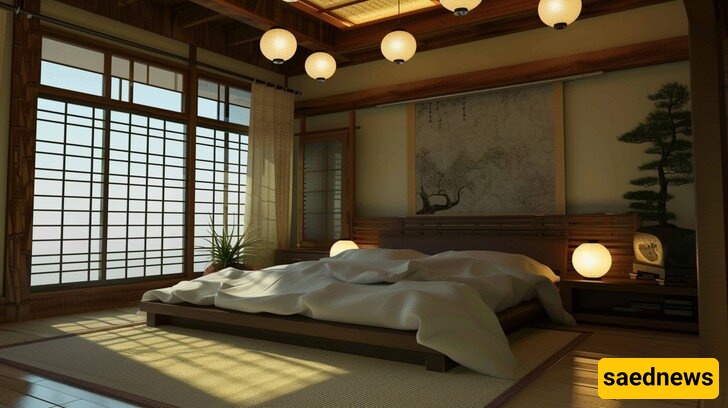
According to SAEDNEWS, you have probably often heard that for back pain you should consider buying an expensive orthopedic mattress. However, in traditional Japanese culture, millions of people sleep on thin mattresses called “futons” placed directly on the floor.
Interestingly, statistics and scientific research show that this simple lifestyle not only does not increase back pain, but in many cases reduces chronic pain.
In this article, we take a look at findings that challenge our belief about the “ideal mattress.”
In Japan, sleeping on futons about 5 cm thick is still a common habit in millions of households. Contrary to the common belief that thicker and softer mattresses mean better sleep quality, multiple studies have shown that firmer sleeping surfaces (not overly hard) are associated with less back pain.
In a well-known study published in The Lancet, people suffering from chronic back pain who slept on medium-firm mattresses experienced less pain and disability compared to those sleeping on very firm mattresses.
Futons naturally keep the body more aligned, prevent excessive sinking of the hips and shoulders, and improve sleeping posture.
Researchers emphasize that very soft mattresses gradually place uneven pressure on the spine and joints. In contrast, a relatively firm but flexible surface helps distribute body weight evenly.
Sleep comfort is highly individual. Thin futons are not recommended for everyone, especially elderly people or those with specific joint conditions.
However, the key point is that good sleep is not necessarily dependent on luxurious and expensive mattresses. It may be time to choose firmness based on your body’s needs, rather than simply selecting the thickest or most expensive option on the market.
The traditional Japanese sleeping style reminds us that simplicity and adherence to scientific principles (such as maintaining natural spinal alignment) can sometimes be more effective than costly solutions.
If you suffer from back pain, a medium-firm mattress—not too soft, not too hard—may be the solution that Japanese people have used for centuries.