SAEDNEWS: Kerman Province is one of Iran’s ancient and culturally rich regions. When visiting Kerman, be sure to explore and admire the province’s popular traditional handicrafts.
According to Saednews, Kerman is one of the historic cities in central Iran and is home to numerous fascinating attractions. It is considered one of the country’s oldest cities, offering a remarkable combination of beautiful climatic regions and desert landscapes. The people of Kerman are known for their warmth and hospitality and have a close connection with visitors.
One of the main reasons travelers are attracted to the beautiful city of Kerman is its wide variety of traditional handicrafts. The city is home to the historic Ganjali Khan Bazaar, which has long served as a center for selling Kerman’s souvenirs and handicrafts. Visitors will find that the city’s handicrafts and souvenirs suit a wide range of tastes, making it easy to find gifts for themselves, friends, and family.
Among the most notable handicrafts of Kerman are Persian carpets, Afshari rugs, kilims, shawls, Pateh embroidery, metalwork, woodcraft, traditional textiles, and various woven products.
Kerman carpets are among the most important and authentic handicrafts of the region. They are produced in a variety of designs, including Afshan, Tree, Shah Abbasi, Quranic Frame, Hunting Ground, Toranj, European-inspired, and Khousheh patterns. One of the reasons for the reputation of Kerman carpets is the use of cotton yarn and high-quality wool.
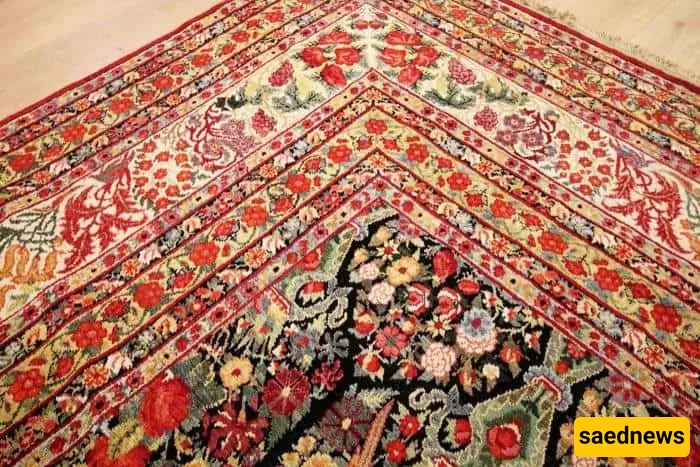
Afshari rugs are among the best-known traditional rugs of Kerman Province, particularly associated with the Sirjan region. Their name comes from the Afshari tribal weavers who migrated to Kerman and continued their traditional weaving practices there. The colors and patterns can vary from one tribe to another, giving these rugs a distinctive character and preserving their tribal heritage.
Buying a Kerman kilim is another option for travelers looking for a traditional souvenir. One of the most famous types is the needle-woven kilim, known locally as Shiriki-Pich. Its name is associated with tribal weavers. Although its appearance can resemble a carpet, producing it requires considerable experience, patience, precision, time, and artistic skill.
Before carpet weaving became widespread in Kerman, shawl weaving was one of the region’s most common traditional arts. Many traditional Kerman carpet designs were inspired by patterns originally used on these shawls.
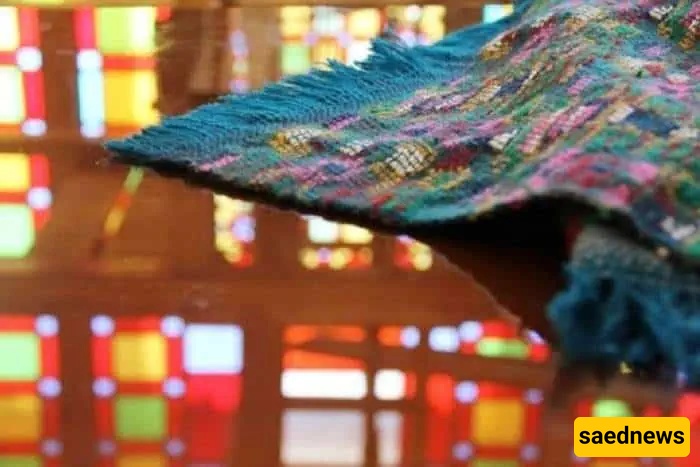
Traditional Kerman shawls are approximately three meters long and one-quarter of that width. They are known in different varieties based on their colors and patterns, including deer-horn, crimson, floral, ceremonial, lapis lazuli, verdigris, and Termeh-inspired designs.
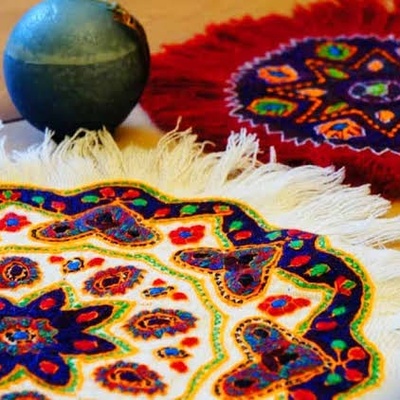
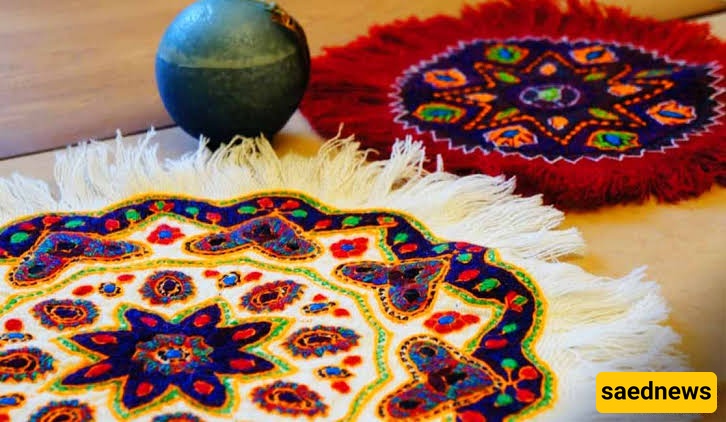
Pateh embroidery holds a special place among Kerman’s traditional arts and is one of the province’s most famous handicrafts. It is a type of needlework created by stitching colorful wool, silk, or other threads onto fabric. The craft has traditionally been practiced mainly by skilled women and girls in Kerman.
One of its most characteristic motifs is the Tree of Life, which appears in several traditional styles, including Jaqeh, Termeh, Miri, and almond patterns.
Although Isfahan is particularly famous for metal engraving, Kerman is also traditionally associated with this art. Engraved metal objects are therefore popular souvenirs for visitors exploring the city and its traditional markets.
Jajim is a traditional flat-woven textile used as a floor covering. It is made from relatively thick fabric and is thinner than Palas. Unlike carpets, Jajim has no pile.
Its warp and weft are woven from fine colored cotton or wool yarns, and sometimes a combination of both. Jajim is produced in various colors and patterns in many parts of Iran.
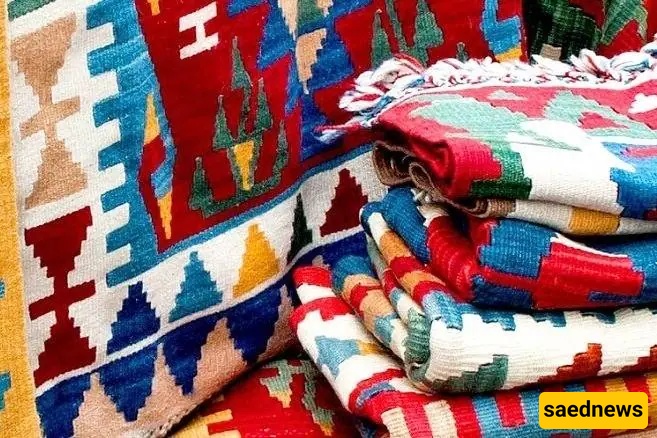
Although Yazd is widely associated with Termeh weaving, historical sources also connect the origins of Iranian Termeh production with Kerman. These luxurious textiles are made from natural fibers and feature distinctive designs such as the Boteh-Jegheh motif and Shah Abbasi flowers.
Termeh is a popular and attractive traditional product that can be found throughout Kerman and makes an elegant souvenir for visitors.
Kerman is known for producing a variety of traditional woven products made from natural plant materials. Local artisans use dried branches and other natural fibers to create items such as prayer mats, doormats, and decorative shades.
Gabbeh embroidery is considered one of Kerman Province’s distinctive traditional crafts and is associated with the heritage of Zoroastrian communities in the region. Colorful silk threads are used to embroider motifs such as fish, carnations, peacocks, and hoopoes onto fabric.
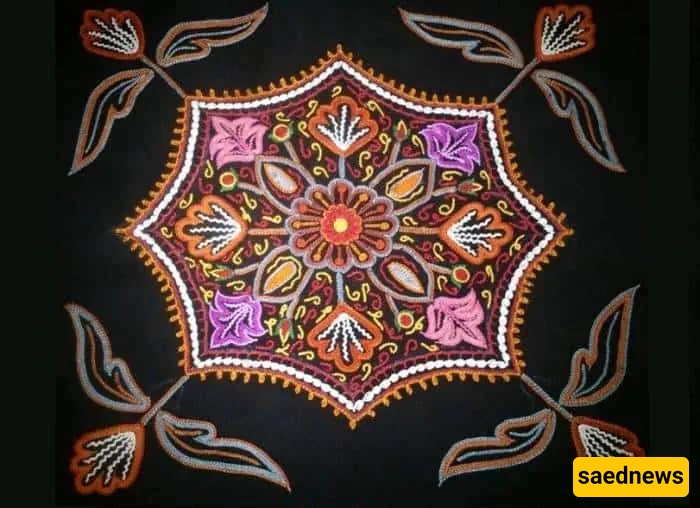
Ariz is a thick woolen fabric traditionally used as the base material for Pateh embroidery. In the past, it was also used for making garments such as coats and jackets. Today, its use has declined considerably compared with earlier periods, including in Pateh embroidery.
Ajideh, also known as cotton quilting or layered embroidery, is one of Kerman’s traditional textile arts. The technique has a long history in Iran and is traditionally associated with layered and padded textiles.
In Kerman, examples of this craft can be found in items such as table coverings, prayer rugs, bedspreads, and traditional caps.
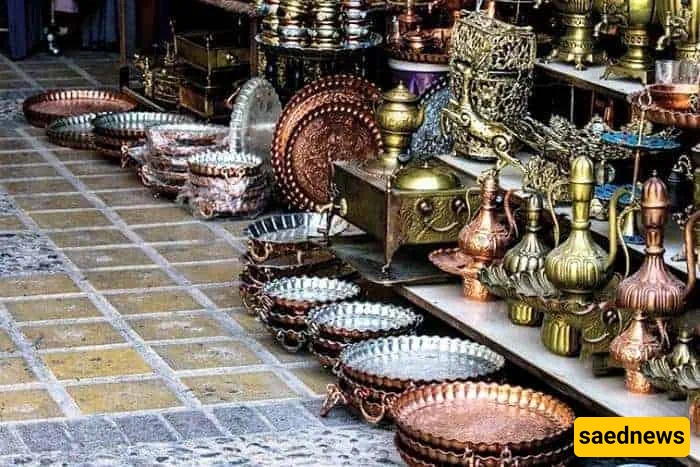
A visit to Kerman’s traditional markets reveals the long-standing importance of copper craftsmanship in the city. Copperworking has been practiced in Kerman for generations, and skilled artisans continue to produce items such as pots, bowls, serving dishes, trays, decorative panels, and other household objects.
Khurjin weaving is a traditional Iranian craft and Kerman is one of the country’s important centers for producing these saddle bags. Artisans use colored wool, cotton yarn, and sometimes goat hair to create them.
These beautifully decorated traditional bags are valued as examples of Iranian folk craftsmanship and are popular souvenirs.
Producing sugar cutters, tongs, and knives is another long-established craft in Kerman. The city has developed a particular reputation for these metalworking traditions.
Skilled Kerman knife makers traditionally produce tools such as cleavers and sickles, as well as decorative components used with ceremonial standards during religious processions.
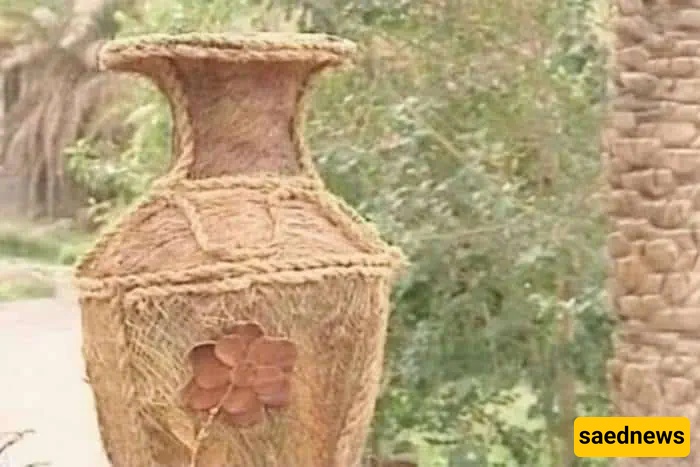
Sis, or palm fiber, is a natural fiber that grows around date palms. It is used to make a variety of traditional products, including baskets, doormats, and other woven objects.
Palm-fiber weaving is particularly common in Kerman, where visitors can find a wide selection of products made using this traditional material.
Kerman is also a destination for those interested in traditional music and musical instruments. Local craftsmen produce a variety of wooden instruments known for their craftsmanship and appearance.
Visitors interested in playing traditional instruments can explore the city’s specialized markets and workshops to find locally made instruments.
Khos embroidery is an old Iranian textile art associated with Kerman. The technique involves creating decorative patterns on fabric using silver- and gold-colored fibers.
A distinctive feature of this craft is that artisans traditionally create the designs directly during the embroidery process rather than first drawing the patterns onto the fabric.
Although wood marquetry does not have as long a history in Kerman as some of the region’s other crafts, it has gained a special place among the city’s contemporary handicrafts. The development of this craft has been supported by the incorporation of materials such as shell and traditional inlay elements.
Kerman artisans create delicate and intricate decorative objects using these techniques, which can be found in the city’s historic markets.
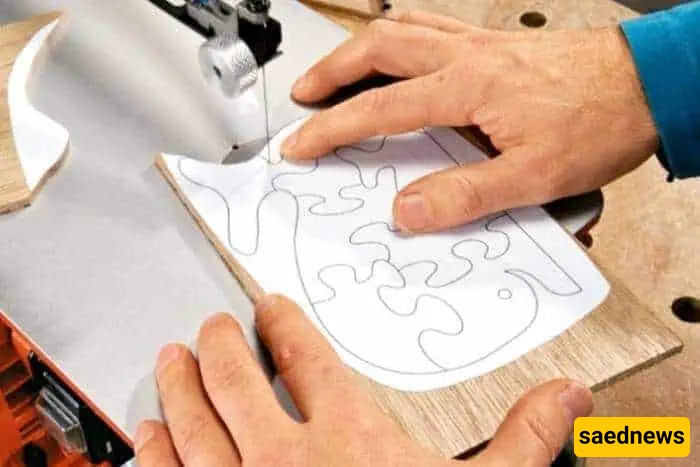
For visitors interested in traditional wooden crafts, Kerman’s latticework is another notable option. Artisans create intricate patterns by cutting openings and decorative shapes into wooden objects, giving them an elegant and distinctive appearance.
These handmade wooden pieces are available in the traditional markets of Kerman and can make distinctive souvenirs or gifts.