SAEDNEWS: Across Europe, some of the most cinematic landscapes are not found in major cities but in tiny villages shaped by mountains, canals, medieval architecture and centuries of history.
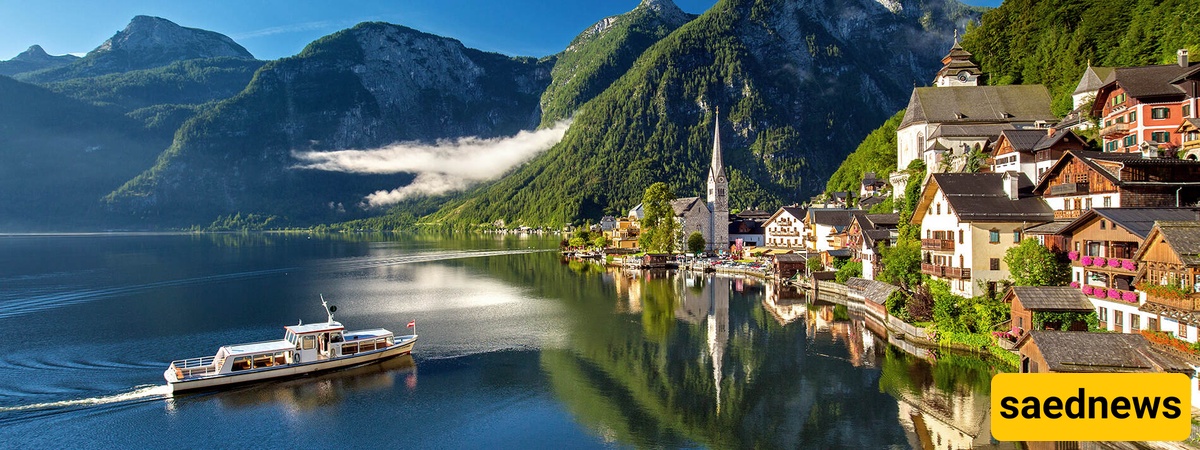
According to SaedNews,There are places in Europe where the first impression is almost impossible to believe. A village appears to rise directly from a lake, another seems to float above a valley, while elsewhere narrow medieval lanes, stone cottages and ancient walls create the illusion that a film crew has simply forgotten to pack up the set.
But these places are not studio constructions.
They are living European communities whose extraordinary appearances developed from geography, history and architecture. In some cases, filmmakers really have used them as locations. In others, their cinematic quality comes from something even more interesting: they have preserved an atmosphere that modern cities largely lost.
Here are six tiny European villages and small historic towns that demonstrate just how dramatic a real landscape can be.
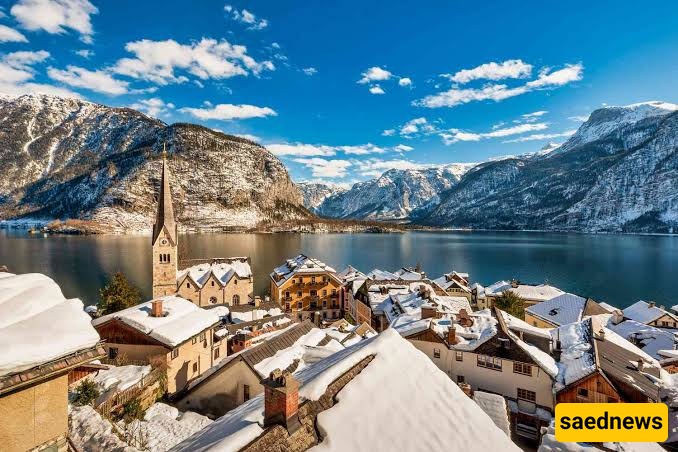
Few European settlements have a more instantly recognizable setting than Hallstatt.
The Austrian village sits between the steep Dachstein mountains and the shore of Lake Hallstatt, with closely packed historic buildings appearing to climb the narrow strip of land between water and rock. The result is an almost perfectly composed landscape: mountains behind, water in front and a compact historic settlement in the middle.
The scenery is not simply beautiful by modern standards. It has been recognized as part of the Hallstatt-Dachstein/Salzkammergut Cultural Landscape, which UNESCO inscribed on the World Heritage List in 1997. The region's history is deeply connected to salt extraction, with salt exploitation dating back to the 2nd millennium BC.
That history helps explain why Hallstatt looks the way it does. The settlement grew in an environment where usable land was limited by mountains and water, producing a dense architectural form rather than the sprawling development familiar in modern cities.
UNESCO also notes that the landscape's distinctive character reflects thousands of years of interaction between human communities and the Alpine environment.
So the village's cinematic quality is not a modern decorative trick. It is the visible result of geography and a very long human history.
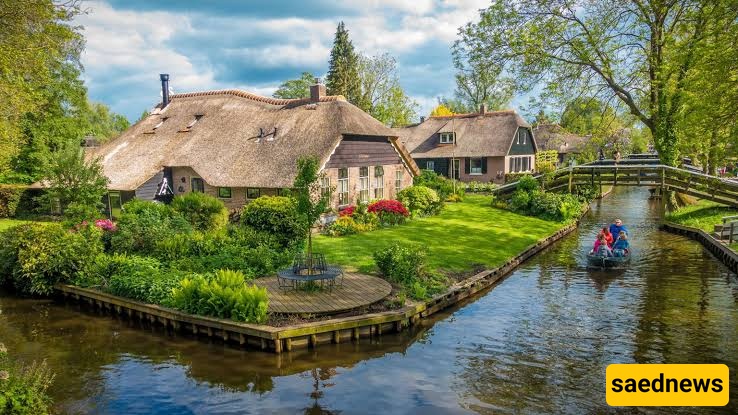
If Hallstatt looks like a fantasy painting, Giethoorn looks as though someone designed a village around a series of waterways.
This small Dutch settlement is famous for its canals, bridges and thatched-roof houses. In the historic central area, roads do not dominate the landscape; people move around on foot, by bicycle or by boat. National Geographic describes Giethoorn as a village built on small peat islands, with canals and bridges connecting the settlement.
The absence of ordinary road traffic changes the entire visual experience.
Instead of seeing cars, broad intersections and parking areas, visitors encounter narrow waterways, gardens, wooden bridges and houses reflected in the canals. The result is unusually quiet and visually coherent.
The village's cinematic character also has a genuine connection to filmmaking. The Dutch film Fanfare (1958), directed by Bert Haanstra, was shot in the Giethoorn area, according to a regional canoe-route reference describing the film and the village's earlier roadless character.
Giethoorn therefore manages to satisfy two different ideas of a movie set: it looks carefully designed for the camera, and parts of its history have actually appeared on camera.
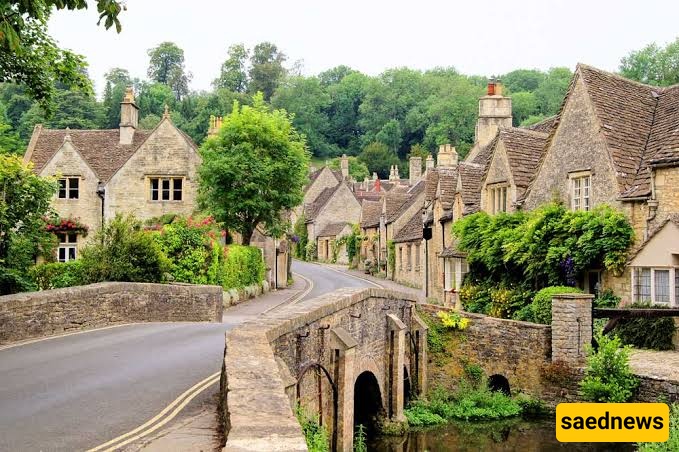
In Wiltshire, England, Castle Combe creates a completely different cinematic mood.
There are no Alpine peaks or Venetian-style canals here. Instead, the village is defined by honey-colored Cotswold stone cottages, a wooded valley and the Bybrook River.
What makes Castle Combe particularly striking is how little its historic core has changed. The parish's own information states that no new houses have been built in the historic area since about 1600.
That preservation has made the village a natural location for period-style filmmaking. Visit Wiltshire explicitly warns visitors that Castle Combe is a real living village, not a film set, while noting that it has appeared in productions including Stardust and War Horse.
This distinction matters.
The village does not look old because a production designer recreated an old village. It looks old because the historic landscape itself survived.
That is also why the experience can feel strangely familiar. Even if visitors have never been there, the combination of stone cottages, narrow lanes, greenery and traditional buildings resembles the visual language of countless fantasy and historical films.
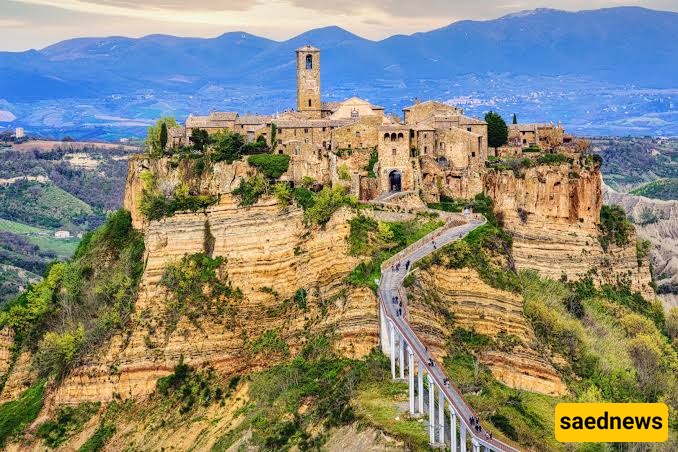
Some places look cinematic because they are beautiful. Civita di Bagnoregio looks cinematic because its entire physical setting is extraordinary.
The tiny Italian settlement sits on a hill surrounded by the eroded clay formations of the Valle dei Calanchi. Access to the historic village is by a pedestrian bridge, giving visitors the striking impression of approaching a settlement suspended above the landscape.
Italy's official tourism site describes Civita as a village on a fragile tuff hill affected by continuing erosion. It also traces its origins back more than 2,500 years to the Etruscans.
The combination of medieval architecture, steep ravines and the narrow approach creates a setting that seems almost too dramatic to be ordinary.
And in this case, the connection with cinema is extensive.
The Lazio tourism authority lists Civita as a location for several film and television productions, including The Two Colonels, Pinocchio, Questione di karma and Puoi baciare lo sposo. A regional film archive also documents its use in works by filmmakers including Giuseppe Tornatore and Alice Rohrwacher.
Civita has even entered the world of animation. Italy's official tourism portal notes the village's influence on Japanese animator Hayao Miyazaki and the setting of Laputa: Castle in the Sky.
Here, the movie-set comparison is almost unavoidable: the village's geography already supplies the drama that filmmakers normally have to construct.
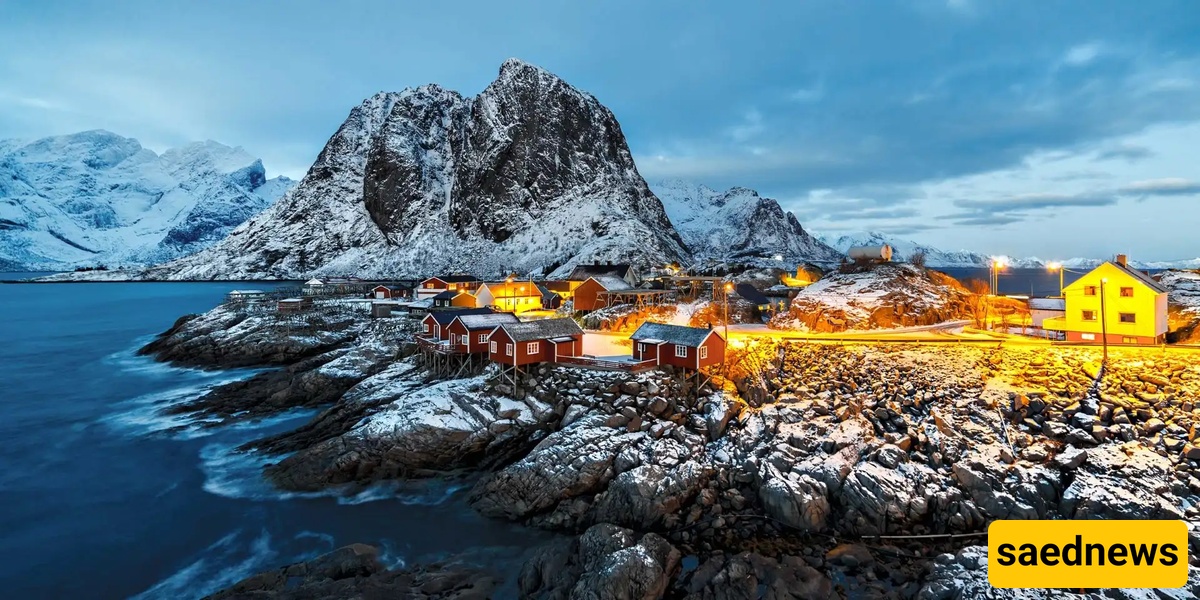
Far north in Norway's Lofoten Islands, Reine offers a different kind of cinematic spectacle.
Rather than medieval stone buildings, the village is characterized by traditional fishing culture, water and sharply rising mountains. Reine is spread across a chain of islands connected by bridges and winding roads, with the Vestfjord and Reinefjord surrounding the settlement. The official Lofoten tourism organization describes it as one of Norway's most photographed destinations.
The village is home to roughly 300 people, while fishing remains an important part of local life.
Its visual power comes from scale.
Small buildings appear almost miniature beside enormous mountains, while the surrounding fjords create a dramatic frame. The effect resembles the establishing shot of an adventure film: a tiny human settlement surrounded by a landscape that seems vastly larger than itself.
Unlike some European villages whose charm comes primarily from architectural preservation, Reine's appeal is largely the relationship between settlement and nature.
The mountains do most of the cinematic work.
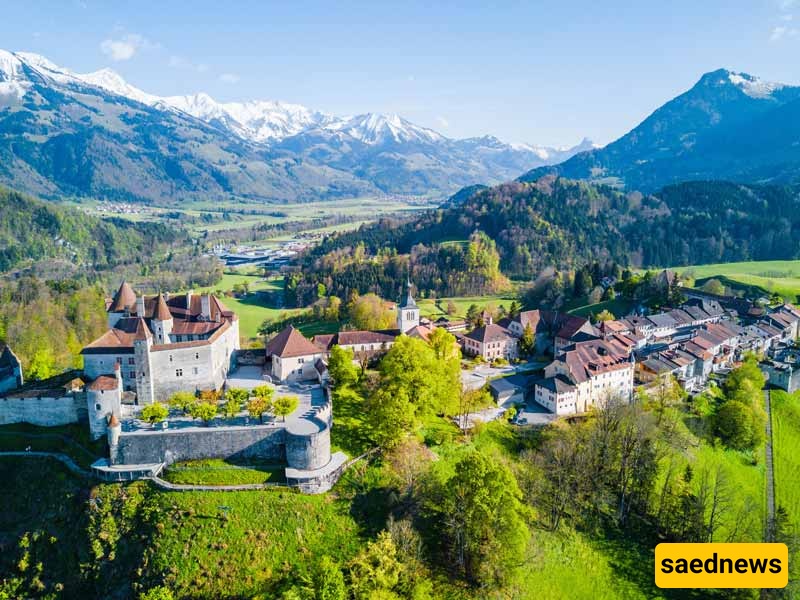
In Switzerland's Fribourg region, Gruyères looks like a medieval story brought to life.
The village is associated with a castle that has stood on the hill above the Sarine River since the 13th century. Switzerland Tourism describes Gruyères as a medieval village whose castle, museums and surrounding green hills create a strong sense of stepping back in time.
Inside the castle, visitors encounter centuries of architecture and art, including medieval stained glass, historic rooms and the Knights' Hall.
But the most cinematic quality comes from the composition of the whole settlement.
The village sits below the castle, with historic rooftops, mountain scenery and green pastures creating layers within the landscape. It is easy to imagine the setting behind a historical drama without having to alter much of what already exists.
That is the secret shared by many of Europe's most photogenic small settlements: their visual identity is not dependent on a single landmark. Architecture, terrain and history reinforce one another.
There is a simple reason these places feel cinematic: movies often rely on visual environments that communicate a story before a character says a word.
A castle suggests power or history.
A misty mountain village suggests isolation.
A canal lined with old houses suggests another pace of life.
A medieval stone street can make a modern viewer feel as if they have entered another century.
The six places above naturally contain these visual signals.
But there is another factor: scale.
A major European city contains countless competing elements. A tiny village has fewer buildings, fewer roads and fewer visual distractions. The eye can absorb the entire scene almost at once. That makes the relationship between architecture and landscape much more obvious.
Preservation also matters.
Castle Combe's historic core changed remarkably little for centuries. Hallstatt's settlement remains tightly connected to its Alpine geography. Civita's isolation is part of its identity. Giethoorn's canals still shape movement through the village. Gruyères retains its medieval relationship with the castle above it, while Reine remains visually dominated by the mountains and sea.
In other words, these places do not merely contain beautiful buildings.
They preserve relationships between people, buildings and landscapes.
That may be what makes them feel more convincing than a movie set.
There is also a danger in seeing these places only as beautiful backgrounds.
They are not frozen photographs. They are living communities dealing with tourism, preservation and the practical realities of everyday life.
Visit Wiltshire, for example, specifically describes Castle Combe as a "tiny living village" and warns that increasing visitor numbers can put pressure on residents and the village's narrow streets. It encourages travelers to visit responsibly and avoid treating private homes as photographic props.
The same broader issue applies to picturesque destinations across Europe. The more a village becomes famous for looking unreal, the greater the temptation to treat it as a backdrop rather than as someone's home.
That is perhaps the most interesting thing about these places.
They look like movie sets because history, geography and preservation created extraordinary visual environments without the need for a studio.
But unlike a movie set, they do not disappear when the cameras stop rolling.
The most memorable European destinations are not always the largest or most famous.
Sometimes a handful of streets beside a lake can tell a story spanning thousands of years. Sometimes a village with no conventional roads can reveal how people adapted to a landscape. Sometimes a handful of stone houses beneath a castle can preserve the visual character of another era.
Hallstatt, Giethoorn, Castle Combe, Civita di Bagnoregio, Reine and Gruyères each look cinematic for a different reason.
And that is what makes them more fascinating than a movie set.
A film set is designed to create an illusion.
These villages are remarkable because the illusion is real.