SAEDNEWS: The Pyramid of Cestius stands in Rome, the capital of Italy. This ancient pyramid is located in the Ostiense district, near the Villa Borghese park.
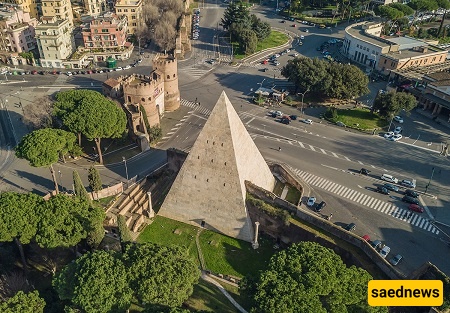
According to Saednews, The Pyramid of Cestius (Italian: Piramide Cestia) is one of Rome’s most unusual ancient monuments. Located in the heart of Rome, Italy, this striking pyramid was built around 18–12 BC as a tomb for Gaius Cestius, a wealthy Roman magistrate and member of the Epulones, a religious college responsible for organizing sacred banquets.
Unlike the famous pyramids of Egypt, the Pyramid of Cestius was not built as a royal monument. Its distinctive Egyptian-inspired design reflects the strong fascination with Egyptian culture that spread throughout Rome following Egypt’s incorporation into the Roman world.
Address: Pyramid of Cestius, Via Raffaele Persichetti, Rome, Italy
Although much smaller than the monumental pyramids of ancient Egypt, the Pyramid of Cestius has earned an important place among the world’s historic pyramids. Today, it stands alongside Rome’s other ancient landmarks as one of the city’s most distinctive tourist attractions.
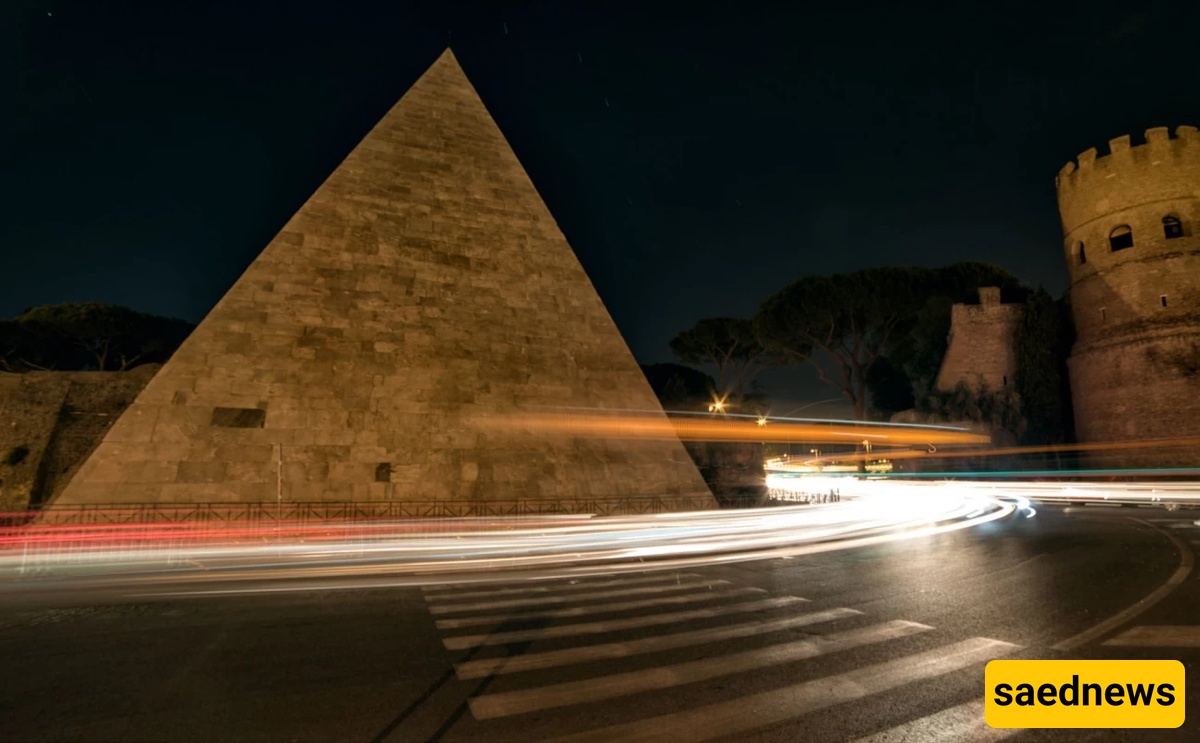
The pyramid’s architecture is remarkably different from the typical buildings of ancient Rome. Its unusual design demonstrates how Roman architects incorporated foreign artistic influences into their own traditions.
For many years, people speculated about the purpose of the pyramid. However, inscriptions discovered on the monument clearly established that it was constructed as the tomb of Gaius Cestius.
The pyramid was originally covered with slabs of white marble, giving it a bright and impressive appearance. Much of the surrounding area was later altered, but the monument itself has survived remarkably well.
The structure consists of a concrete core made with a mixture of sand and mortar, reinforced with brickwork. Its exterior was originally faced with white marble.
The pyramid has a square base measuring approximately 29 meters on each side and rises about 36 meters high. Its steep sides give it a much sharper appearance than the better-known Egyptian pyramids.
Inside the monument is a small burial chamber decorated with paintings inspired by ancient Roman and Egyptian funerary traditions.
During the construction of the Aurelian Walls in the 3rd century AD, the pyramid was incorporated into Rome’s defensive fortifications. This helped protect the monument and contributed to its survival over the centuries.
The steep shape of the Pyramid of Cestius has led to different theories about its inspiration. Some have suggested that Roman architects may have deliberately created a sharper profile than the pyramids of Giza. Another, more convincing theory connects the monument with the pyramids of the Kingdom of Kush, whose shape more closely resembles that of Cestius.
Following the decline of the Roman Empire, many ancient monuments gradually lost their importance. The Pyramid of Cestius was also neglected for centuries.
Its historical significance became clearer after inscriptions on the structure were examined. These inscriptions identified the owner and provided important information about the monument’s construction.
The first recorded restoration took place in 1663, during the reign of Pope Alexander VII. More extensive conservation work was later carried out, including major restoration projects in 2001 and 2011, helping preserve the pyramid for future generations.
Like many ancient monumental tombs, the burial chamber was sealed to protect its contents. Over the centuries, attempts to enter the pyramid caused some damage to the structure.
Today, access to the interior is restricted and generally available only through authorized visits or special arrangements. The exterior, however, can be admired from the surrounding streets and the nearby Protestant Cemetery.
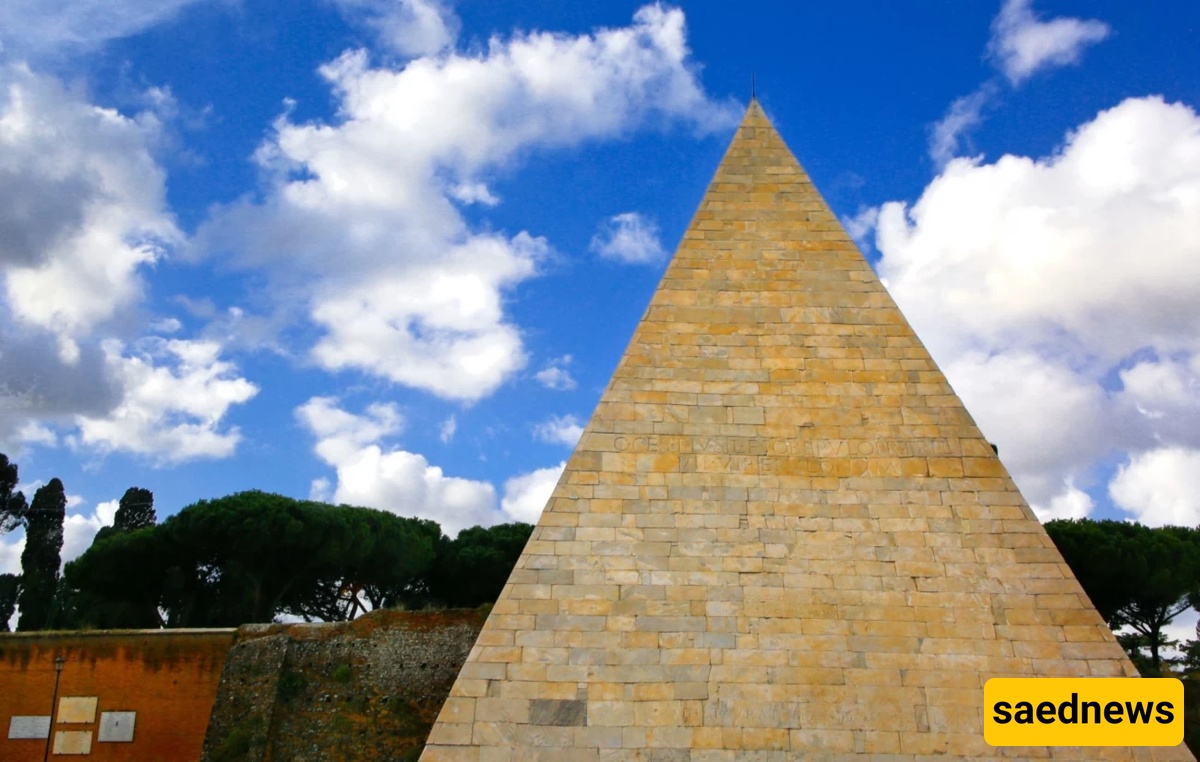
Two important inscriptions, located on the eastern and western faces of the pyramid, reveal the identity of the man buried inside.
They state that the monument was built as the tomb of Gaius Cestius, son of Lucius, who belonged to the gens Cestia. Cestius was a Roman magistrate and a member of the religious college known as the Epulones.
Another inscription explains that the pyramid was constructed in an exceptionally short period—330 days—according to the terms of Cestius’s will. This remarkable detail helps explain why the monument was designed with such an efficient and distinctive construction technique.
Today, the Pyramid of Cestius remains one of Rome’s most fascinating ancient monuments, offering a unique glimpse into the way Egyptian architectural ideas were adapted within Roman culture.