SAEDNEWS: Proper care during the first year helps young trees develop strong roots, healthy growth, and better resistance to environmental stress.
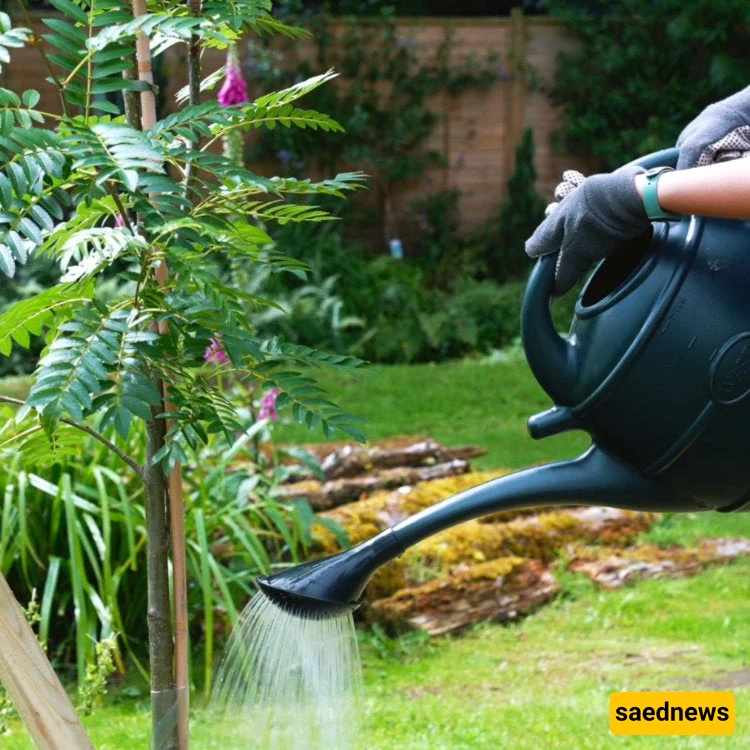
According to SAEDNEWS, the first year after planting is a critical period for young trees because they are still adapting to their new environment. Newly planted trees have limited root systems and need careful attention to watering, soil conditions, protection, and growth management to establish successfully.
Young trees mainly need consistent support in several areas:
• Regular watering
• Mulching around the root area
• Protection from physical damage
• Monitoring soil and plant health
• Proper pruning when necessary
Each of these practices helps reduce stress and encourages stronger root development.
Water is one of the most important factors for a newly planted tree. Young roots need enough moisture to grow outward into the surrounding soil, but excessive watering can reduce oxygen availability around the roots.
Helpful watering practices include:
Check soil moisture regularly, especially during dry periods.
Water deeply so moisture reaches the developing root zone.
Adjust watering frequency based on soil type, weather conditions, and tree species.
Avoid frequent shallow watering that only wets the surface of the soil.
The goal is to maintain suitable moisture rather than keeping the soil constantly wet.
Applying a layer of organic mulch around the tree can help maintain soil moisture and protect roots from temperature changes. Materials such as wood chips or composted plant material are commonly used.
When applying mulch:
Keep the mulch away from direct contact with the trunk.
Cover the area around the tree’s root zone rather than creating a thick pile at the base.
Replace or refresh mulch as it breaks down over time.
Proper mulching can also reduce competition from weeds that may take water and nutrients away from the young tree.
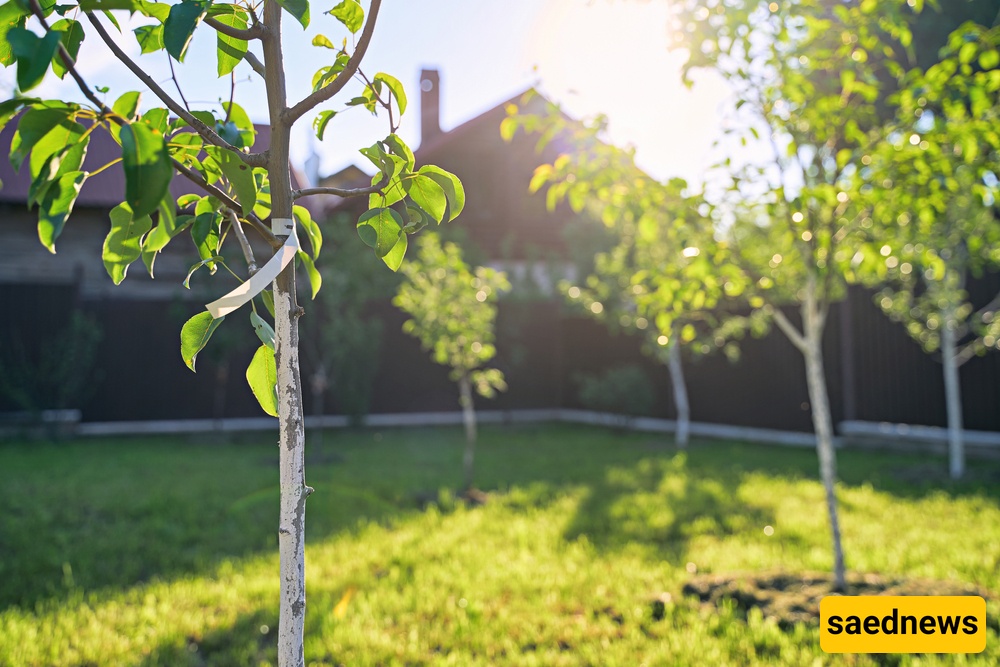
During the first year, young trees are more vulnerable to damage from weather, animals, and accidental impacts. Protection may be needed depending on the planting location.
Common protective measures include:
Using support stakes when a tree is unstable after planting.
Protecting the trunk from damage caused by lawn equipment.
Checking ties and supports regularly to prevent restriction as the tree grows.
Removing protective materials when they are no longer needed.
Some care mistakes can slow the development of young trees:
Overwatering
Too much water can create unhealthy root conditions and may weaken the tree.
Planting too deeply
Covering the trunk base with excess soil can interfere with normal growth.
Adding too much fertilizer too soon
Young trees usually need time to establish roots before receiving additional nutrients unless soil conditions require it.
Ignoring early signs of stress
Changes in leaf color, wilting, or unusual growth patterns may indicate that the tree needs attention.
A young tree should be observed throughout the year because its needs change with the seasons. During hot periods, moisture levels may need closer monitoring, while colder months may require protection from extreme conditions depending on the tree type and climate.
The first year is not only about keeping the tree alive but also about creating the conditions for long-term healthy growth. With consistent care, young trees can develop stronger root systems and become more resilient as they mature.