SAEDNEWS: Baobabs are remarkable trees whose thick trunks can store substantial amounts of water, helping them survive long periods of seasonal dryness.
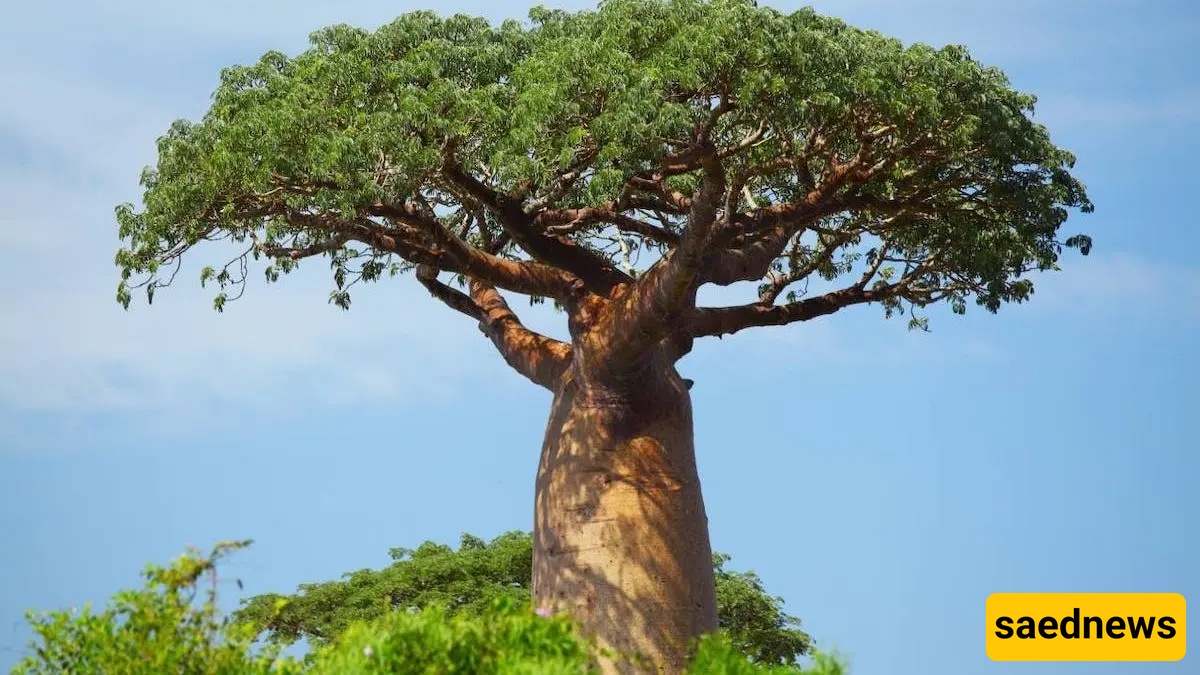
According to SAEDNEWS, the baobab is one of the most distinctive examples of how plants adapt to harsh environments. Several baobab species grow in regions where long dry seasons are common, and their unusually thick trunks are adapted to hold large amounts of water. The swollen trunk gives the tree its characteristic appearance while serving as an important reserve during periods when rainfall is limited.
The trunk of a baobab is not simply made larger by ordinary wood growth. Its tissues can contain large amounts of water, allowing the tree to maintain its physiological functions during dry conditions. The trunk can also change in size as its water content changes, making it particularly different from the rigid-looking trunks of many other trees.
Baobabs combine this water-storage ability with other adaptations that reduce water loss. During dry periods, some species shed their leaves, which reduces the amount of water lost through transpiration. Their overall structure therefore reflects a strategy for coping with seasonal water scarcity rather than relying on a constant water supply.
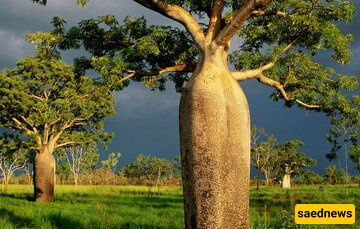
A baobab trunk has several features that contribute to its remarkable appearance and function:
Water-rich tissues: Parts of the trunk can retain substantial quantities of water.
Exceptional trunk size: The broad trunk provides considerable internal storage capacity.
Seasonal adaptation: Water reserves can help the tree endure periods of limited rainfall.
Reduced water loss: Leaf shedding during dry conditions can lower transpiration.
The famous swollen shape should not be interpreted as evidence that the tree contains a hollow tank of liquid water. Instead, water is held within living and supportive tissues of the trunk.
The baobab's trunk also has structural and ecological importance. Its unusual tissues allow the tree to combine considerable size with adaptations suited to dry climates. Depending on the species and environment, baobabs can live for many years and provide valuable resources and habitat for other organisms.
This combination of water storage, seasonal behavior, and specialized trunk structure makes the baobab a striking example of plant adaptation. Rather than escaping drought, the tree has evolved ways to cope with it, using its own tissues as part of a broader survival strategy.