SAEDNEWS: Learn how to care for Dryopteris affinis, including watering, light, humidity, soil, pruning, repotting, temperature, and propagation.
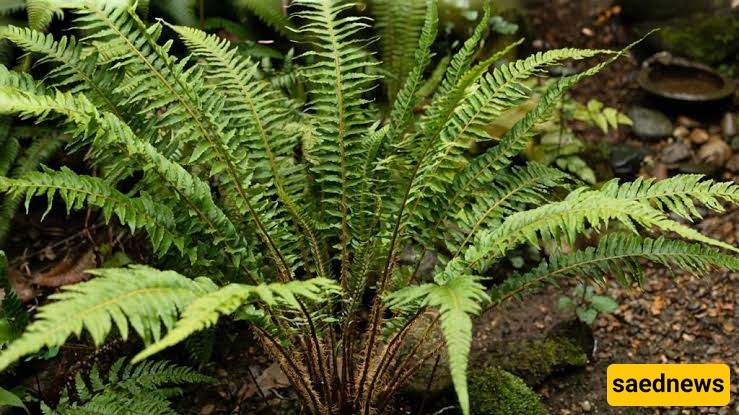
According to Saednews, The male fern, scientifically known as Dryopteris affinis, is native to the Himalayan region, Europe, and Western Asia. It is also commonly referred to as the golden shield fern. This fern grows particularly well in moist environments. One of its attractive features is the distinctive scaly texture of its leaf stalks and foliage. It is also worth noting that the plant is non-toxic and does not pose a known danger to humans or pets. Botanically, the male fern belongs to the family Polypodiaceae.
Like most ferns, the male fern grows best when the soil is kept consistently moist. Water the plant when the top few centimeters of soil have dried out. Each time you water, do so thoroughly so that moisture reaches the entire root system.
Avoid excessive watering, however, as constantly wet soil can lead to root rot. Insufficient watering and low moisture levels may cause the fern's leaves to turn brown.
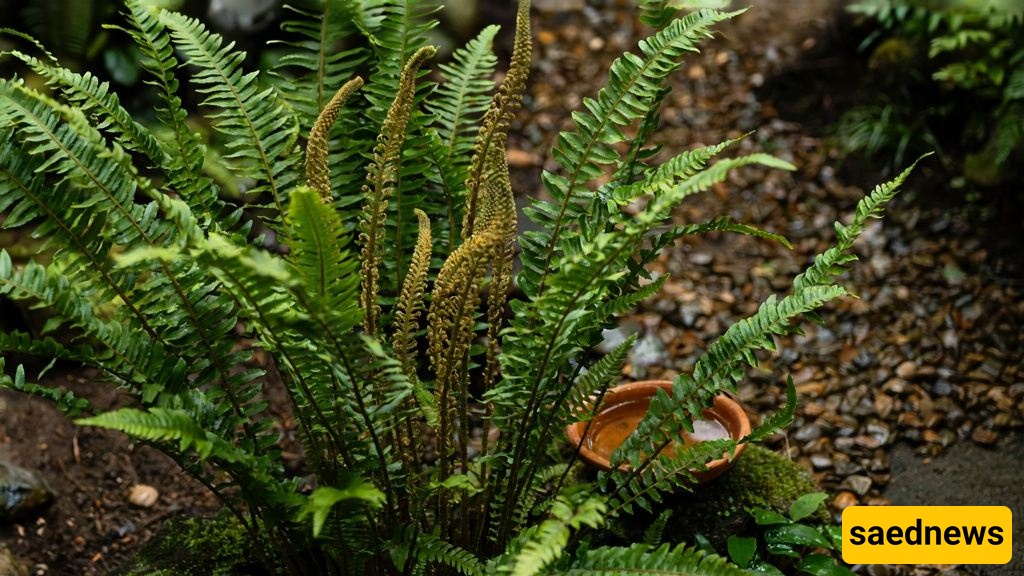
For healthy growth, the male fern prefers bright, indirect sunlight. However, it is a relatively hardy plant and can tolerate shaded conditions as well. Brief exposure to direct sunlight may also be tolerated, although prolonged exposure to strong sunlight can damage the foliage.
The male fern requires adequate humidity for healthy growth. You can increase humidity by placing a container of water near the plant or using a humidifier.
Another simple method is to fill the plant's saucer with small pebbles and add water until the pebbles are partially submerged. Place the pot on top of the pebbles, making sure that the bottom of the pot does not sit directly in the water.
During winter, keep the plant away from heaters and other direct heat sources, as dry, hot air can severely damage the fern.
The male fern does not require a highly specialized soil mixture. The most important requirement is good drainage, allowing excess water to pass through the soil easily.
Heavy, compact soil can retain too much water and prevent proper air circulation around the roots, increasing the risk of root problems. A suitable growing medium can be made from a mixture of loamy soil, peat moss, and sand.
Regular pruning can help the male fern maintain a healthy and attractive appearance. Spring is generally the best time to prune because it coincides with the plant's active growing season.
Damaged, dead, or unhealthy leaves can also be removed whenever necessary. Pruning these leaves helps keep the plant looking tidy and allows it to focus its energy on healthy growth.
The fern should be repotted when its roots begin emerging from the drainage holes at the bottom of the pot. This indicates that the root system has outgrown its current container.
Spring is the ideal season for repotting because the plant is entering its active growth period.
The ideal temperature range for healthy growth is approximately 15–22°C (59–72°F).
The male fern is relatively tolerant and can survive temperatures below 10°C (50°F) and above 30°C (86°F) for short periods. Nevertheless, keeping it within its preferred temperature range will encourage stronger and healthier growth.
The most practical way to propagate a mature male fern is by dividing its rhizomes. Rhizomes are the underground stems from which the plant's roots and fronds develop.
Propagation by division is best carried out in spring. Carefully remove the mature plant from the soil and inspect the rhizomes. If any sections are damaged or unhealthy, remove them with clean, sterilized tools.
Using a clean, sterilized knife, divide the rhizome into two or more sections. Each division should contain a sufficient number of healthy leaves or growing points along with an adequate portion of the underground stem and roots. This will give each new section the resources it needs to establish itself and produce new growth.
After division, plant each section in a suitable, well-draining growing medium and provide appropriate moisture, humidity, and indirect light while the new plants become established.