SAEDNEWS: Children may look at a specific spot while speaking to concentrate, remember something, or organize their thoughts. It is often a natural part of communication and thinking.
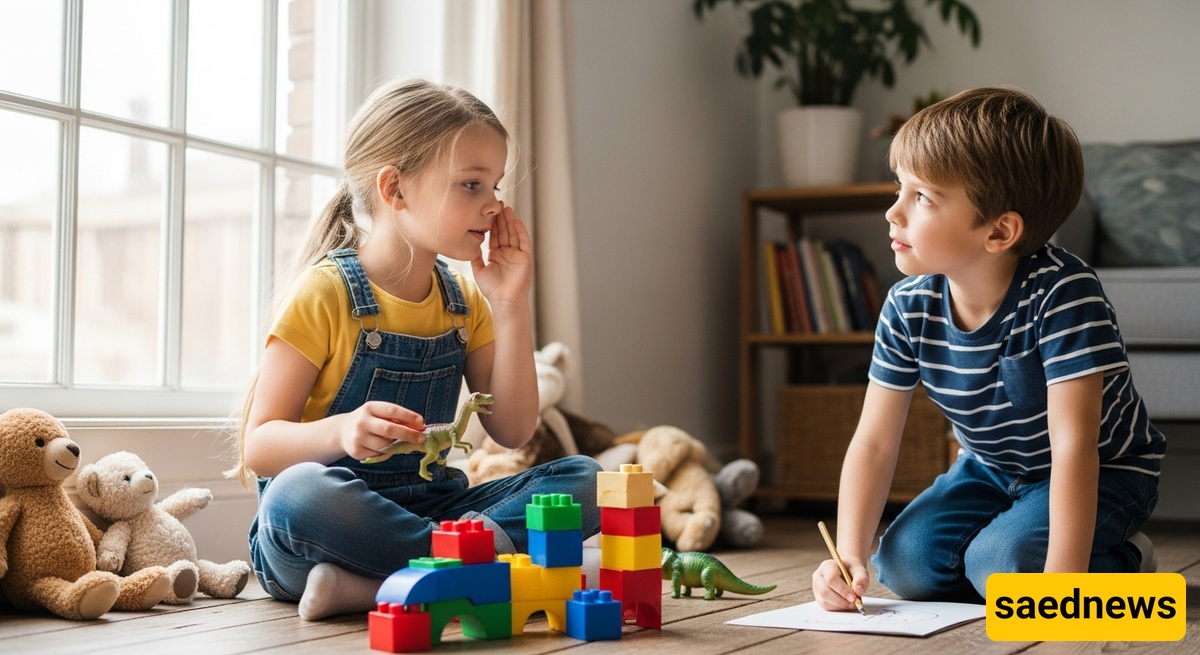
According to SAEDNEWS, a child may occasionally look at one specific point while talking simply because they are concentrating on what they want to say. Speaking requires children to organize words, ideas, and emotions at the same time. Focusing their eyes on a fixed object or area can reduce distractions and make it easier to gather their thoughts.
Children may also look away from the person they are speaking to when trying to remember something. Recalling an event, describing what happened, or choosing the right words can require mental effort. During these moments, their gaze may naturally settle on a wall, window, toy, or another familiar spot while they think.
Eye contact does not always remain constant during a conversation. Children can look at a person, then shift their gaze elsewhere before returning their attention. Such changes can be part of normal communication and may become more noticeable when the child is excited, tired, shy, or deeply interested in what they are saying.

A particular spot may also attract a child's attention because of something in the environment. A moving shadow, sound, object, or familiar detail can briefly capture their focus. If the child continues speaking normally and responds appropriately to others, occasional shifts in attention are generally a natural part of everyday behavior.
The most useful approach is to consider the child's behavior as a whole rather than focusing on one habit. Looking at a particular spot while talking is usually not meaningful by itself. Parents can observe whether the child communicates comfortably, responds to questions, follows conversations, and interacts naturally. If unusual behaviors occur frequently alongside noticeable difficulties in communication or daily activities, discussing them with a qualified child-development professional can provide appropriate guidance.