SAEDNEWS: A missing nose on an ancient statue may look like ordinary damage after thousands of years, but archaeologists have found patterns suggesting that many were deliberately attacked. The reasons ranged from religious beliefs and political erasure to simple physical fragility.
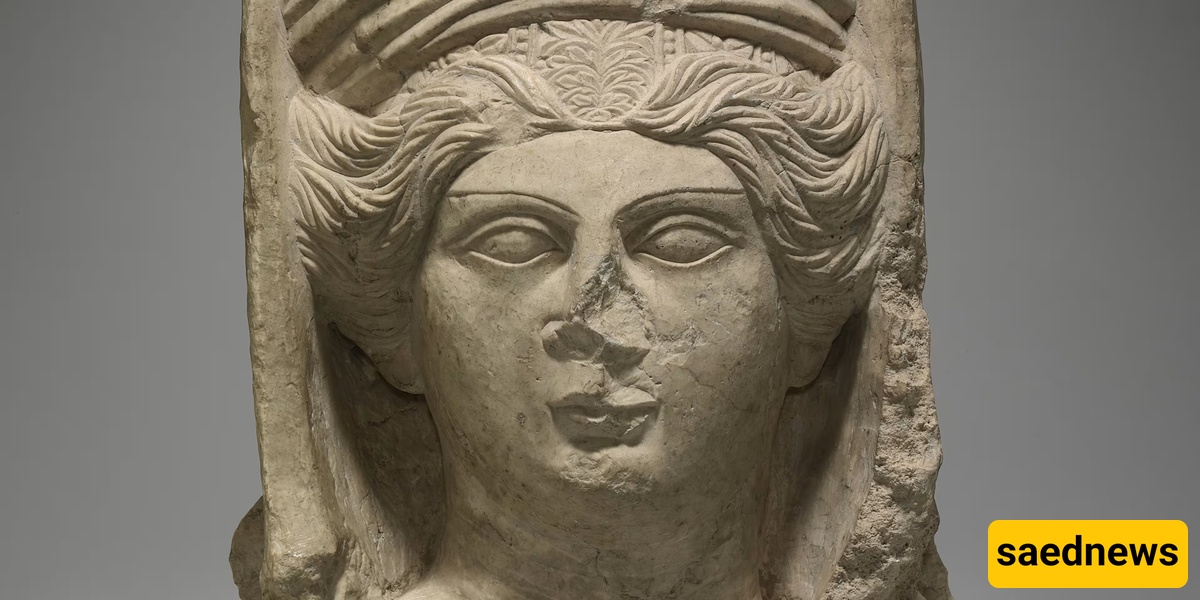
According to SaedNews, one of the most familiar sights in a museum of ancient art is also one of the most puzzling: a beautiful stone face staring back at visitors with its nose missing.
At first glance, the explanation seems obvious. The statue is thousands of years old, so surely weather, accidents and centuries of handling simply took their toll.
Sometimes, that is exactly what happened.
But researchers studying ancient Egyptian sculpture have found that some damaged noses show a much more deliberate pattern. In certain cases, the missing feature was part of a broader attack on the face or body, suggesting that someone wanted to disable, punish or symbolically erase the figure represented by the statue.
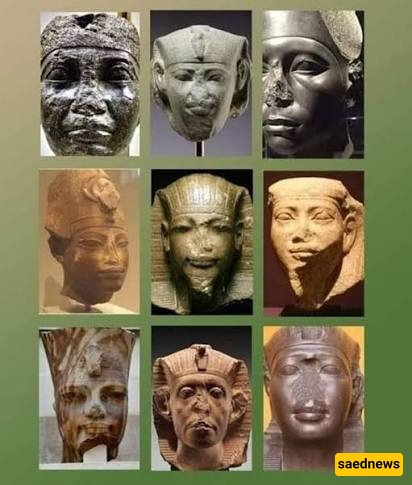
Stone is remarkably durable, but it is not indestructible. Ancient Egyptian sculptors worked with materials including limestone, sandstone, basalt, granite and other stones. When a stone sculpture falls or receives a hard blow, projecting features such as noses, fingers and beards are particularly vulnerable.
The Metropolitan Museum of Art notes that although stone is durable, it is also brittle, and projecting parts are often smashed when sculptures are knocked over. That alone can explain many missing noses.
There is another clue, however: the same kind of damage can appear on flat reliefs.
A nose carved into a wall is not sticking out in the same vulnerable way as the nose of a three-dimensional statue. Yet ancient Egyptian reliefs also sometimes have their noses deliberately damaged. Edward Bleiberg, a curator and scholar of Egyptian art, has pointed to such patterns as evidence that at least some destruction was intentional rather than simply the result of accidents.
That distinction changes the story completely.
To modern eyes, an ancient statue is primarily an artwork or archaeological object.
For ancient Egyptians, some images had a much more active religious and social role.
The exhibition Striking Power: Iconoclasm in Ancient Egypt, organized by the Pulitzer Arts Foundation in collaboration with the Brooklyn Museum, explains that images could be understood as containers of spiritual power. Deliberately damaging them could therefore have consequences beyond making the sculpture look different.
This helps explain why attackers sometimes targeted particular body parts rather than destroying an entire statue.
The nose was especially significant because breathing was associated with life. Damaging the nose could therefore symbolically prevent the represented being from breathing.
Other features could be targeted for similar reasons. Harvard's documentation of Bleiberg's research notes that eyes, mouths, arms and feet could also be deliberately damaged, with the pattern of destruction providing clues about the attacker's purpose.
Ancient images were not only religious objects. They could also represent rulers and political authority.
When political power changed hands, destroying or altering a ruler's image could become a way of attacking that person's public identity.
The damage could extend beyond the nose to royal symbols, inscriptions and facial features. The Striking Power exhibition highlights targeted destruction connected with figures such as Hatshepsut and Akhenaten, showing how political upheaval could leave physical marks on monuments and sculptures.
In this sense, destroying a statue was sometimes an ancient form of political erasure.
The objective was not necessarily to eliminate every trace of a person. Damaging a recognizable image could itself send a message: this person's authority was being rejected.
This is where the popular explanation often goes wrong.
It is tempting to look at a gallery full of damaged statues and conclude that ancient people systematically smashed every nose for religious or political reasons.
The evidence does not support such a simple rule.
Some noses were broken because the sculptures were fragile. Some damage resulted from falling, environmental deterioration, later reuse, transportation or other accidents. And the precise cause of damage cannot always be established from the surviving object.
Researchers therefore examine patterns rather than assuming that every missing feature has the same explanation. Harvard's presentation of Bleiberg's research specifically emphasizes that close inspection of damage can help distinguish personal, political, religious and criminal motives.
The most famous missing nose in ancient Egyptian art belongs to the Great Sphinx at Giza.
A persistent story claims that Napoleon's soldiers damaged it during the French expedition to Egypt. The evidence does not support that explanation.
Harvard's archaeological material records that Napoleon's expedition encountered the Sphinx in 1798 with its nose already missing. Earlier historical evidence and archaeological research place the destruction well before Napoleon's arrival. A study of the monument also identified traces of tool damage whose date falls somewhere between the third and tenth centuries CE, rather than the Napoleonic period.
So the famous French emperor cannot reasonably be blamed for the missing nose.
There is also a visual trick involved.
A missing nose immediately changes the appearance of a human face. Visitors therefore notice it more readily than smaller losses elsewhere on a sculpture.
Ancient statues can lose fingers, ears, toes, crowns, beards or entire limbs, yet the absence of a nose is particularly striking because it transforms the expression of the face.
That makes the broken nose both an archaeological clue and a powerful visual reminder that these objects have had long, complicated lives.
Perhaps the most interesting lesson is that damage is not necessarily just a defect.
A broken nose may reveal something about the people who encountered an object centuries after it was created. A carefully targeted blow can point toward religious conflict, political change or an attempt to neutralize an image. An irregular fracture may instead suggest an accident or the natural vulnerability of stone.
In other words, archaeologists do not simply ask, “What happened to this statue?”
They can also ask, “Why was this particular part attacked?”
That question turns a missing piece of stone into evidence.
The next time an ancient face appears in a museum with a broken nose, the damage may be telling a story that is almost as important as the sculpture itself.