SAEDNEWS: Scientists are trying to bring back a frog species that went extinct 30 years ago. It was the only known animal to carry its eggs in its stomach and later give birth by regurgitating its young.

According to Saed News, citing Bitoteh, Different animal species have evolved remarkable reproductive strategies. Among the most extraordinary was the gastric-brooding frog (Rheobatrachus silus), an amphibian that incubated its eggs inside its stomach and later gave birth through its mouth. This unique reproductive behavior made it one of the most unusual vertebrates ever discovered.
Unfortunately, the gastric-brooding frog became extinct in 1983, primarily because of habitat loss. Today, however, scientists are working to revive this remarkable species using advanced reproductive and cloning technologies.
The gastric-brooding frog remains the only known animal species that reproduced by swallowing its fertilized eggs. After laying its eggs, the female swallowed them, allowing the embryos to develop safely inside her stomach. During this period, her digestive system temporarily shut down to prevent the eggs from being digested.
Approximately six weeks later, fully developed froglets emerged from the mother's mouth, completing one of nature's most extraordinary reproductive cycles.
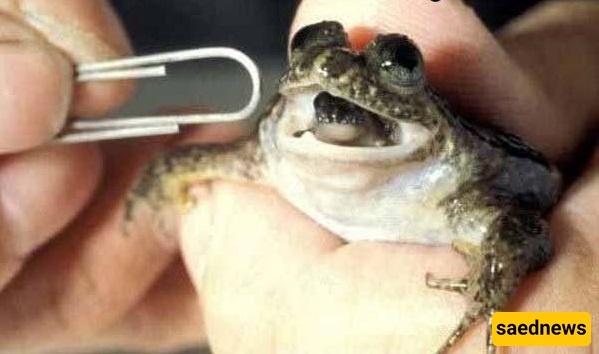
Researchers led by Michael Archer at the University of New South Wales in Sydney, Australia, have taken important steps toward restoring the species. The team extracted nuclei from frozen gastric-brooding frog cells that had been preserved for nearly four decades.
These nuclei were then inserted into eggs taken from a closely related frog species, Mixophyes fasciolatus. The reconstructed cells successfully divided and developed into early-stage embryos, demonstrating that the extinct frog's genetic material remained functional.
The findings were first presented during a TED Conference in Washington under the theme of de-extinction, highlighting the growing scientific effort to restore species that have disappeared.
Among the various de-extinction projects under consideration, the gastric-brooding frog offers several significant advantages:
Its genetic makeup is relatively simple compared to many extinct animals.
Frozen cell samples have been preserved, providing usable genetic material.
Close living relatives still exist and can supply compatible eggs for cloning research.
Amphibian embryos develop inside eggs, making the process less complex than mammalian reproduction, where embryos interact extensively with the mother's hormones and immune system.
These factors make the gastric-brooding frog one of the most practical candidates for de-extinction research.
Not every extinct species is equally suitable for revival. For example, the Tasmanian tiger (thylacine) presents a much greater challenge because it lacks a living close relative capable of providing compatible reproductive cells or serving as a surrogate.
Although the gastric-brooding frog offers a more promising path, researchers still face significant obstacles before a self-sustaining population can be re-established.
Michael Archer hopes that, if the project succeeds, revived gastric-brooding frogs could initially be raised in carefully controlled aquarium environments. Researchers may also need to recreate aspects of the mother frog's unique reproductive biology to support embryo development until the species can reproduce naturally once again.
If successful, the project would represent a major milestone in conservation biology and demonstrate how modern science could help restore species that have been lost to extinction while deepening our understanding of one of nature's most extraordinary reproductive adaptations.