SAEDNEWS: Complete Overview of Cashew Nuts: Benefits for Women and Men, Nutritional Value, Calories, Health Benefits, and Possible Side Effects of Excess Consumption
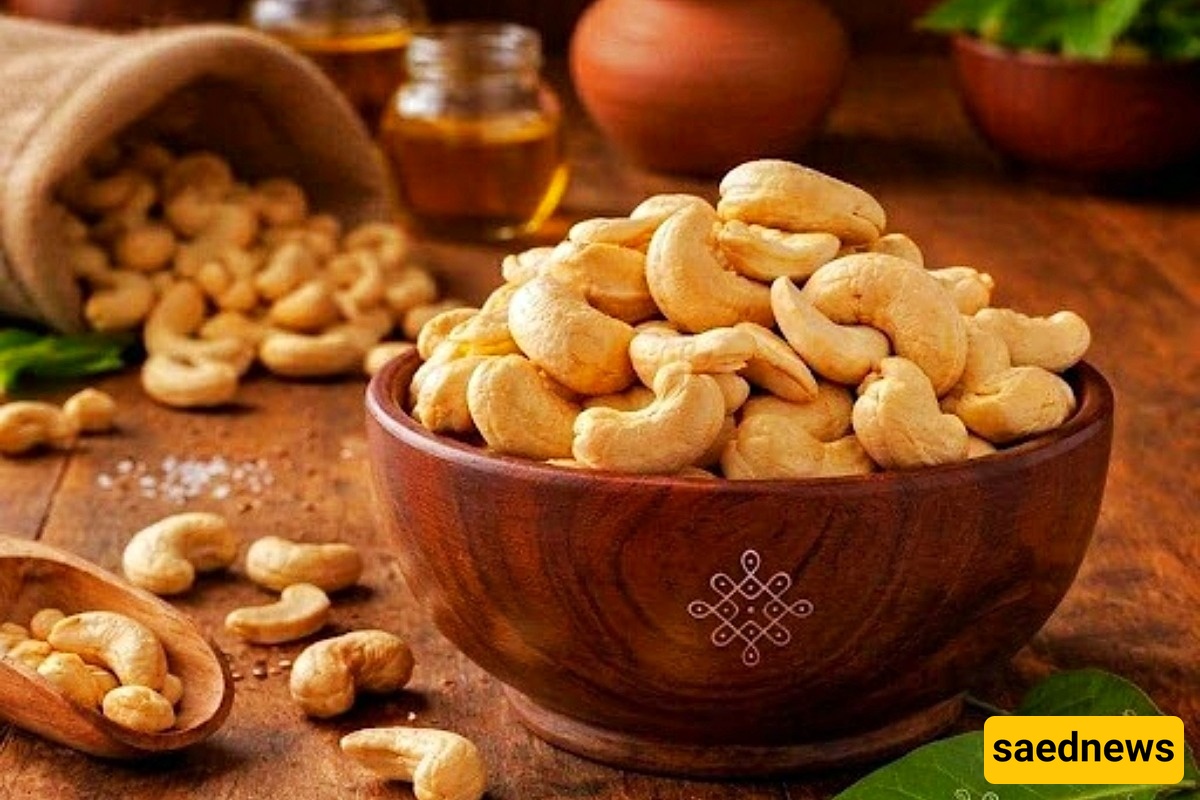
According to Saednews, Cashew nuts are among the most popular and widely consumed nuts in the world. Their main origin is traced back to Brazil. Today, this valuable food is produced on a large scale in countries such as India, Vietnam, and Nigeria. Due to their pleasant taste and unique texture, cashew nuts hold a special place among different types of nuts. Many people consider them one of the most delicious components of mixed nuts and include them in their daily diet.
In this section on health and wellness, you will become familiar with cashew nuts, their nutritional value, and important points you should know about consuming this popular nut.
In response to the question “Where do cashew nuts come from?”, it can be said that cashew nuts are native to the northeastern regions of Brazil and were used for centuries by indigenous people as a food source.
In the 16th century, the Portuguese, after encountering the plant in Brazil, introduced it to their colonies in Asia and Africa.
Due to the cashew tree’s high adaptability to tropical climates, its cultivation quickly expanded to countries such as India, Vietnam, Nigeria, and other African regions. India has also played an important role in the global development and commercialization of this product and is now considered one of the main producers of cashew nuts worldwide.
Per 28 grams of cashew nuts (approximately 16–18 medium kernels), the nutritional content is:
1.47 g water
8.56 g carbohydrates
12.45 g fat
5.17 g protein
0.9 g dietary fiber
1.68 g sugar (including 1.65 g sucrose)
0.01 g glucose
0.01 g fructose
6.66 g starch
0.622 mg copper
168 mg phosphorus
1.89 mg iron
0.469 mg manganese
83 mg magnesium
0.081 g tryptophan
1.64 mg zinc
0.31 g valine
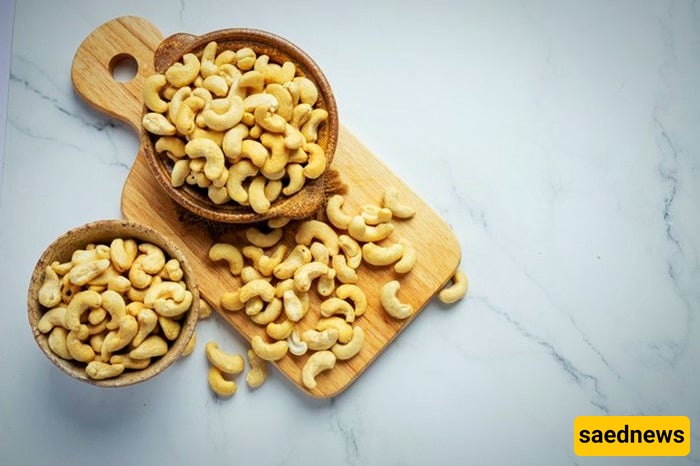
Cashew nuts are nutritionally dense but relatively high in calories.
Every 100 grams contains approximately 550–570 calories.
A standard serving of 28 grams (about 18–20 cashew nuts) provides around 155–165 calories.
Despite their calorie content, cashew nuts are rich in protein, fiber, and healthy fats. When consumed in moderation, they can help promote satiety and provide energy. Therefore, balanced consumption is recommended to benefit from their properties.
The cashew tree, scientifically known as Anacardium occidentale, is a tropical tree native to Brazil that grows well in warm and humid climates.
It produces a fruit whose seed is the edible cashew nut. Today, it is widely cultivated in countries such as India, Vietnam, and Nigeria.
Cashew nuts are considered warm and dry in traditional medicine. Therefore, moderate consumption may help boost energy and strengthen the body.
Cashew nuts have many health benefits. Below are the most important ones:
Cashew nuts may help regulate blood sugar levels. Their compounds have anti-inflammatory effects and may improve insulin sensitivity in people with type 2 diabetes.
They may also help manage glycemic index and improve lipid (fat) balance in the blood, supporting overall metabolic health.

Cashews are rich in healthy fats and unsaturated fatty acids that support cardiovascular health. They also contain antioxidants and minerals that help reduce inflammation and improve overall bodily function.
They may also support the absorption of fat-soluble vitamins such as A, D, E, and K.
Cashews are a good source of magnesium, which is essential for bone health, muscle function, and nervous system activity. Magnesium also helps regulate blood pressure and supports immune function and metabolism.

Antioxidants in cashew nuts may help reduce oxidative stress and protect cells from free radical damage. This may provide supportive nutritional benefits during chemotherapy.
However, cashews are not a treatment for cancer and should only be consumed as a supportive food alongside medical treatment.
Cashew nuts contain iron and essential minerals that help in red blood cell production and oxygen transport. This may help prevent anemia and reduce fatigue.
Cashews contain phosphorus, which supports bone and dental health. They also provide protein and healthy fats that contribute to overall body function.
Cashews may support digestive health and help regulate cholesterol levels due to their fiber and healthy fat content, potentially benefiting gallbladder function.
Zinc in cashew nuts supports immune function, tissue repair, and growth. It is also important during pregnancy, but should be consumed under medical supervision.
Despite being calorie-dense, cashews can help with weight management when eaten in moderation, as they promote satiety and reduce overeating.
Cashews may support women’s health in several ways:
May reduce symptoms of premenstrual syndrome (PMS) such as fatigue, headaches, and mood swings
May help improve metabolic balance in polycystic ovary syndrome (PCOS)
Moderate consumption during pregnancy can provide essential nutrients such as protein, iron, magnesium, calcium, and healthy fats. They may also help improve digestion and reduce constipation.

Excess intake may lead to weight gain
Salted or roasted cashews may increase blood pressure due to high sodium
Individuals with allergies or kidney issues should consult a doctor before regular consumption
Cashew nuts may support male health in several ways:
May improve sperm quality and motility due to zinc and antioxidants
May support muscle performance and recovery in athletes
May contribute to testosterone balance
May support sexual health and energy levels
Cashews can support growth and health in children when consumed in moderation:
Support physical growth and immunity
Improve energy levels
May enhance concentration and cognitive function
Support bone and dental health
Due to potential allergies and high calorie content, intake should be carefully controlled and adjusted for age.

In traditional medicine, cashew nuts and parts of the tree have been used to support overall health, reduce inflammation, strengthen the body, and improve skin and digestive health. However, many of these uses require further scientific validation.
Cashews are generally safe when consumed in moderation, but excessive intake may cause issues:
Cashews contain oxalates, which may contribute to kidney stone formation in susceptible individuals.
Some individuals may experience allergic reactions such as itching, swelling, rashes, digestive discomfort, or in severe cases, anaphylaxis.

Salted cashews may increase blood pressure due to high sodium content.
In some individuals, cashews may trigger headaches or migraines.

Improper storage may lead to fungal contamination and exposure to harmful toxins affecting liver health.
Cashews may interact with medications for blood pressure, diabetes, calcium channel blockers, and thyroid treatments.
A safe daily amount is about 5 to 10 cashew nuts.
Excess consumption may lead to weight gain.
It is recommended to consume fresh, packaged cashews and store them in a cool place such as a refrigerator or freezer to maintain quality.