SAEDNEWS: Among all known animals, there are some that, unlike other animals, are unable to walk backwards. These animals include…
According to SAEDNEWS, Many animals are able to move backwards as a way to escape dangerous situations when they feel trapped or threatened. This ability helps them survive in critical moments.
Although this physical trait is very useful and effective for protection against danger, it is interesting to know that some animals do not have this ability and cannot move backwards. In this section, we will introduce them.
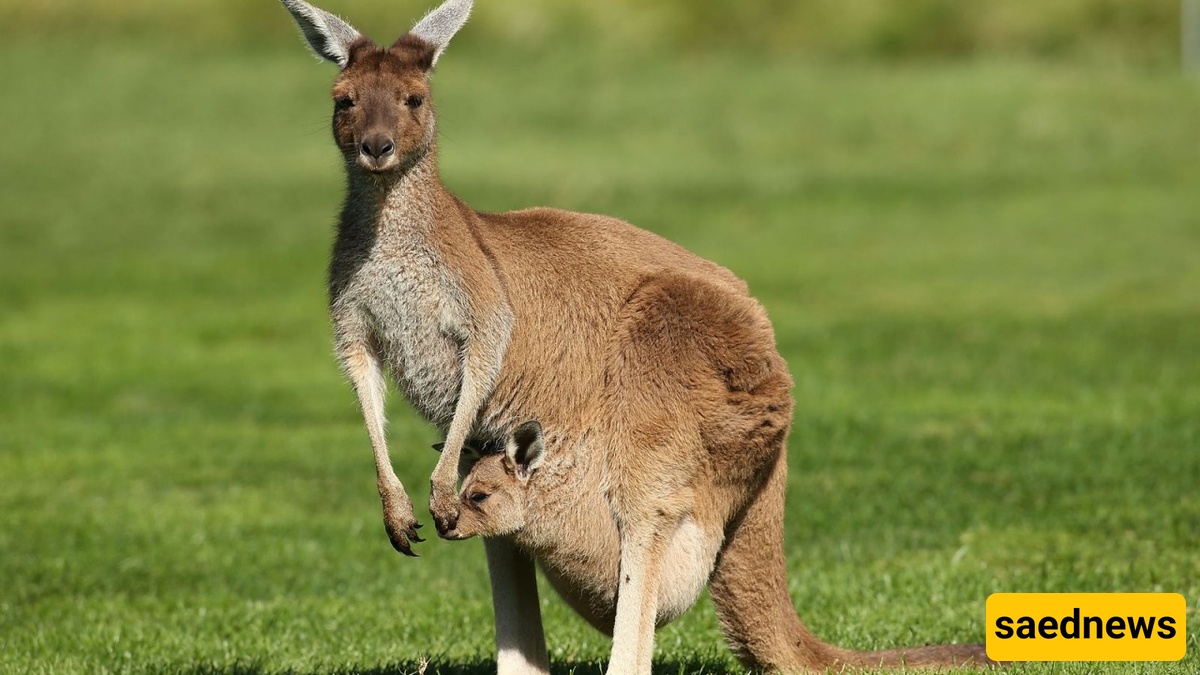
Although most people are familiar with kangaroos as large Australian mammals that carry their young in a pouch, many are unaware that kangaroos are unable to move backwards.
Their mode of movement is based on sudden hopping. They jump using both hind legs at the same time and use their tail to maintain balance. This combination of powerful leg muscles and a strong tail enables them to move forward efficiently. In fact, it is due to these physical adaptations that they are unable to move backwards.
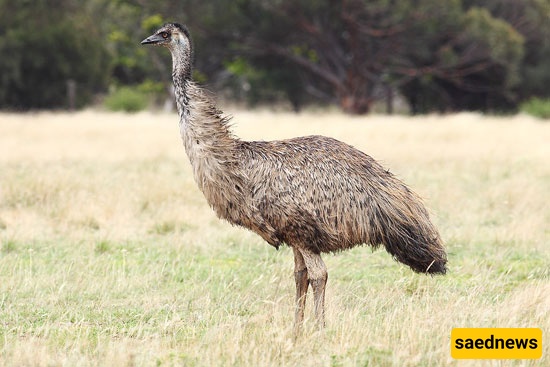
The Australian ostrich, like the kangaroo, is an animal native to Australia. This flightless bird resembles the ostrich in appearance and body characteristics, although it is about ten centimeters shorter than other ostrich species.
Unlike the ostrich, the emu is unable to move backwards, although the exact reason for this is not fully known. The emu is well known for its ability to run fast over long distances. It is also one of the few bird species that has muscular lower legs.
Internet research suggests that some animals, including whales and penguins, are also unable to move backwards. However, in reality this is not entirely true, as these animals are capable of moving in reverse. The issue is that their backward movement may not match what is typically defined as standard locomotion, though in certain situations they can still pull themselves in the opposite direction.
In general, penguins move forward in a duck-like waddle, while whales move by swimming and gliding through the water. Despite their unique body structures, both animals can, under certain conditions, exhibit a form of backward movement.