SAEDNEWS: Which animal has the strongest eyesight? Vision is one of the most important tools for hunting in animals. It is interesting to know that a goat can see behind itself without turning its head
According to SAEDNEWS, The largest eyes in the world belong to the giant squid, the largest invertebrate on Earth. Fully grown giant squids have eyes that can exceed 30 cm in diameter. These huge eyes are essential for survival in the deep, dark ocean environment where they live.
It is often said that the human eye has a visual resolution of about 576 megapixels, which is sharper than most animals, but many species still possess some of the most advanced vision systems in nature.
Vision is likely one of the most important tools in the wild. Predators often have highly precise eyesight to detect a single target, while prey animals have very sensitive vision to detect movement and warn them of danger. Birds, especially birds of prey, rely heavily on vision for survival and hunting.
In general, birds have a weaker sense of smell and hearing (although there are exceptions), and mostly depend on vision to hunt and survive.
Vision has evolved in many different ways across species. Comparing animals based on eyesight alone is actually quite difficult, because each species has developed a different type of vision suited to its own environment and needs.
It is unfair to rank the mysterious or unusual gaze of a lizard above the eyes of a cat, because both serve completely different purposes and have evolved into entirely different visual systems.
In this section, a list of animals with the best eyesight is presented. Join us to get to know them.
Eagles:
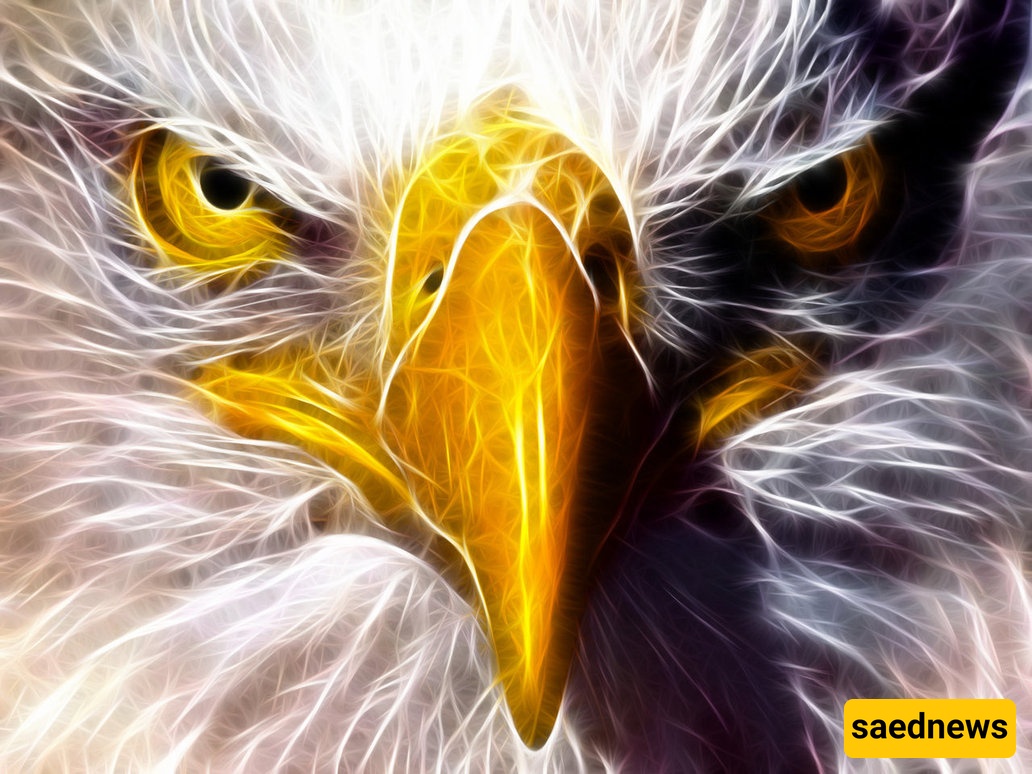
Birds of prey such as eagles and falcons have some of the best eyesight in the animal kingdom. These magnificent birds are designed to detect prey from high in the sky and then rapidly dive down to capture it before the prey even realizes what is happening.
Their vision is among the sharpest of all animals, and some species can spot a rabbit-sized animal from more than a mile away.
Like many predators, their eyes are positioned at the front of their face, giving them excellent binocular vision, although this reduces their field of view. Not all birds of prey hunt from high altitudes, but all of them rely heavily on their exceptional vision for hunting.
Owls:
Although technically also birds of prey, owls deserve special mention. In the animal kingdom, owls have some of the largest eyes relative to their body size and are among the few nocturnal animals that do not rely heavily on scent or other visual enhancements like a tapetum lucidum.
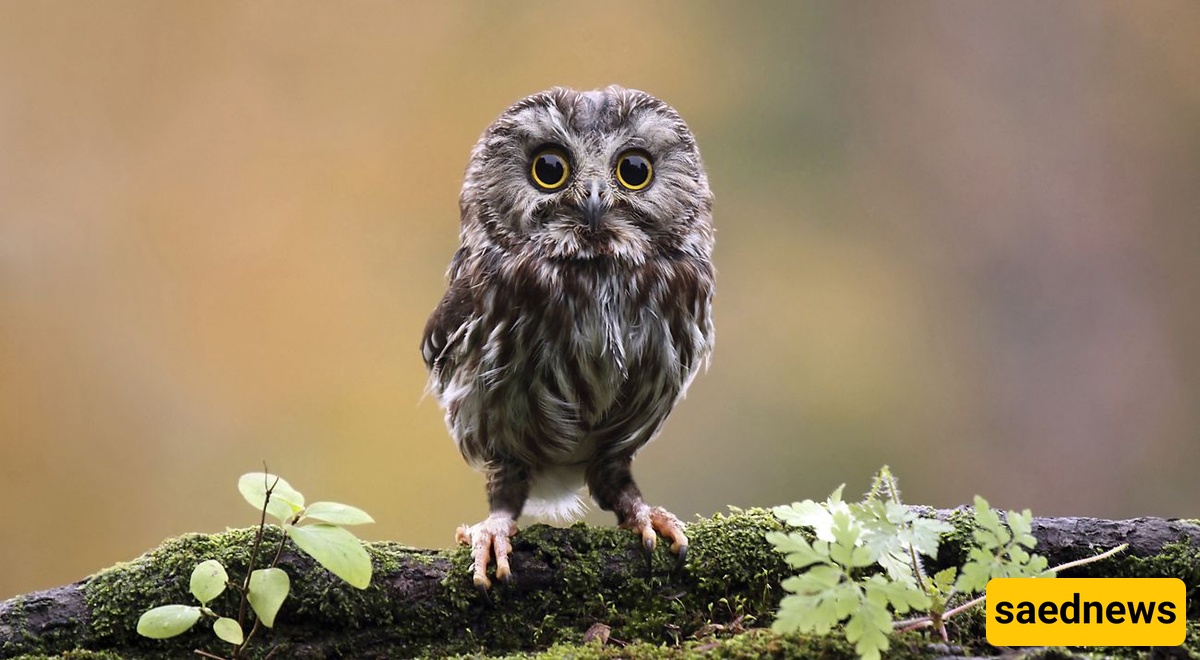
They rely on their large eyes, which are actually larger than their brains in some cases, to capture as much light as possible. However, their eyesight alone is not always “sharp” in detail; instead, much of their excellent night hunting ability comes from their brain’s ability to process even the smallest visual cues in low light conditions.
Despite this, owls do not rely solely on vision, as they also depend heavily on their acute sense of hearing for hunting.
Owls are considered as a single group here because differences between species in vision are relatively minor and mostly due to evolutionary adaptations.
Tiger:
Cats have excellent night vision, and large cats such as tigers, lions, and leopards possess highly effective low-light eyesight that allows them to hunt in darkness. Cats have a reflective layer at the back of their eyes called the tapetum lucidum. This layer increases the amount of light entering the eye, improving vision in low-light conditions.
Compared to humans, cats are more sensitive to light because they have more rod cells in their eyes. Their eyes also contain cone cells, which are responsible for color detection, but their color perception is limited, making them somewhat color-blind compared to humans. They can distinguish only a narrow range of colors.
Big cats are considered as a single group, similar to owls, because differences in vision between species are relatively minor and mainly due to adaptation and evolution.
Prosimians (early primates):
Prosimians, which include lemurs, the Indian night monkey, bush babies, and lorises, are distant relatives of monkeys and humans. They have some of the largest eyes relative to body size, which is essential for their nocturnal behavior. All prosimians, except the Indian night monkey, also have a tapetum lucidum to enhance night vision.
Dragonfly:
Dragonflies are skilled insect predators and among the fastest insects in the world. Their eyes are among the most fascinating in the insect world. They have compound eyes along with three simple eyes (ocelli). While compound eyes are highly efficient, the simple eyes help dragonflies react to extremely fast movements. This has led to the belief that they may see motion in slow motion, although this is not entirely accurate.
Goat:
Goats have some of the most unusual eyes among mammals, but they are extremely effective for a key purpose: survival. Their main predators are often large cats, such as big felines. Goats have rectangular, horizontal pupils that give them a nearly 330-degree field of vision.
This means they can see almost everything around them—including behind themselves—without turning their heads. This wide vision gives them a better chance of spotting predators before it is too late.
Chameleon:
Chameleons likely have one of the most famous visual systems in the animal kingdom. They can move their eyes independently of each other while simultaneously processing two completely different images. This phenomenon has been widely documented, although its exact neural mechanism is still not fully understood.
Mantis shrimp (Stomatopod):
This small creature likely has one of the most complex and least understood visual systems in the world. The mantis shrimp has compound eyes (similar to dragonflies) that are mounted on stalks and can move independently. Each eye is divided into three sections, allowing it to perceive different aspects of its surroundings simultaneously.
Unlike humans, who have only two eyes, mantis shrimp are believed to see the world in up to 12 color channels. They can also detect circularly polarized light, which is somewhat like constantly wearing 3D glasses in nature.
Why these crustaceans have developed such extraordinary abilities—and exactly how they use them—remains a mystery and is still the subject of scientific research and speculation.