SAEDNEWS: Learn how to make Persian chicken stew in all its varieties, from simple and elegant versions to tomato paste, saffron, and Northern Iranian sour chicken stew. Discover step-by-step recipes, essential cooking tips, the best side dishes, recommended spices, and answers to common questions about cooking chicken.
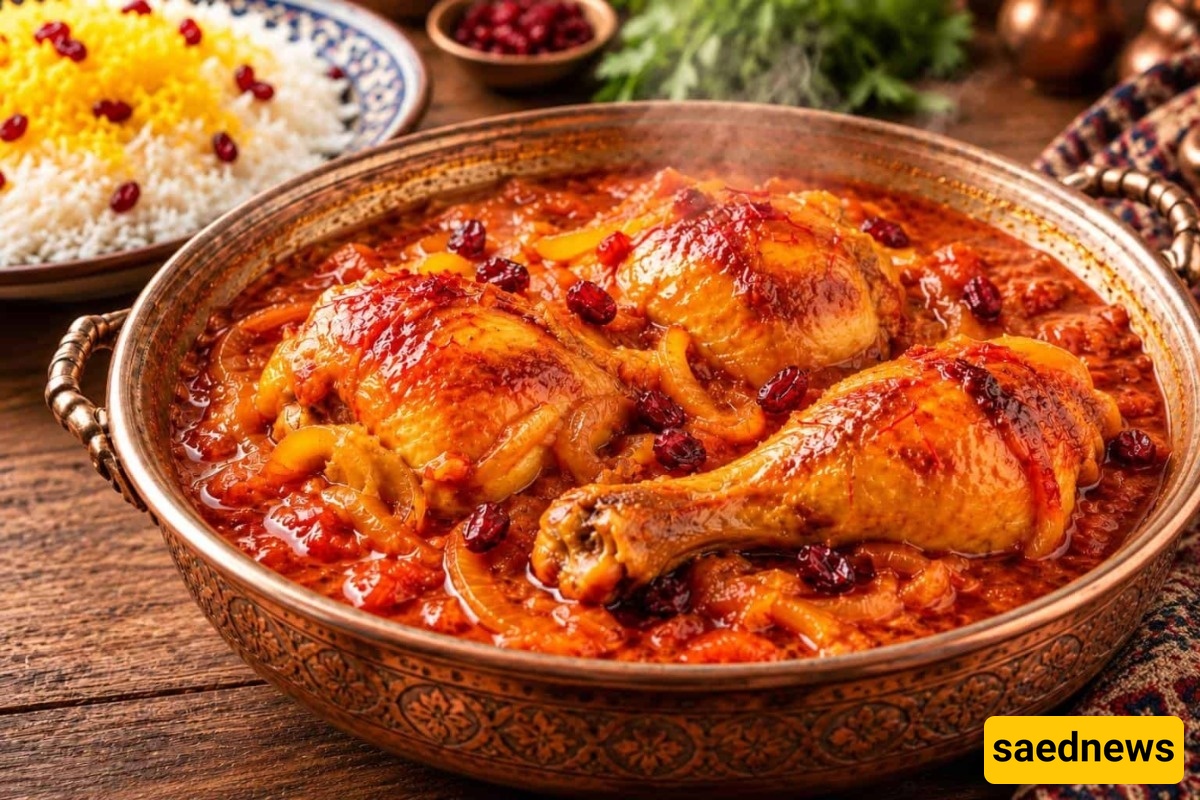
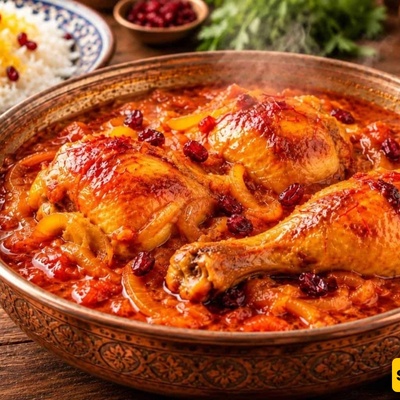
According to Saednews, Saffron chicken stew is a versatile Persian dish that is perfect for both everyday meals and special occasions. Featuring tender chicken simmered in a rich, golden sauce infused with saffron, this recipe is an excellent base for several classic Persian dishes, including Persian chicken and rice, and Zereshk Polo ba Morgh (barberry rice with chicken). It can be served as a simple homemade meal or presented as an elegant dish for guests.
In this guide, you will learn how to prepare saffron chicken stew from start to finish, including ingredient measurements, cooking techniques, serving suggestions, and useful tips for achieving restaurant-quality results.
The following quantities are suitable for four servings.
Ingredient | Quantity |
|---|---|
Chicken pieces | 4 pieces (800–900 g) |
Onions | 2 medium-large (about 300 g) |
Tomato paste | 2 level tablespoons |
Strong brewed saffron | 3 tablespoons |
Turmeric | 1 teaspoon |
Black pepper | A pinch |
Salt | 1 teaspoon |
Fresh lemon juice or sour orange juice | 1 tablespoon |
Cinnamon stick | 1 small piece |
Vegetable oil | 3 tablespoons |
Butter | 15–20 g |
Boiling water | Approximately 2 cups |
Follow these steps to prepare flavorful, tender chicken in a beautifully colored saffron and tomato sauce.
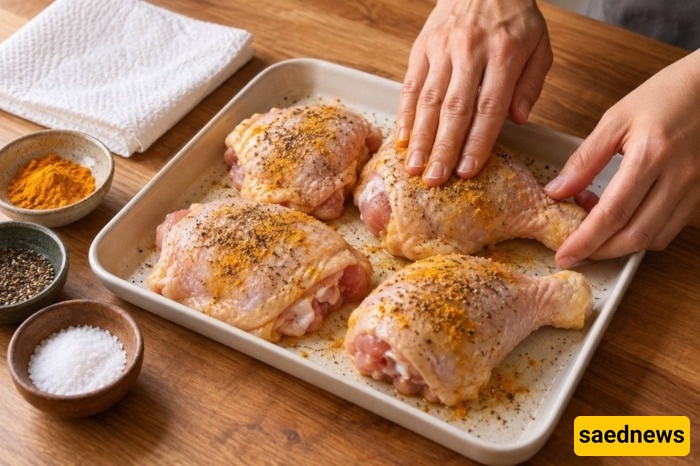
First, pat the chicken pieces dry with paper towels. Rub them with half a teaspoon of turmeric, black pepper, and a little salt. Set aside for 15–20 minutes to allow the seasonings to penetrate the meat.
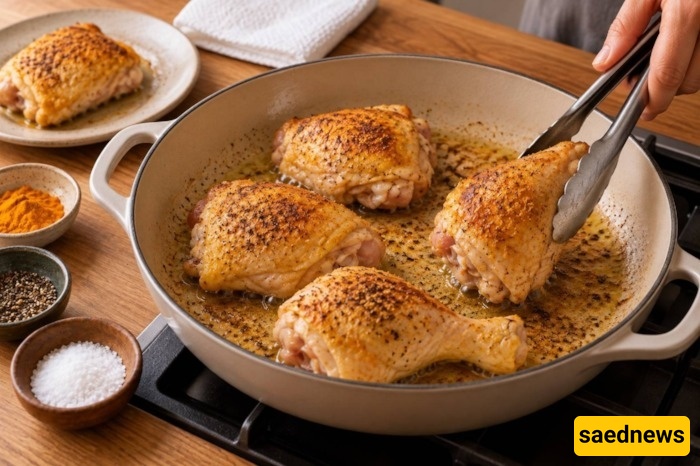
Heat 2 tablespoons of oil in a wide, heavy-bottomed pot over medium-high heat.
Add the chicken pieces and brown each side for approximately 3–4 minutes, until golden. The chicken does not need to cook completely at this stage.
Remove the browned chicken from the pot and set aside.
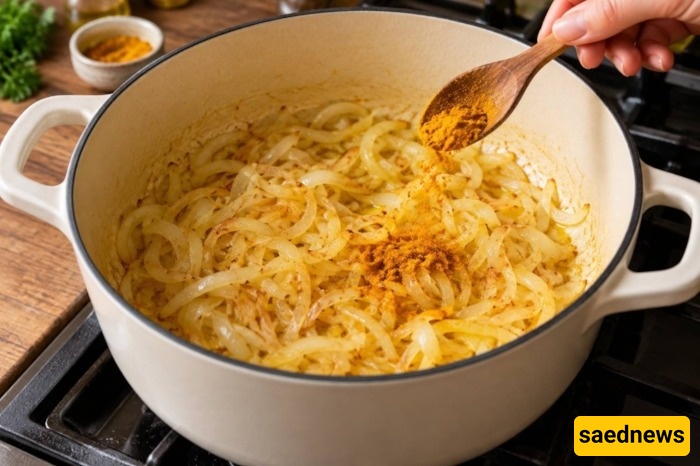
Thinly slice the onions and add them to the same pot.
Cook over medium heat until softened and golden. Add the remaining turmeric and sauté for another 30 seconds.
Move the onions to one side of the pot and add the tomato paste to the empty space.
Fry for 2–3 minutes, stirring occasionally, until its raw smell disappears and its color becomes deeper.
Mix the tomato paste thoroughly with the onions.
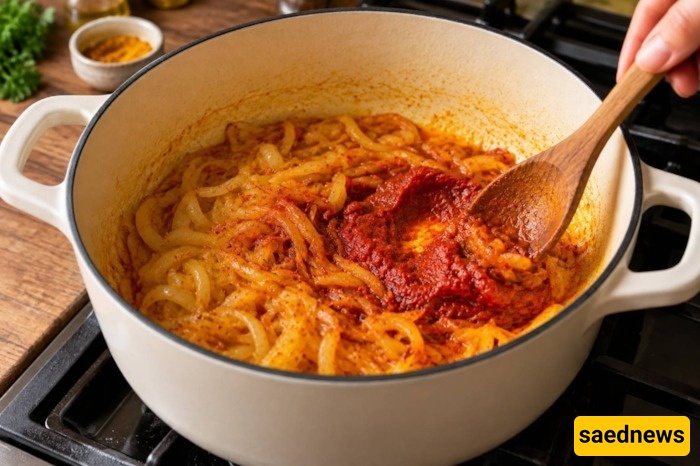
Add 1½ cups of boiling water and stir until the tomato paste dissolves completely.
Add the small cinnamon stick to the sauce.
Return the browned chicken pieces to the pot. If the liquid seems insufficient, add another half cup of boiling water.
The sauce should cover approximately one-third to half the height of the chicken pieces. The chicken should not be completely submerged.
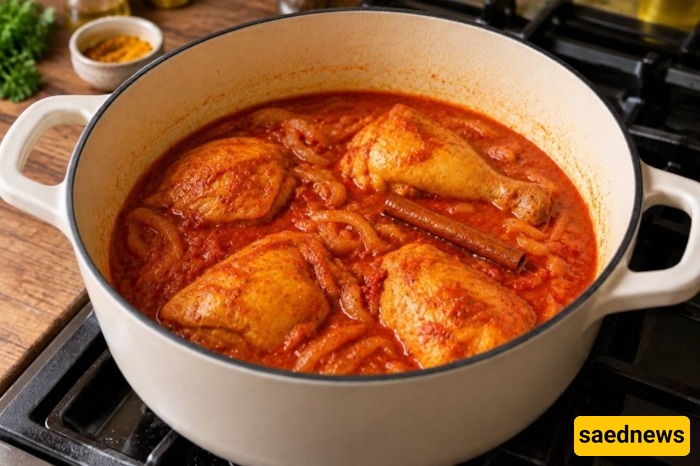
Once the sauce begins to boil, reduce the heat to low and partially cover the pot.
Approximate cooking times:
Bone-in chicken thighs or legs: 45–55 minutes.
Chicken breast: 30–35 minutes.
Turn the chicken pieces once during cooking so both sides absorb the flavor of the sauce.
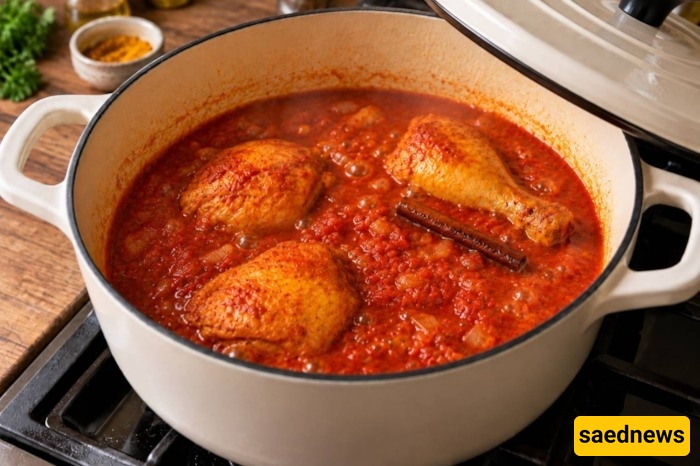
Approximately 15 minutes before the chicken finishes cooking, pour the concentrated brewed saffron over the chicken and into the sauce.
Gently shake the pot or spoon some sauce over the chicken to distribute the saffron evenly.
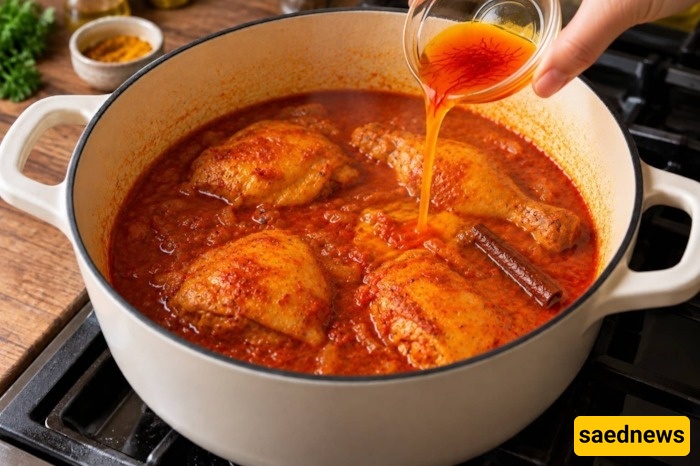
About 10 minutes before the end of cooking, taste the sauce and adjust the salt.
Add fresh lemon juice or sour orange juice gradually. Avoid adding too much, as excessive acidity can overpower the delicate saffron and tomato flavors.
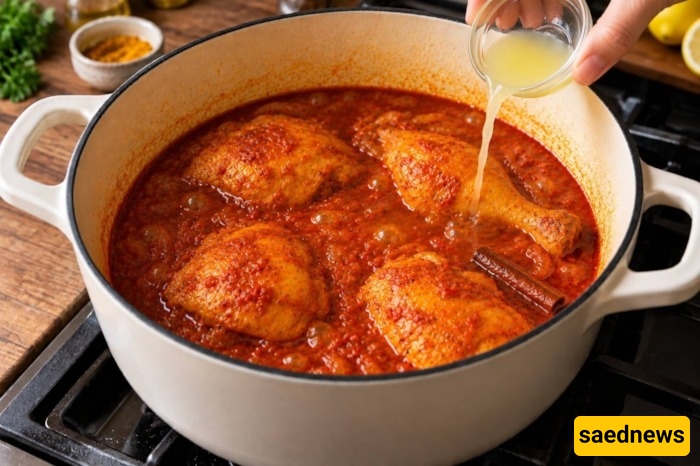
During the final 10–15 minutes, remove the lid and allow the sauce to reduce over low heat.
When the sauce becomes thick, glossy, and no longer watery, remove the cinnamon stick.
Add the butter and gently shake the pot until it melts into the sauce.
If you prefer a more liquid-style saffron chicken stew, simply reduce the sauce for a shorter time.
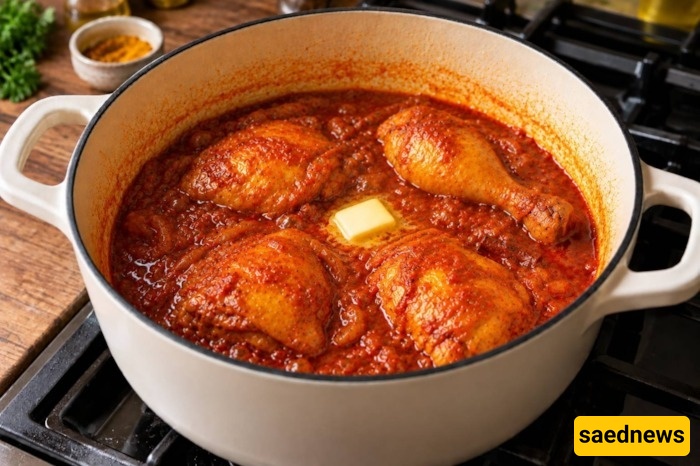
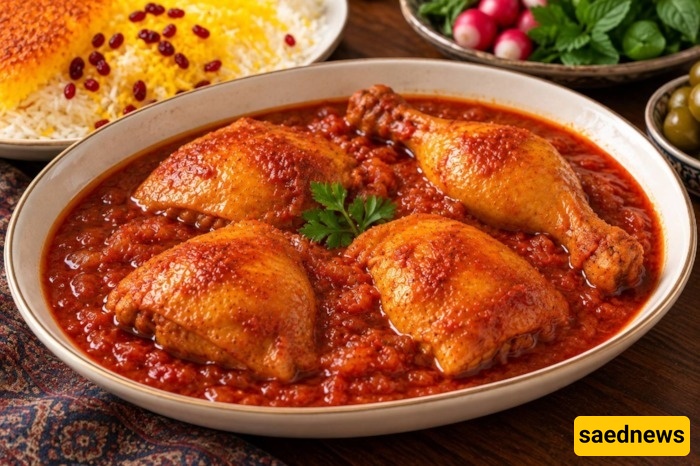
Carefully transfer the chicken pieces to a serving dish and spoon the sauce over them.
For an elegant presentation, avoid completely covering the chicken with sauce. Leaving some of the golden-brown surface visible gives the dish a more attractive appearance.
Serve with:
Plain steamed Persian rice
Zereshk Polo (Persian barberry rice)
Saffron rice
Persian crispy rice (Tahdig)
You can also serve the chicken as a main dish with carrots, bell peppers, potatoes, or other vegetables.
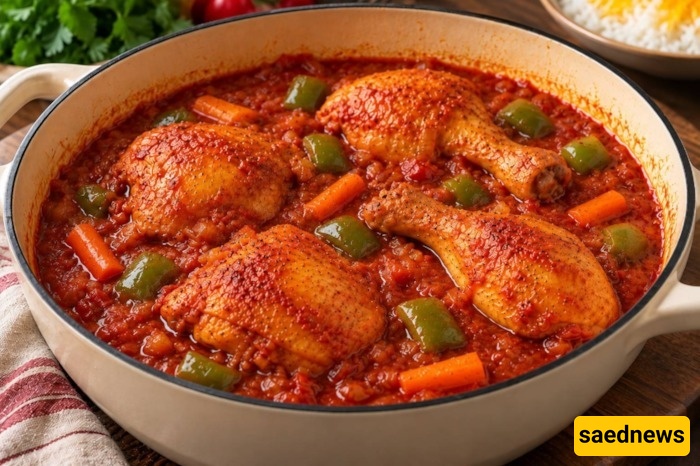
To make a more colorful version of this recipe, follow the main chicken stew instructions with a few additional ingredients.
After sautéing the onions and tomato paste:
Slice 2 carrots into rounds or thick strips.
Add them to the pot and sauté with the onions and tomato paste for 2–3 minutes.
Return the browned chicken pieces to the pot.
Add the boiling water and continue cooking as directed.
Approximately 15–20 minutes before the chicken is done, add half a bell pepper cut into thick strips.
Avoid adding the bell pepper at the beginning, as prolonged cooking will make it too soft and may overpower the other flavors.
Finish by adding the brewed saffron and adjusting the seasoning.
The carrots absorb the rich tomato sauce, while the bell pepper adds a gentle aroma without overpowering the saffron.
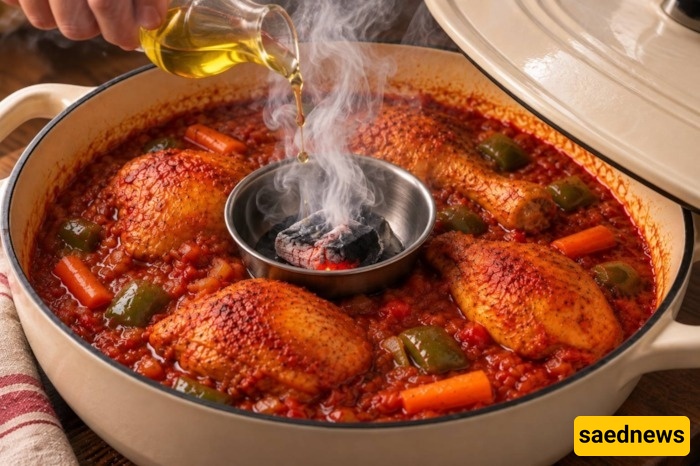
For a subtle smoky flavor, prepare the chicken and sauce using the main recipe.
Once the chicken is fully cooked:
Heat a small piece of charcoal directly over a flame until completely red-hot.
Place it in a small metal bowl.
Position the bowl in the center of the pot.
Add a few drops of oil onto the hot charcoal.
Immediately cover the pot.
Allow the smoke to infuse the chicken for approximately 2–3 minutes.
Remove the charcoal and bowl before serving.
Avoid smoking the chicken for too long, as excessive smoke can make the flavor bitter and overpowering.
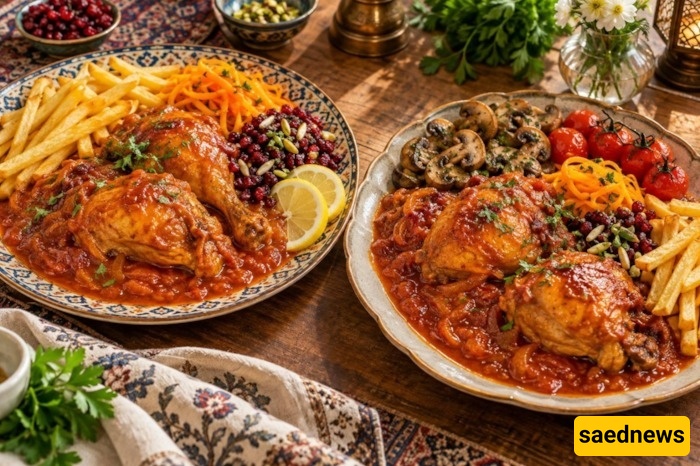
For a beautiful serving platter, prepare a selection of colorful garnishes.
Crispy potatoes: Cut 2 potatoes into strips and fry until golden and crunchy.
Saffron carrots: Thinly slice 1 carrot and sauté in a little butter for 3–4 minutes until tender but still firm.
Buttery barberries: Sauté 2–3 tablespoons of barberries in a little butter for approximately 30 seconds. Add a few drops of brewed saffron.
Sautéed mushrooms: Cook a few mushrooms over relatively high heat until golden and lightly browned.
Cherry tomatoes: Add a few cherry tomatoes to the pan and sauté for 1–2 minutes.
Arrange the potatoes, saffron carrots, barberries, and mushrooms around the chicken. Add a few fresh lemon wedges for extra color and freshness.
For a more festive presentation, sprinkle a little slivered pistachio or almond over the barberries.
Keep the garnishes around the chicken rather than directly on top, so the golden surface and rich sauce remain visible.
Zereshk Polo ba Morgh is one of the most popular Persian dishes served at celebrations and family gatherings.
Once your saffron chicken is ready, prepare the barberries separately.
Remove any unwanted particles from the barberries.
Soak them in cold water for a few minutes.
Drain them gently.
Melt 25 g of butter in a pan over low heat.
Add the barberries and sauté for only 30–60 seconds.
Avoid high heat or prolonged cooking, as barberries can quickly become dark and bitter.
Add 1–2 tablespoons of sugar to balance their natural tartness and stir briefly.
For a more festive version, add 1–2 tablespoons of concentrated brewed saffron at the end.
Spread the prepared barberries over plain or saffron-infused Persian rice and serve alongside the chicken with its thick, flavorful sauce.
For a simpler homemade version, reduce the sugar and saffron and sauté the barberries with just a little butter.
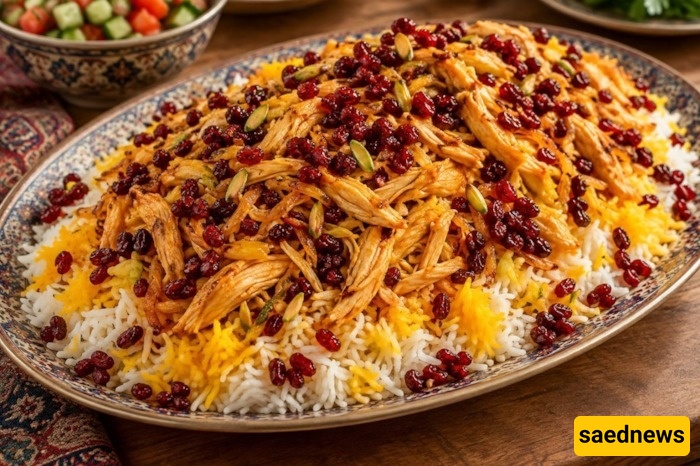
There are two popular ways to prepare Persian barberry rice with chicken and carrots.
Method 1: Cook the carrots with the chicken
Add sliced carrots directly to the chicken sauce.
Approximate cooking times:
Thin carrot slices: 20–25 minutes.
Medium carrot strips: 25–30 minutes.
Thick carrot strips: 30–40 minutes.
The carrots should become tender without losing their shape.
Method 2: Prepare the carrots separately
Cut the carrots into thin strips.
Sauté them in a little butter for 4–5 minutes.
Add washed barberries and cook for approximately 30 seconds.
Add a little brewed saffron.
If desired, add a small amount of sugar.
Spread the carrot and barberry mixture over the cooked Persian rice before serving.
Chicken breast is the best choice for shredded chicken because it becomes easy to pull apart after cooking and provides a consistent texture.
Place the chicken breast in a pot with one onion, a little turmeric, black pepper, and salt.
Cook until completely tender.
Remove the chicken and shred it using two forks.
Heat a little butter or oil in a pan.
Add the shredded chicken and sauté for 2–3 minutes.
Add 1–2 tablespoons of concentrated brewed saffron and a few tablespoons of chicken broth or sauce.
This prevents the shredded chicken from becoming dry while allowing it to absorb the saffron flavor.
In a separate pan, sauté washed barberries in a little butter for approximately 30 seconds. Add a little sugar and saffron if desired.
To serve, spread the shredded chicken and barberries over a platter of Persian rice.
For a more elegant presentation, reserve some saffron rice for the top and arrange the chicken and barberries in decorative layers.
If you enjoy sweet-and-sour flavors, Persian pomegranate chicken is an excellent alternative.
This variation is prepared with chicken, onions, pomegranate paste, and optionally walnuts. The ingredients simmer together to create a rich, thick sauce with a distinctive tangy flavor.
The pomegranate paste provides the main flavor, making this dish different from the classic saffron and tomato-based chicken stew.
A few simple techniques can significantly improve the flavor, texture, and appearance of your chicken stew.
Avoid turning the chicken too frequently: Once the chicken becomes tender, excessive handling can cause the meat to separate from the bones and ruin its presentation. Spoon sauce over the chicken instead of repeatedly turning it.
Keep the sauce slightly thinner when preparing ahead: If you are making the stew in advance for guests, leave the sauce a little more liquid. It will naturally thicken as it cools and is reheated.
Use a suitably sized pot: A pot that is too large may require additional water to cover the bottom, making it harder to achieve a thick sauce.
Should you remove the chicken skin? For a less greasy and more refined stew, it is generally better to remove excess skin, as it can release too much fat into the sauce.
Reheat gently: Always use low heat when reheating the chicken to prevent it from drying out.
The most effective solution is to increase the amount of sauce by adding unsalted water or broth. You can also add another piece of unseasoned chicken.
Although adding a whole potato is a common suggestion, potatoes do not magically absorb excess salt. It is better to adjust the overall liquid and ingredient proportions.
The most common reason is burnt tomato paste or overheated spices.
Low-quality saffron or excessive amounts of bitter seasonings can also affect the flavor.
To prevent bitterness, sauté the tomato paste only until its color deepens and its raw smell disappears. Avoid burning it.
If lemon juice, sour orange juice, or tomato paste makes the sauce excessively sour, add a very small amount of sugar.
Start with approximately ¼ teaspoon, taste, and adjust if necessary.
The goal is not to make the stew sweet, but simply to balance its acidity.
The classic seasoning combination includes:
Turmeric
Black pepper
Salt
Saffron
These ingredients provide a balanced, traditional flavor.
For a warmer aroma, add a small piece of cinnamon stick to the sauce and remove it before serving.
You can also experiment with small amounts of:
Paprika for a mild flavor and richer color
Garlic powder for a stronger savory taste
Ginger powder for a warm, aromatic note
However, use these additional spices sparingly so they do not overpower the natural flavor of the chicken, tomato paste, and saffron.