SAEDNEWS: Why Are Fittonia Leaves Wilting or Turning Yellow? Causes, Care Tips, and How to Grow Fittonia Successfully in Pots and Terrariums
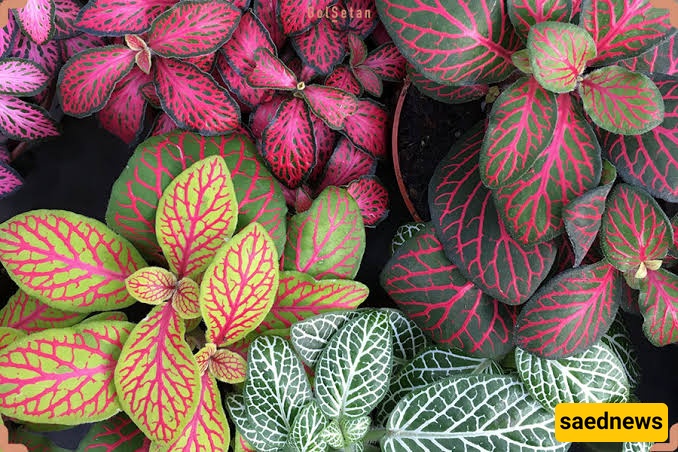
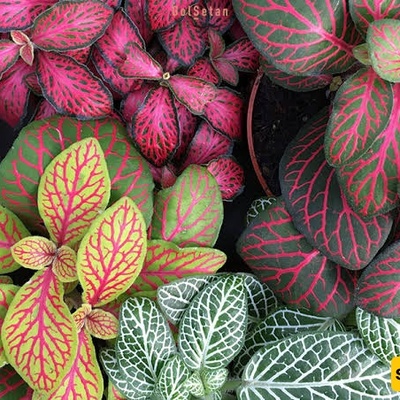
According to Saednews, Fittonia, commonly known as the Nerve Plant or Mosaic Plant, is one of the most attractive indoor plants, thanks to its small leaves decorated with colorful, contrasting veins. Available in shades of green, white, pink, and red, this compact plant adds a beautiful touch to home interiors, office desks, and terrariums.
Despite its delicate appearance, Fittonia requires specific care. It is sensitive to underwatering, dry air, and direct sunlight. Without suitable growing conditions, its leaves can wilt surprisingly quickly. Understanding its needs will help you maintain a healthy, bushy plant and prevent common growing problems.
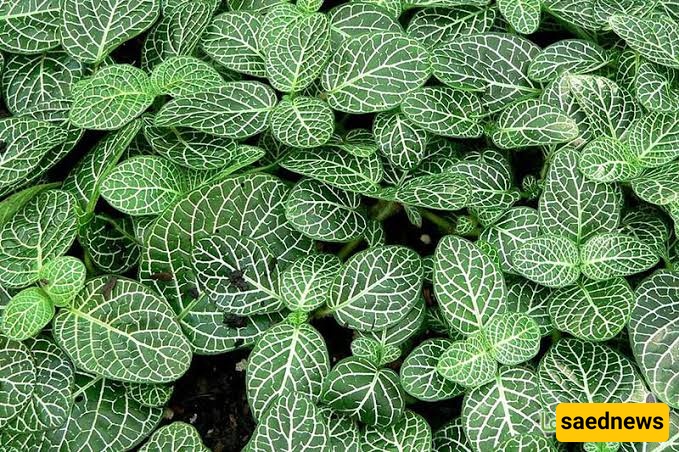
Fittonia, scientifically known as Fittonia albivenis, is an evergreen plant native to the tropical rainforests of South America. It is also called the Nerve Plant or Mosaic Plant because of its distinctive oval-shaped leaves decorated with prominent, colorful vein patterns.
Fittonia generally remains small and compact, making it an excellent choice for small pots, decorative shelves, indoor arrangements, and terrariums.
Although the plant may occasionally produce small flowers, its main ornamental appeal comes from its beautifully patterned foliage.
Fittonia varieties are mainly distinguished by the color of their leaves and veins.
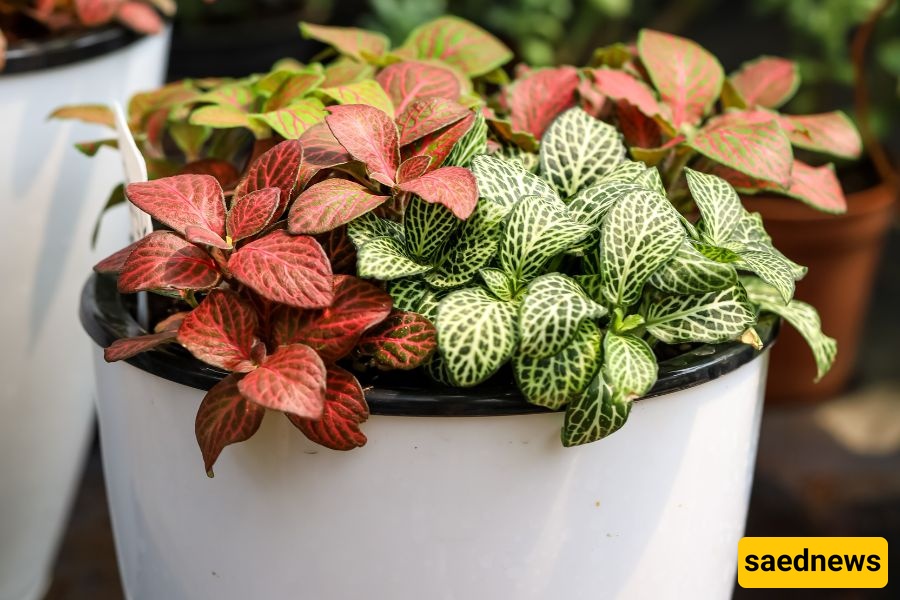
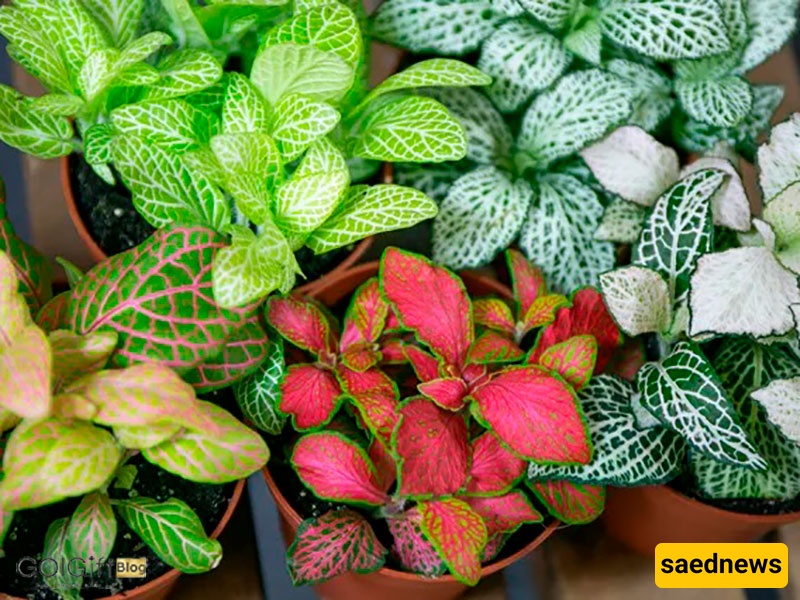
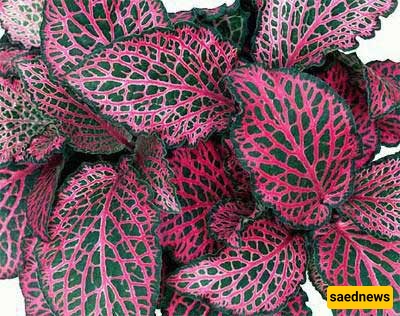
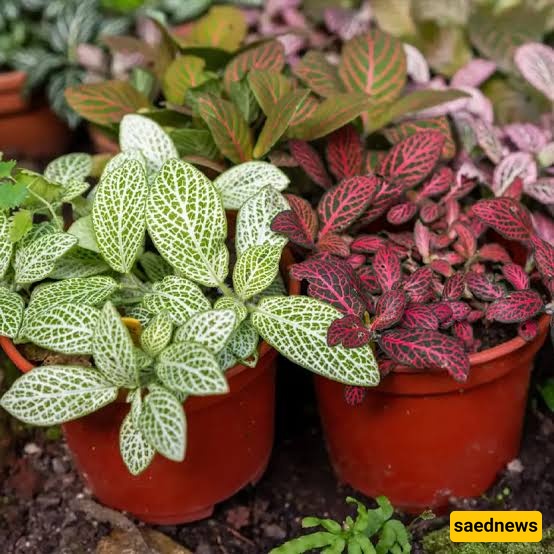
Red Fittonia features green leaves with bright red or deep pink veins. In some varieties, the reddish coloring covers a larger portion of the leaf, creating a striking appearance.
It is particularly attractive when displayed alongside green-leaved indoor plants.
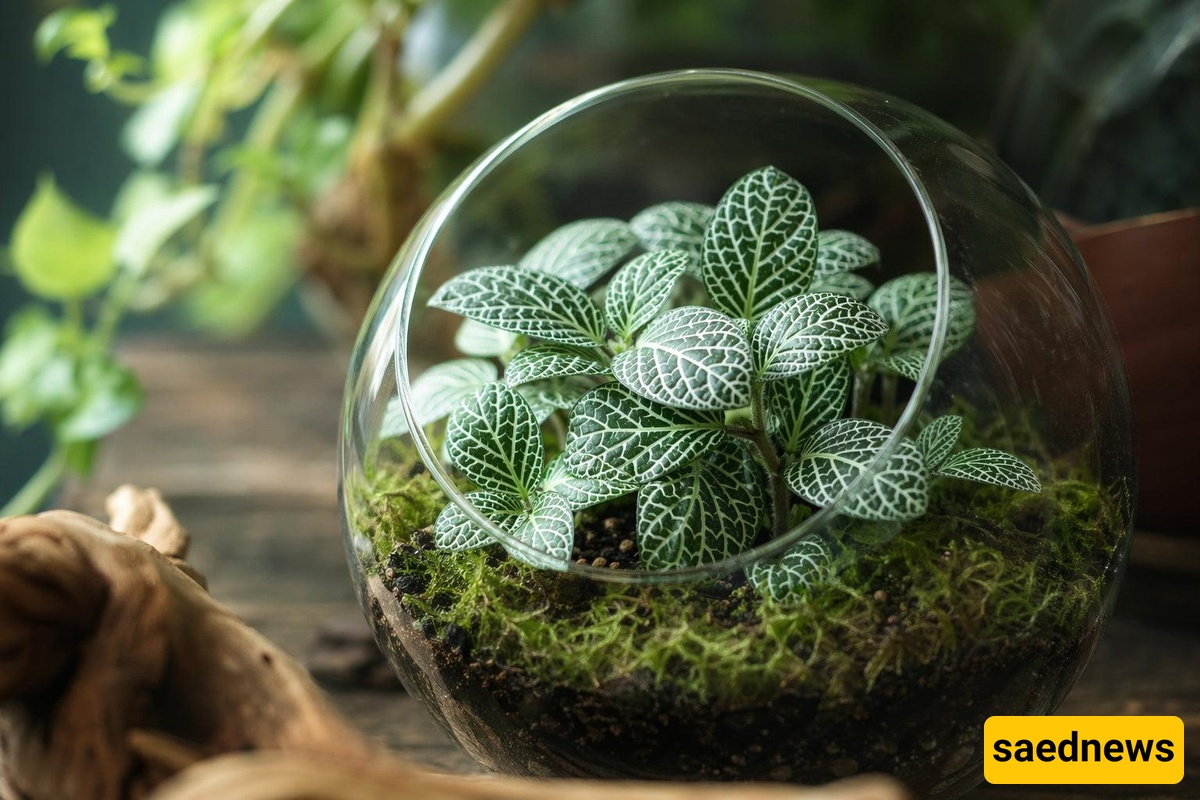
Pink Fittonia has delicate pink veins or pink patterns across its foliage. Its soft colors make it a popular choice for tabletop arrangements, decorative pots, and terrariums.
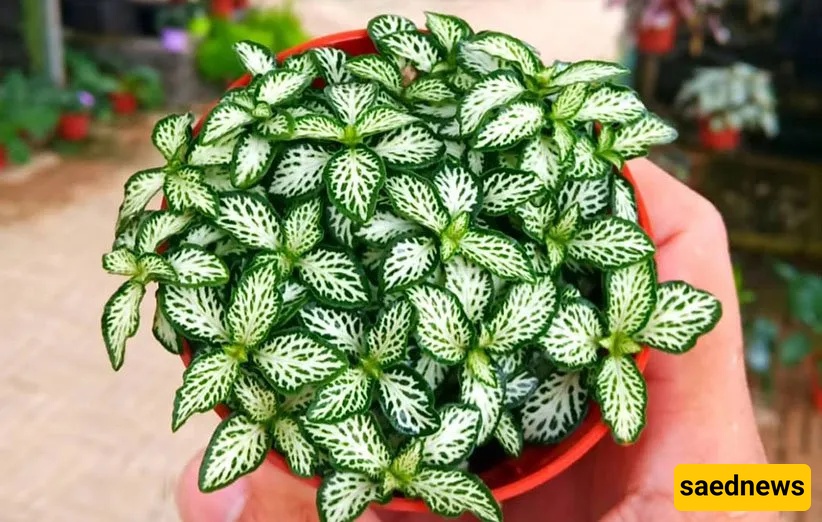
White Fittonia typically has green leaves with white or silvery veins. White Anne and White Star are two well-known varieties in this group.
Green Fittonia varieties feature light green, dark green, or subtly veined foliage. Some varieties, such as Lemon, display attractive combinations of lemon-green leaves and lighter veins.
Important note: The care requirements of different Fittonia varieties are generally similar. Red or pink leaves do not mean that the plant needs direct sunlight.
To grow Fittonia successfully, try to recreate the conditions of its natural tropical habitat. It needs bright indirect light, relatively high humidity, moderate temperatures, and soil that retains moisture without becoming waterlogged.
Fittonia prefers slightly moist soil. The soil should never become completely dry, but it should not remain constantly waterlogged either.
The best watering method is to check the top layer of soil with your finger before watering. If the surface feels slightly dry, water the plant thoroughly until excess water drains through the holes at the bottom of the pot.
Watering frequency depends on several factors, including:
Indoor temperature
Pot size
Soil composition
Season
Humidity levels
Therefore, following a fixed watering schedule, such as every two days, is not recommended for every Fittonia plant.
During warmer months, the plant may require more frequent watering. In winter, watering intervals generally become longer.
Important: Always empty the drainage tray after watering. Allowing the roots to sit in standing water can cause root rot.
Fittonia grows best in bright, indirect light.
An east-facing window or a suitable spot near a south-facing window can provide ideal conditions, provided the plant is protected from direct sunlight.
Strong sunlight can scorch the leaves and create brown patches. On the other hand, insufficient light can slow growth and reduce the intensity of the leaf colors.
If your home does not receive enough natural light, you can use a suitable grow light to support healthy growth.
Fittonia is a humidity-loving plant. In excessively dry environments, the tips and edges of its leaves may turn brown.
You can increase indoor humidity by:
Using a cool-mist humidifier.
Placing the pot on a pebble tray filled with water, making sure the bottom of the pot does not touch the water.
Keeping the plant in a naturally humid room with sufficient light, such as a bright bathroom.
Misting may temporarily moisten the leaves, but it is not a reliable substitute for maintaining adequate environmental humidity.
Additionally, leaves that remain wet for extended periods in poorly ventilated spaces may become more susceptible to fungal problems.
A temperature range of approximately 18–26°C (64–79°F) is suitable for growing Fittonia indoors.
Ideally, temperatures should not consistently fall below 15°C (59°F), and the plant should be protected from sudden temperature fluctuations.
Avoid placing Fittonia near:
Radiators and heaters
Air-conditioning vents
Cold windows
Areas exposed to cold drafts
Both excessive heat and direct exposure to cold air can damage its delicate foliage.
The ideal Fittonia soil should retain enough moisture while providing excellent drainage.
A high-quality indoor potting mix combined with some perlite is generally a good option.
Avoid heavy, clay-based, or compacted soil because it can retain too much water around the roots and increase the risk of root rot.
Choose a pot with drainage holes. When repotting, select a container only slightly larger than the previous one. An oversized pot may hold excess moisture and increase the risk of overwatering.
Fittonia does not require heavy fertilization.
During the growing season, you can apply a balanced houseplant fertilizer every two to three months, diluted to half the recommended strength.
Avoid fertilizing when:
The plant has recently been repotted.
The plant is unhealthy or stressed.
Growth has slowed significantly during colder months.
Excessive fertilizer can damage the roots and cause brown or burned leaf tips.
To encourage a bushier Fittonia, regularly trim the tips of long stems using clean scissors.
Pruning encourages lateral branching and helps the plant develop a fuller, denser appearance.
Remove dry, damaged, or unhealthy leaves to maintain its appearance. The growing season is generally the best time for pruning.
Yes! Fittonia is an excellent choice for terrariums because of its compact growth habit and preference for humid environments.
This is why growing Fittonia in glass containers, particularly closed terrariums, is so popular.
However, high humidity should not be confused with constantly wet soil. Even though Fittonia loves moisture, excessive water accumulation can still cause root rot.
Follow these tips to create a suitable environment for your plant:
1. Choose the right container
Select a transparent glass container with enough room for the plant to grow.
2. Prepare a suitable growing medium
Use a lightweight potting mix with good drainage. A layer of gravel at the bottom may provide space for excess water to collect, but it does not replace proper drainage.
3. Allow enough space between plants
Avoid overcrowding. The leaves should not be pressed tightly against the glass walls or surrounding plants.
4. Water sparingly
Water evaporates more slowly in closed terrariums, so they generally require less frequent watering.
5. Provide indirect light
Never place a terrarium in direct sunlight. The temperature inside the glass container can rise rapidly and damage the plants.
6. Monitor humidity and leaf health
If large water droplets constantly cover the glass, the soil remains excessively wet, or mold appears, adjust the moisture levels and ventilate the container when necessary.
Open vs. Closed Terrariums
Closed terrariums generally maintain higher humidity levels and are particularly suitable for Fittonia.
Open terrariums lose moisture more quickly, especially during dry seasons, so the soil moisture and surrounding humidity should be monitored more frequently.
Fittonia is usually propagated through stem cuttings. Spring and summer are the most suitable seasons for propagation.
Follow these steps:
Select a healthy stem cutting approximately 5–8 cm (2–3 inches) long.
Using clean scissors, cut just below a leaf node.
Remove the lower leaves from the cutting.
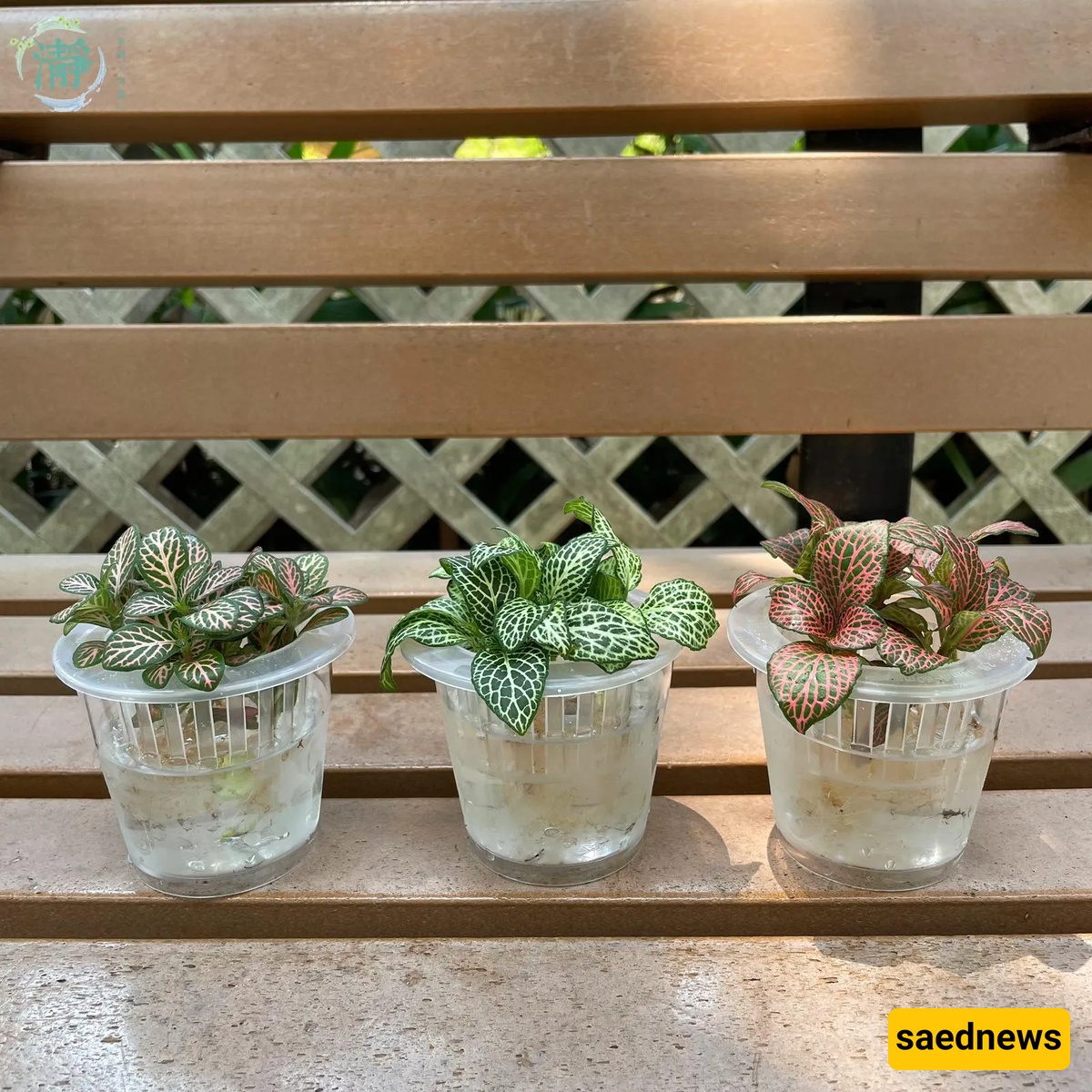
Place the cutting in a container of water, ensuring that one or two stem nodes are submerged while the leaves remain above the water.
Keep the container in a warm, bright location away from direct sunlight.
Replace the water if it becomes cloudy.
Once sufficient roots have developed, transfer the cutting into a lightweight potting mix.
Root development may take several weeks, depending on the growing conditions.
To propagate Fittonia directly in soil:
Select a healthy stem cutting.
Remove the lower leaves.
Insert the leafless portion of the stem into slightly moist, well-draining soil.
To help the cutting retain moisture while developing roots, you can cover the pot with a transparent plastic bag.
Make sure the plastic does not touch the leaves. Remove it briefly every day to allow fresh air to circulate.
Keep the soil lightly moist without overwatering.
Once the cutting develops roots and produces new leaves, gradually remove the plastic cover.
Another propagation method: Division
If you have a mature Fittonia plant, you can divide it into several smaller sections during repotting.
Make sure each section has healthy roots and several stems.
Changes in leaf appearance are often the first signs that growing conditions are unsuitable.
When diagnosing a problem, do not focus only on leaf color. Check the soil, lighting, humidity, and root condition as well.
Sudden wilting is one of the most recognizable characteristics of Fittonia.
The most common cause is underwatering or completely dry soil.
If the soil is dry and the leaves are drooping, water the plant thoroughly and allow excess water to drain away.
In many cases, Fittonia recovers surprisingly quickly after watering.
However, if the soil is already wet and the leaves remain wilted, root damage or root rot may be responsible.
In this situation, adding more water will not solve the problem. Instead, inspect the drainage and check the roots for signs of damage.
Brown leaf tips are commonly associated with:
Low humidity
Underwatering
Excessive heat
Direct sunlight
Salt or mineral buildup in the soil
Overfertilization
To address the problem, improve indoor humidity, maintain consistent watering, and move the plant away from intense sunlight and heat.
Brown areas will not turn green again. However, correcting the growing conditions can prevent further damage to new leaves.
Leaf drop may occur because of:
Severely dry soil
Sudden cold temperatures
Exposure to cold drafts
Inappropriate lighting
Root damage
If the stems also become soft and the soil develops an unpleasant smell, root rot should be considered.
Yellow leaves can have several possible causes.
Overwatering: Particularly when the soil remains wet for extended periods.
Insufficient light: Plants kept in very dark environments may become weak and develop yellow leaves.
Root problems: Compacted soil or poor drainage can interfere with water and nutrient absorption.
Natural aging: Occasional yellowing of older leaves is not always a cause for concern, especially when the rest of the plant looks healthy.
If yellowing affects several leaves, check the soil moisture and lighting conditions first.
Applying fertilizer without identifying the underlying problem is not an effective solution.
Slow growth does not necessarily mean that your Fittonia is unhealthy.
This plant naturally has a relatively moderate growth rate, and its development may slow during colder months.
However, insufficient light, unsuitable temperatures, compacted soil, and damaged roots can also restrict growth.
Mealybugs and spider mites are among the common pests that can attack Fittonia.
These pests may damage the leaves and weaken the plant.
Look for the following warning signs:
White, cotton-like clusters on leaves and stems.
Fine webs around the foliage.
Unusual spots or discoloration.
Tiny insects hiding underneath the leaves.
If you notice an infestation, isolate the affected plant from other houseplants, inspect the leaves carefully, and apply an appropriate treatment for the specific pest.
Avoid excessive pesticide use or highly concentrated homemade solutions, as Fittonia has delicate foliage that can be easily damaged.
Fittonia is often associated with connection, communication, and harmony.
This symbolism comes from its delicate, interconnected leaf veins, which create an intricate network-like pattern.
The beautiful arrangement of these veins is often seen as a reminder of human relationships, closeness, and meaningful connections.
For this reason, Fittonia can make a thoughtful symbolic gift to express friendship and affection.
Fittonia is generally listed as non-toxic to cats and dogs, making it a safer choice than many common toxic houseplants.
However, non-toxic does not mean edible.
Chewing or swallowing large quantities of ornamental plants may still cause digestive discomfort.
It is therefore best to keep the plant away from young children who may put leaves or other plant parts in their mouths.
If you want your Fittonia to remain healthy and attractive for a long time, maintaining balanced growing conditions is essential.
Its four main requirements are:
Bright, indirect light: Protect the leaves from harsh direct sunlight.
Consistently moist soil: Avoid both prolonged dryness and waterlogging.
Adequate humidity: Maintain a relatively humid environment.
Stable temperatures: Keep the plant away from sudden temperature changes and cold drafts.
Fittonia can grow successfully in both traditional pots and terrariums, although watering requirements differ between these environments.
Before treating yellowing, wilting, or browning leaves, always try to identify the actual cause of the problem.
With appropriate care, occasional pruning, and the right growing conditions, you can enjoy a healthy, colorful, and beautifully bushy Fittonia plant throughout the year.