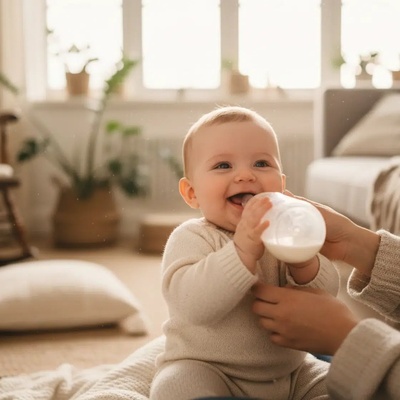
SAEDNEWS: The Moment a Baby Holds Their Bottle for the First Time: A Sweet Milestone in the First Year of Life

According to Saednews, This article explores the developmental process behind a baby’s ability to hold their own bottle, going beyond age milestones alone. You will learn how bottle-holding depends on several interconnected neuromuscular abilities, including grip strength, hand-eye coordination, trunk control, and proprioceptive development.
According to developmental milestones outlined by the Centers for Disease Control and Prevention (CDC) and guidance from the American Academy of Pediatrics (AAP), many babies begin developing the ability to hold a bottle between 6 and 10 months of age. However, the normal developmental range is much broader, and every baby progresses at their own pace.
Many people assume that holding a bottle is simply a mechanical action. However, it involves a complex sequence of neurological processes.
For a baby to hold their own bottle, the brain must coordinate several tasks simultaneously:
Recognizing the bottle's position in space.
Sending signals to the arm and forearm muscles to grasp it.
Adjusting the bottle's angle to maintain an appropriate milk flow.
Coordinating sucking with breathing.
This ability develops as part of the progression of gross and fine motor skills. Babies generally learn to reach for objects at around 4 months, grasp objects with their hands at 5–6 months, transfer objects from one hand to the other at 7–8 months, and eventually develop more purposeful and controlled grasping movements.
Therefore, holding a bottle can provide useful insight into a baby's motor development and sensory-motor coordination.
Another important aspect of this milestone is its connection to independence. When babies begin holding their own bottles, they experience one of their earliest forms of doing things independently. This experience can contribute to their developing confidence and curiosity about their surroundings.
During this period, a baby's nervous system is still undergoing early development, and hand movements are primarily reflexive and involuntary.
The palmar grasp reflex is present, but babies cannot intentionally wrap their fingers around an object to hold it.
Parents or caregivers should hold the bottle during feeding. Eye contact, gentle talking, and affectionate touch help support bonding and development.
Trying to make a baby hold a bottle independently at this age is neither useful nor appropriate.
At around 3 months, babies begin discovering that their hands can be used to interact with the world.
They may:
Bring their hands together.
Put their hands in their mouths.
Reach toward nearby objects.
Attempt to touch objects within their reach.
These behaviors are important early steps toward bottle-holding.
If your baby shows interest in touching the bottle, you can gently allow them to place their hands on it. However, you should not expect them to hold it independently.
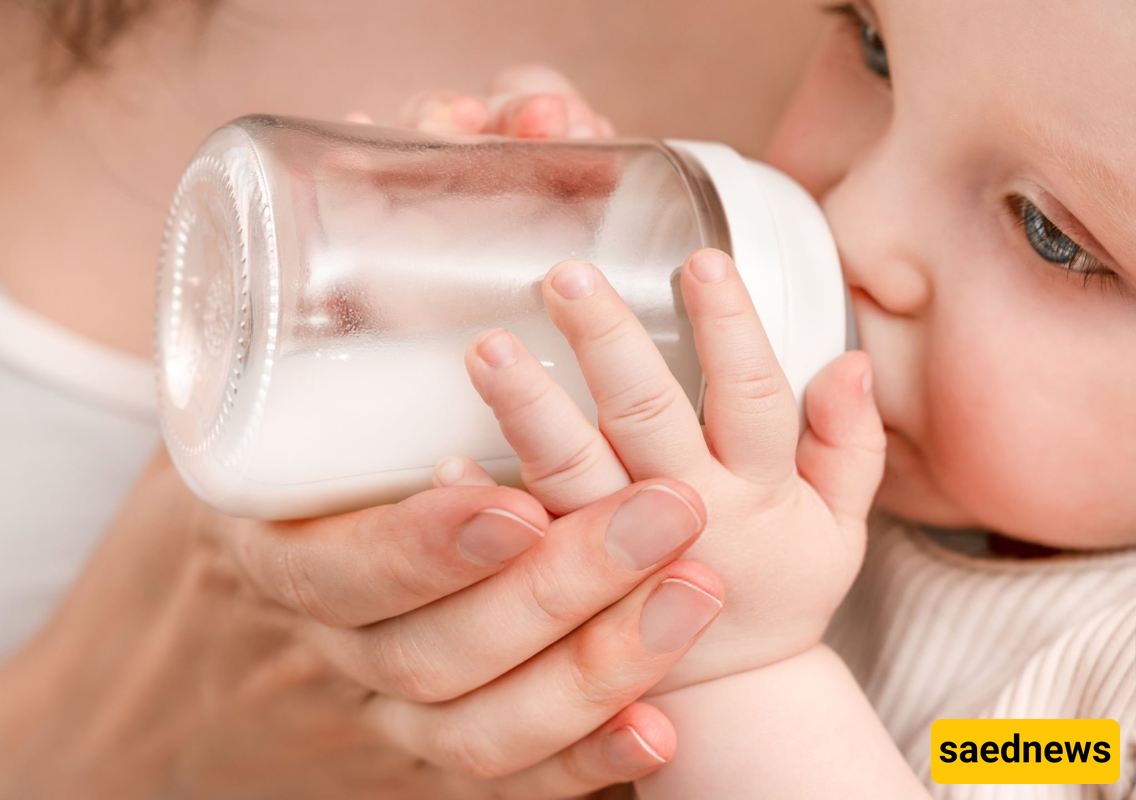
This is when many parents notice their baby's first attempts to hold a bottle.
Babies may grasp a bottle with both hands, but they usually release it after a few seconds or struggle to maintain the correct angle.
During this period, sitting with support also becomes more developed, which is important for safe feeding.
Parents can introduce lightweight, smaller bottles (typically 120–150 ml) to make grasping easier.
At this age, most babies can hold a bottle with both hands and bring it toward their mouths.
Hand-eye coordination has improved considerably, allowing babies to guide the bottle toward their mouths more accurately.
If your baby is not yet interested in holding a bottle, they may simply need more opportunities to practice or a bottle with a more suitable shape. This alone does not indicate a developmental problem.
At this stage, many babies can hold a bottle with one hand while using the other hand to reach for toys or interact with their surroundings.
Their ability to control the bottle's angle also improves. However, they may occasionally tilt it too far, causing milk to spill onto their faces.
This is a normal part of the learning process.
By their first birthday, most babies have developed sufficient coordination to grasp, hold, and release a bottle.
This is also when the American Academy of Pediatrics recommends gradually introducing the transition from bottles to cups.
The American Academy of Pediatric Dentistry also warns that prolonged bottle use, particularly during sleep, can increase the risk of early childhood tooth decay.
Before babies successfully hold a bottle independently, they often demonstrate several signs of developmental readiness.
These signs can be more helpful than relying exclusively on age.
Reaching for the bottle: Your baby moves their hands toward the bottle during feeding or attempts to touch it.
Grasping and releasing other objects: Your baby can pick up lightweight toys or spoons and hold them briefly.
Transferring objects between hands: This skill, commonly developing around 7–8 months, indicates improving bilateral coordination.
Sitting with or without support: Sitting during bottle-feeding provides a safer and more stable position.
Showing interest in self-feeding: Babies who try to bring food to their mouths using a spoon or their hands may also be ready to practice holding a bottle.
Visual attention to the bottle: Watching the bottle and following its movement with their eyes indicates developing visual-motor coordination.
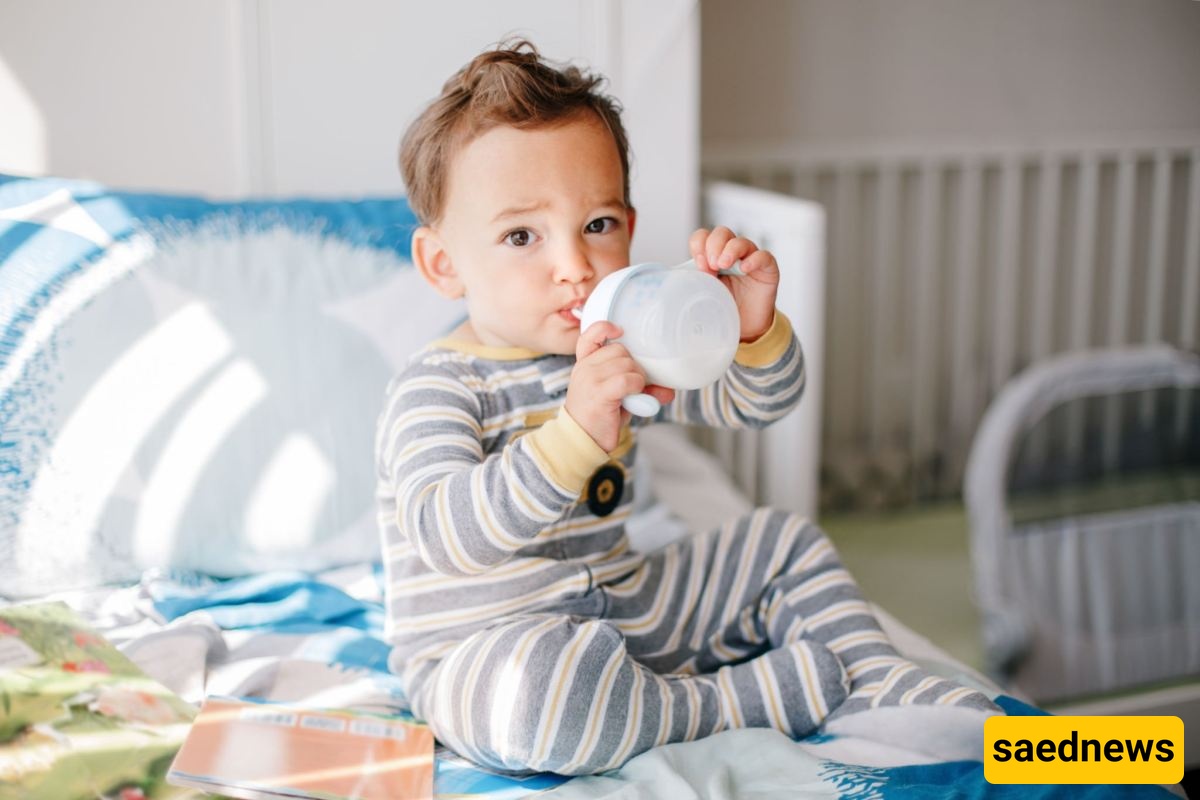
If your baby starts holding a bottle later than other babies of the same age, consider the factors that may influence this skill before becoming concerned.
Some of the most important factors include:
1. Body Weight and Muscle Strength
Babies with larger body sizes may sometimes find it more difficult to hold heavier bottles. Using a lightweight bottle can make grasping easier.
2. Bottle and Nipple Design
Wide or heavy bottles may be difficult for small hands to hold. Ergonomic bottles with narrow bodies or handles can make the process easier.
3. Opportunities for Practice
Babies who have regular opportunities to touch, grasp, and explore different objects may develop this skill more quickly.
Restricting hand movements or limiting opportunities for exploration may slow the learning process.
4. Feeding Method
Babies who are primarily breastfed may have less experience with bottles and therefore fewer opportunities to practice holding them.
5. Individual Temperament and Personality
Some babies are naturally more cautious and prefer observing their surroundings before attempting new activities.
These individual differences are completely normal.
6. Overall Health and Development
Neuromotor difficulties, premature birth, or certain underlying medical conditions may influence how quickly a baby develops this skill.
Parents can support this developmental milestone through a few simple and safe activities.
Choose an Appropriate Bottle: Lightweight, narrow bottles with handles or textured surfaces may be easier for small hands to grasp.
Practice With Similar Objects: Allow your baby to explore lightweight, cylindrical toys to develop grasping skills.
Gently Guide Their Hands Toward the Bottle: During early developmental stages, you can gently place your baby's hands on the bottle so they become familiar with its texture and shape.
Encourage Supported Sitting: Feeding in an appropriate seated position helps babies develop better control of the bottle.
Be Patient and Offer Encouragement: Respond to every attempt with a smile and gentle verbal encouragement, even if your baby does not succeed.
Allow for a Little Mess: Spilling milk onto clothing or the baby's face can happen during the learning process. It is a normal part of developing coordination.
A baby's growing independence does not reduce the parent's responsibility to supervise feeding.
The following safety precautions are particularly important:
Never prop up a bottle or leave it unattended while your baby is lying down. Feeding in a lying position can increase the risk of choking and middle ear infections.
Never leave your baby alone in a crib with a bottle. This can increase the risk of choking and tooth decay.
Always supervise your baby during feeding, even when they can hold the bottle independently.
Clean and sterilize bottles as appropriate, and regularly inspect nipples for cracks or damage.
Monitor the bottle's angle. If your baby tilts it too far, milk may flow too quickly, increasing the risk of choking.
Most babies begin showing early bottle-holding abilities between 5 and 6 months, develop more consistent two-handed control around 7–8 months, and gain greater independence between 9 and 10 months.
By 11–12 months, many babies have developed better control of grasping and holding objects.
However, these ages are general developmental estimates, not strict deadlines. Babies develop at different rates, and bottle-holding is not a required developmental milestone. Parents should continue holding and supervising the bottle whenever necessary rather than encouraging independent feeding before their baby is ready.