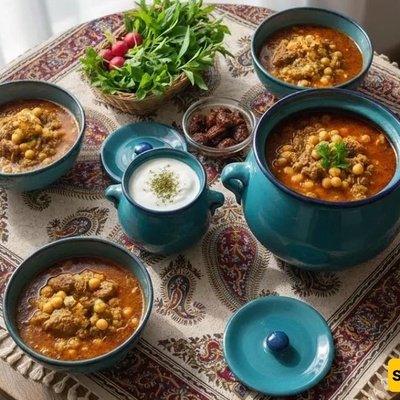
SAEDNEWS: Abgoosht and Dizi are two iconic traditional Iranian dishes that many people consider the same. However, they differ significantly in their cooking methods, serving dishes, and ingredient portions.
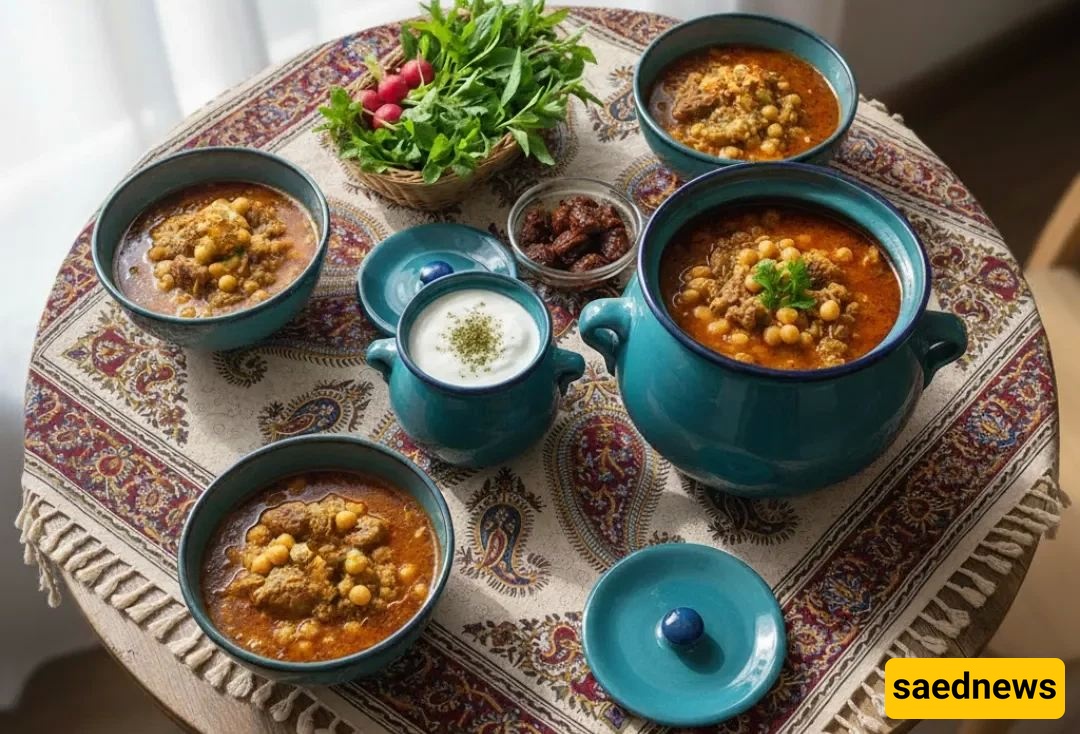
According to Saednews, Abgoosht and Dizi are among Iran’s most authentic traditional dishes, holding a special place in both Iranian households and traditional restaurants. Many people use these two names interchangeably, assuming that Abgoosht and Dizi are simply two names for the same dish. However, in Iranian culinary culture, there is an important distinction between them.
The difference lies less in their ingredients and more in their cooking methods, cooking vessels, and the way ingredients are portioned. Understanding the difference between Abgoosht and Dizi provides a deeper insight into one of Iran’s oldest culinary traditions.
Abgoosht is a traditional Iranian dish with deep roots in the country's culinary heritage. It is typically prepared with meat, legumes, onions, potatoes, tomatoes, and a variety of spices. Different regions of Iran also incorporate local ingredients to create their own versions.
Abgoosht can be considered a symbol of settled family life, as its preparation requires time, suitable cooking facilities, and a large pot. Traditionally, families cooked Abgoosht in a large communal pot and divided it among family members once it was ready.
This communal cooking method has made Abgoosht a popular family-style dish, often associated with togetherness and shared meals.
Abgoosht comes in many varieties, each known by its own name and recipe in different parts of Iran. Some of the most popular types include:
Abgoosht Bozbash: A version prepared with herbs and beans.
Abgoosht Kashk: Made with Kashk, a traditional fermented dairy product.
Abgoosht with Wheat: Prepared using wheat.
Abgoosht with Bulgur: Made with cracked wheat.
Abgoosht with Beans: Featuring beans as a main ingredient.
Abgoosht with Split Peas: Prepared with yellow split peas.
This variety demonstrates how adaptable Abgoosht is and how it has evolved to suit local ingredients and regional tastes.
Despite these variations, all types share one common feature: the ingredients are cooked together in a large pot and then divided among diners.
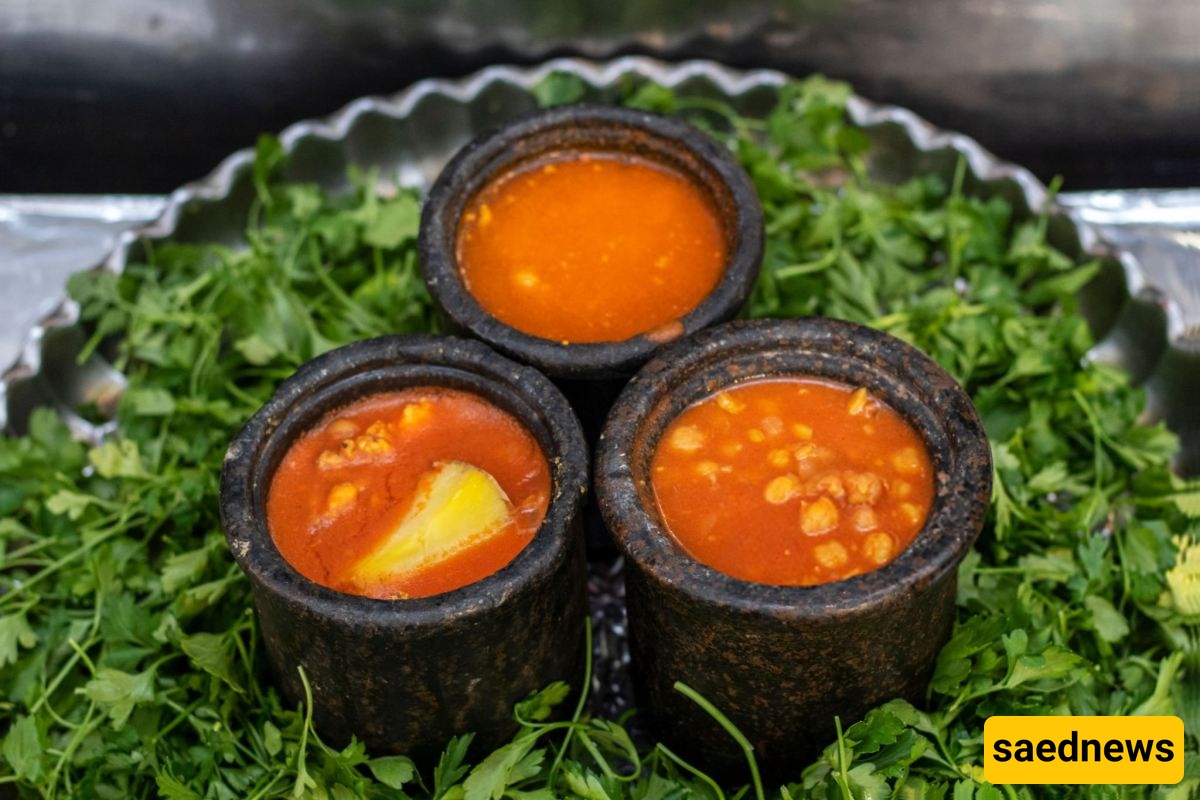
Dizi is another beloved traditional Iranian dish, but its defining characteristic lies in its cooking method and the vessel used to prepare it.
Dizi is traditionally cooked in small individual clay pots. Whether it is prepared for one person or a large group, each serving is cooked separately in its own pot.
In other words, the ingredients for each serving are measured and added individually. Meat, chickpeas, beans, onions, and other ingredients are placed into each pot in carefully measured and equal quantities before cooking begins.
This individual portioning and separate cooking process is what distinguishes Dizi from Abgoosht.
Unlike a large communal pot, each Dizi has its own ingredients and is prepared independently.
The clay pot is not simply a serving dish; it plays an essential role in the cooking process. Clay transfers heat gradually, allowing the ingredients to cook slowly and evenly.
Cooking each serving separately also ensures that everyone receives a clearly defined portion, with ingredients distributed equally. In this sense, Dizi can be seen as a symbol of fairness in food distribution and respect for each person's share.
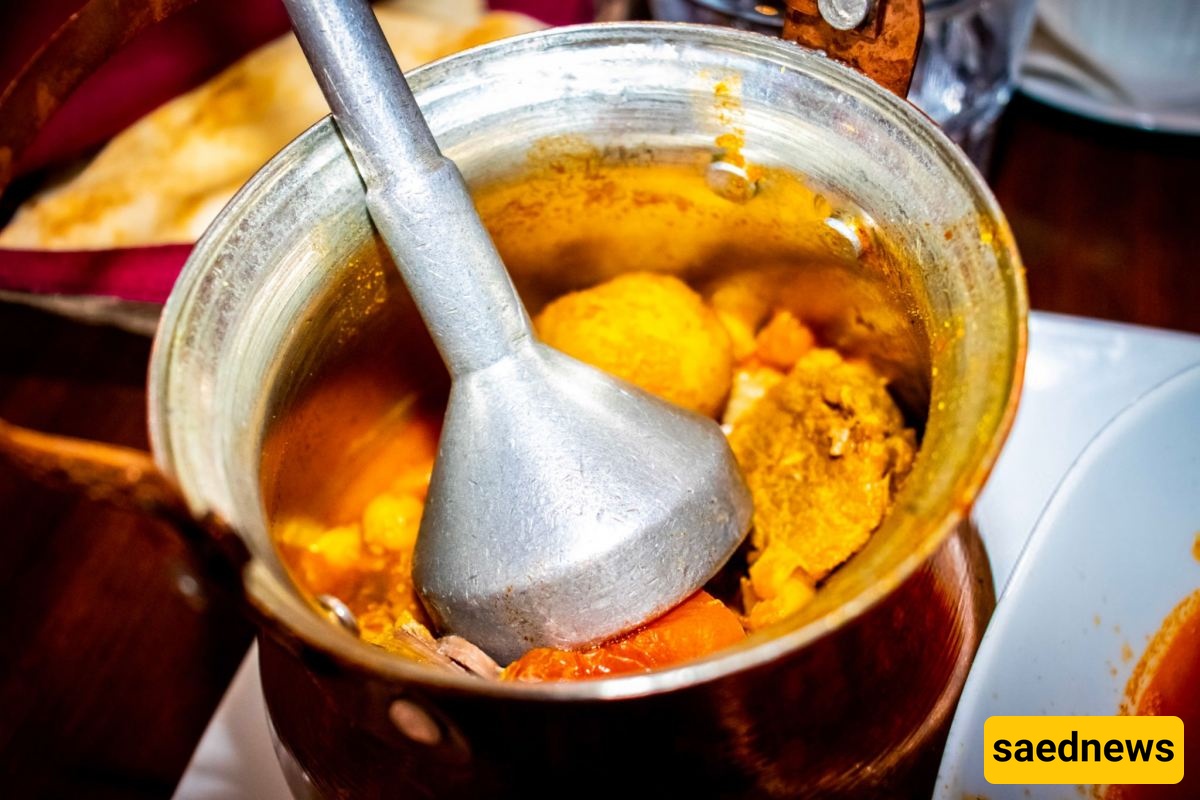
The main distinction between Abgoosht and Dizi is their cooking method and portioning system.
Whether Dizi is prepared for one person or a thousand people, each serving is cooked separately in its own pot. The meat, chickpeas, and water are measured equally for every pot, ensuring that each serving follows the same proportions.
Abgoosht, on the other hand, is prepared differently. All the ingredients are cooked together in one large pot and divided among diners after cooking.
The difference can therefore be summarized in one simple sentence:
Abgoosht is cooked collectively in one large pot and divided after cooking, whereas Dizi is prepared separately in individual portions from the very beginning.
Although this difference may seem minor, it has a significant impact on the dining experience.
With Dizi, each person receives an independent and predetermined serving, with the ingredients measured before cooking. With Abgoosht, everyone shares food prepared in one communal pot.
For this reason, Dizi is more closely associated with individual portions and personal servings, while Abgoosht represents togetherness, family traditions, and communal cooking.
When preparing Abgoosht, the ingredients are generally placed together in a large pot. Once everything is thoroughly cooked, the dish is ready to be divided and served.
In this method, ingredients are measured for the entire pot, and individual portions are determined after cooking.
Dizi follows a different process. The ingredients are measured separately for each individual clay pot before cooking begins.
This requires greater precision in portioning and distributing the ingredients. Even when several Dizi pots are cooked alongside one another, each retains its own identity as a separate serving.
Furthermore, cooking Dizi individually can influence the flavour and consistency of the dish. Each clay pot cooks its ingredients within a smaller, independent space.
In contrast, the larger cooking space and greater mixing of ingredients in a communal Abgoosht pot create a more unified flavour and allow larger quantities to be prepared at once.
Although Abgoosht and Dizi share similar ingredients and are both deeply rooted in Iranian food culture, their cooking methods set them apart.
Abgoosht represents the tradition of preparing food in a large communal pot and sharing it with family and friends. Dizi, meanwhile, emphasizes individual preparation, carefully measured portions, and the traditional use of clay cooking vessels.
Both dishes remain important parts of Iran's culinary heritage, reflecting the country's rich food traditions and the cultural values associated with sharing meals.