SAEDNEWS: The sudden cessation of Earth's rotation is a science-fiction scenario with devastating physical, climatic, and biological consequences. In this article, we scientifically explore what would happen, from objects being hurled eastward to the freezing of the planet's dark hemisphere.
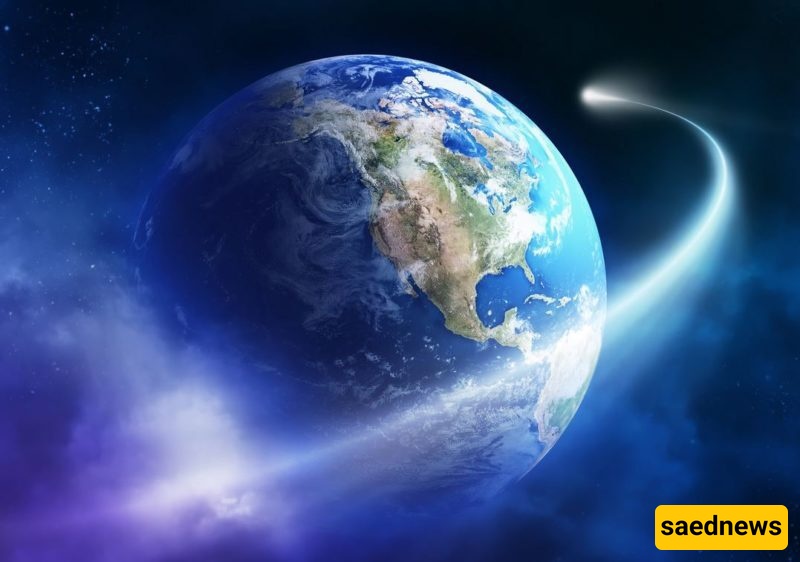
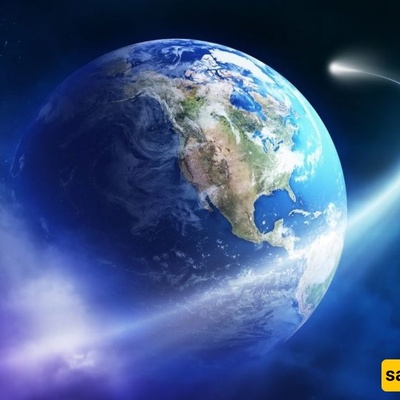
According to Saednews, Earth is a planet in constant motion, rotating continuously on its axis. This movement is so gradual and imperceptible that most people rarely think about it. Yet, it plays a fundamental role in shaping life, climate, oceans, the atmosphere, and even the planet’s physical structure. The question, “What would happen if Earth stopped rotating?” is more than a scientific curiosity; it is a way to understand how deeply life depends on our planet’s motion.
The answer depends on two important factors: whether Earth’s rotation stops suddenly or gradually, and whether the entire planet—including its core, atmosphere, and oceans—stops rotating or only its surface does. In this article, we explore the physical, climatic, geological, and biological consequences of a hypothetical halt in Earth's rotation.
It is important to note that modern science has identified no natural mechanism capable of suddenly stopping Earth's rotation. Nevertheless, examining this scenario helps us better understand why planetary rotation is essential to life.
At the equator, Earth rotates at a linear speed of approximately 1,670 kilometers per hour (1,037 miles per hour). This speed decreases at higher latitudes and reaches zero at the poles.
Earth's rotation generates centrifugal effects that cause the planet to bulge slightly around the equator and flatten at the poles. As a result, Earth is not a perfect sphere but an oblate spheroid.
Rotation also makes the regular cycle of day and night possible, influences global wind patterns and ocean currents, and contributes to the processes responsible for generating Earth's protective magnetic field.
Therefore, stopping Earth's rotation would not simply be an astronomical event. It would disrupt a complex network of interconnected planetary systems.
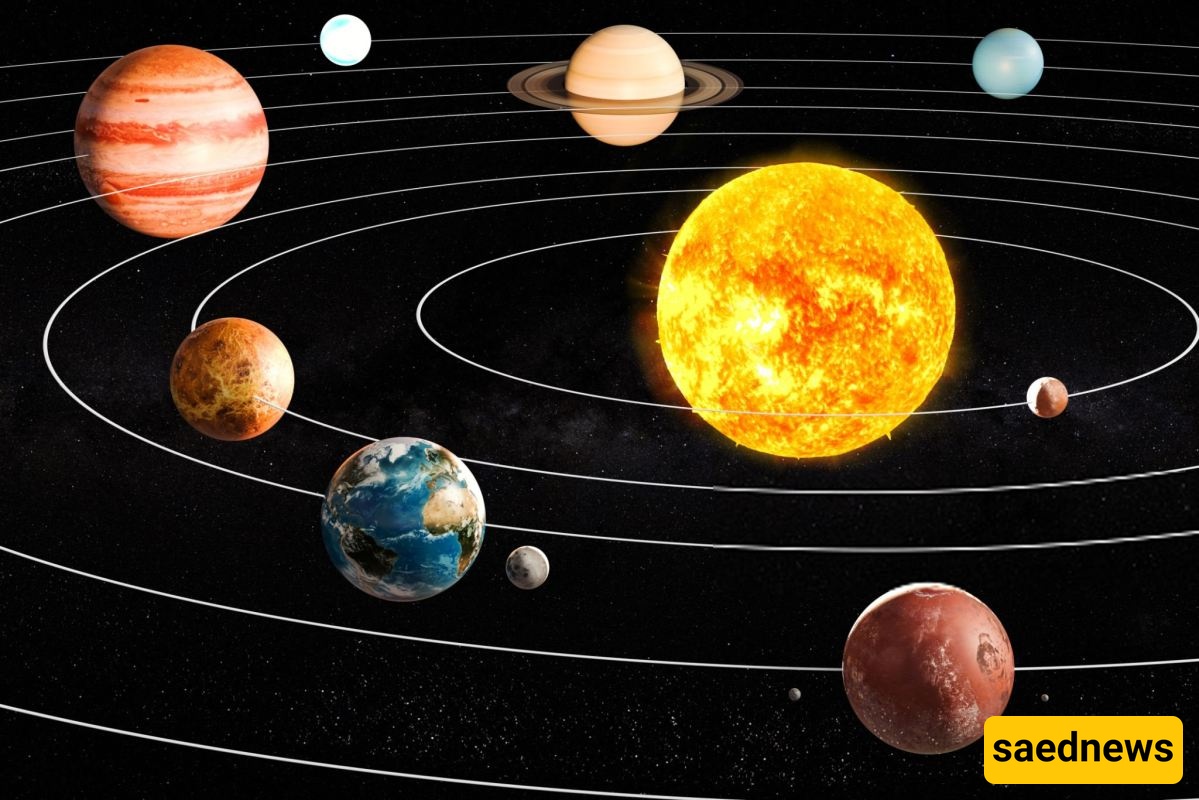
The first question is how Earth's rotation would come to a halt.
If Earth suddenly stopped rotating, everything on its surface—including people, buildings, trees, oceans, and the atmosphere—would continue moving eastward due to inertia. This is a consequence of the conservation of angular momentum.
A sudden stop would involve an enormous amount of rotational kinetic energy that would have to be transferred into other forms, producing catastrophic forces, destruction, and movement.
However, if Earth's rotation gradually slowed over an extremely long period, some of the most devastating immediate physical effects could be reduced. Even so, the long-term climatic and biological consequences would remain severe.
If Earth stopped rotating in an instant, objects on its surface would continue moving eastward at tremendous speeds.
At the equator, this speed would be approximately 1,670 kilometers per hour (1,037 miles per hour), faster than a typical commercial passenger aircraft. At a latitude of 45 degrees, the speed would be approximately 1,180 kilometers per hour (733 miles per hour).
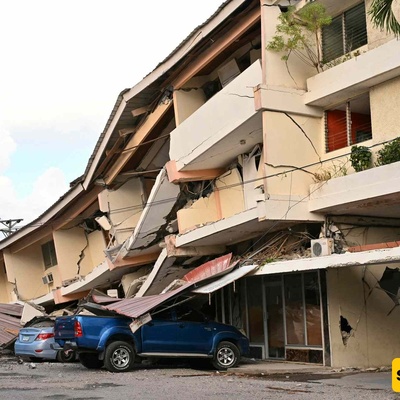
Buildings would collapse, soil and rocks would be thrown into the air, and humans and animals would be carried forward by their existing momentum.
However, this is a simplified explanation. Earth's crust is part of a much larger interconnected system. The enormous forces involved could trigger widespread earthquakes, fractures in the crust, and significant geological disturbances.
Volcanic activity could also be affected, potentially leading to eruptions and the release of molten rock through newly formed fractures.
In short, a sudden halt in Earth's rotation would produce a planetary catastrophe on an unprecedented scale.
The oceans would be just as vulnerable to the effects of a sudden stop.
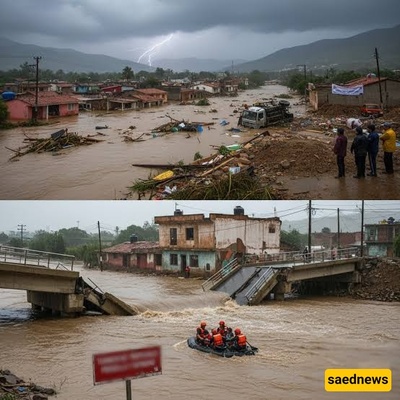
If Earth suddenly stopped rotating, ocean water would continue moving eastward at enormous speeds, potentially generating devastating waves along coastlines. These waves could reach heights of tens or even hundreds of meters under extreme hypothetical conditions.
The destruction would not be limited to coastal areas. Massive volumes of water could travel far inland, flooding extensive regions.
Another major consequence would be the redistribution of ocean water. Earth's rotation currently contributes to the equatorial bulge, allowing more ocean water to remain concentrated around the equatorial region.
Without this rotational effect, water would gradually redistribute toward the polar regions as the planet's shape changed.
Over time, enormous quantities of water could accumulate near the poles, while large parts of the equatorial region would become significantly drier.
This would fundamentally transform Earth's geography.
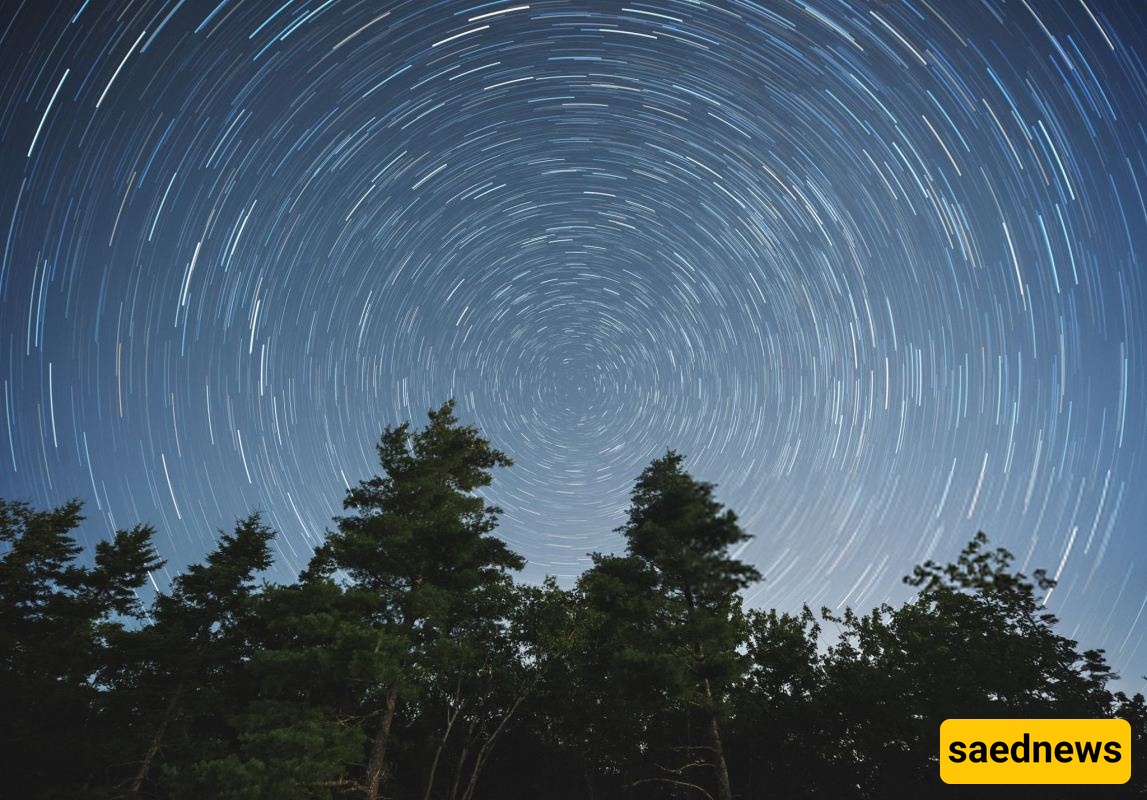
Earth's atmosphere is also strongly influenced by planetary rotation.
If the planet suddenly stopped, the atmosphere would initially continue moving due to inertia, generating extraordinarily powerful winds capable of destroying buildings, uprooting trees, and carrying massive amounts of dust and debris.
Beyond the immediate destruction, the loss of rotation would fundamentally change atmospheric circulation.
The Coriolis effect, which results from Earth's rotation, plays an essential role in shaping trade winds, global weather systems, and the distribution of heat between the equator and the poles.
Without this effect, familiar atmospheric circulation patterns would be dramatically altered.
The result would be a radically different climate system, with extreme temperature contrasts, unusual wind patterns, and potentially vast regions experiencing either persistent winds or relatively stagnant air.
One of the less familiar consequences of stopping Earth's rotation would be a gradual change in the planet's shape.
As mentioned earlier, Earth's equatorial bulge exists because of its rotation and the associated centrifugal effect.
If rotation ceased, this effect would disappear. Over geological timescales, Earth would gradually move toward a more spherical shape.
This adjustment could involve substantial movements within the crust and mantle, potentially producing significant geological stresses and changes in surface elevation.
The redistribution of ocean water would further alter coastlines and continental geography.
In other words, stopping Earth's rotation would eventually redraw the physical map of the planet.
Perhaps the most significant long-term consequence of Earth's rotation stopping would be the disruption of the familiar day-and-night cycle.
If Earth stopped rotating relative to the distant stars, one hemisphere would remain facing the Sun for approximately half a year, while the opposite hemisphere would experience an extended period of darkness. Earth would continue orbiting the Sun, so neither hemisphere would remain permanently illuminated or dark.
The illuminated region would experience prolonged heating, causing temperatures to rise and potentially leading to widespread evaporation of surface water.
Meanwhile, the dark hemisphere would undergo prolonged cooling, allowing extensive areas to freeze.
The boundary between these regions would experience enormous temperature differences, potentially producing persistent and powerful atmospheric circulation.
Such extreme conditions would make agriculture, freshwater availability, and human habitation extraordinarily difficult across much of the planet.
Earth's rotation plays an important role in the geodynamo, the process that generates the planet's magnetic field.
This process takes place primarily within Earth's electrically conductive, liquid outer core, where the movement of molten iron and other materials helps generate the magnetic field.
Earth's magnetic field protects the planet by deflecting many charged particles from the solar wind and reducing the amount of harmful radiation reaching the atmosphere and surface.
If Earth's rotation stopped, the dynamics of the outer core could change significantly, potentially affecting the geodynamo and the strength of the magnetic field.
However, stopping rotation would not necessarily cause the magnetic field to disappear immediately. The relationship between rotation and the geodynamo is complex.
If the magnetic field weakened substantially over time, Earth's atmosphere could become more vulnerable to interactions with the solar wind, potentially increasing atmospheric loss over geological timescales.
This could create additional challenges for the long-term survival of life.
A prolonged disruption of Earth's rotation would have devastating effects on ecosystems and food chains.
Plants depend on sunlight and environmental cycles to grow and carry out photosynthesis. Extreme changes in light exposure and temperature would disrupt agricultural production and natural ecosystems.
Animals would face rapidly changing habitats, disrupted migration patterns, and declining food supplies. Many species could struggle to adapt, potentially leading to widespread extinctions.
Humans would face several simultaneous crises, including:
Destruction of infrastructure and populated areas.
Massive flooding and extreme weather conditions.
Severe shortages of food and freshwater.
Agricultural collapse and ecosystem disruption.
Increasing exposure to environmental extremes.
Long-term deterioration of conditions suitable for human habitation.
Some microorganisms and specialized organisms living in deep-sea environments or protected underground habitats might survive under certain conditions.
However, human civilization, as we know it today, would almost certainly be unable to continue functioning.
Under real-world conditions, there is no known natural force capable of suddenly bringing Earth's rotation to a complete stop.
The planet possesses an enormous amount of angular momentum. Even an extremely large asteroid impact or a massive volcanic eruption would generally produce only relatively small changes in Earth's rotation.
In reality, Earth's rotation is gradually slowing because of tidal friction, primarily caused by interactions between Earth and the Moon.
This process increases the length of the day over extremely long periods. However, the change is so gradual that it is negligible on the timescale of an individual human life or even human civilization.
Therefore, the scenario of Earth suddenly stopping its rotation is primarily a scientific thought experiment rather than a realistic threat.
Earth's rotation is one of the fundamental processes that makes our planet habitable. It influences the length of days, atmospheric circulation, ocean dynamics, planetary shape, and the conditions that support life.
If Earth suddenly stopped rotating, the immediate consequences would include catastrophic destruction caused by inertia, powerful winds, and massive ocean movements. Over longer periods, dramatic changes in climate, geography, ecosystems, and potentially the magnetic field could make much of the planet uninhabitable.
Although such an event is not considered a realistic natural possibility, exploring it reveals just how closely life on Earth is connected to the planet's continuous rotation.