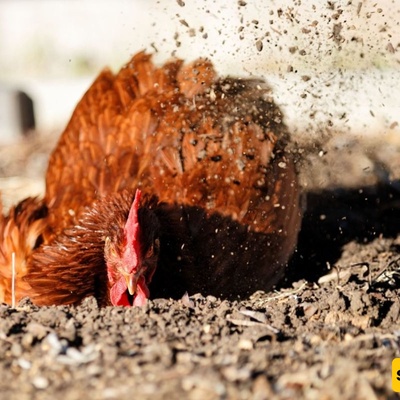
SAEDNEWS: Dust bathing is one of the most natural and essential behaviours in chickens. It plays a vital role in maintaining healthy skin and feathers, controlling parasites, regulating body temperature, reducing stress, and improving overall flock welfare.
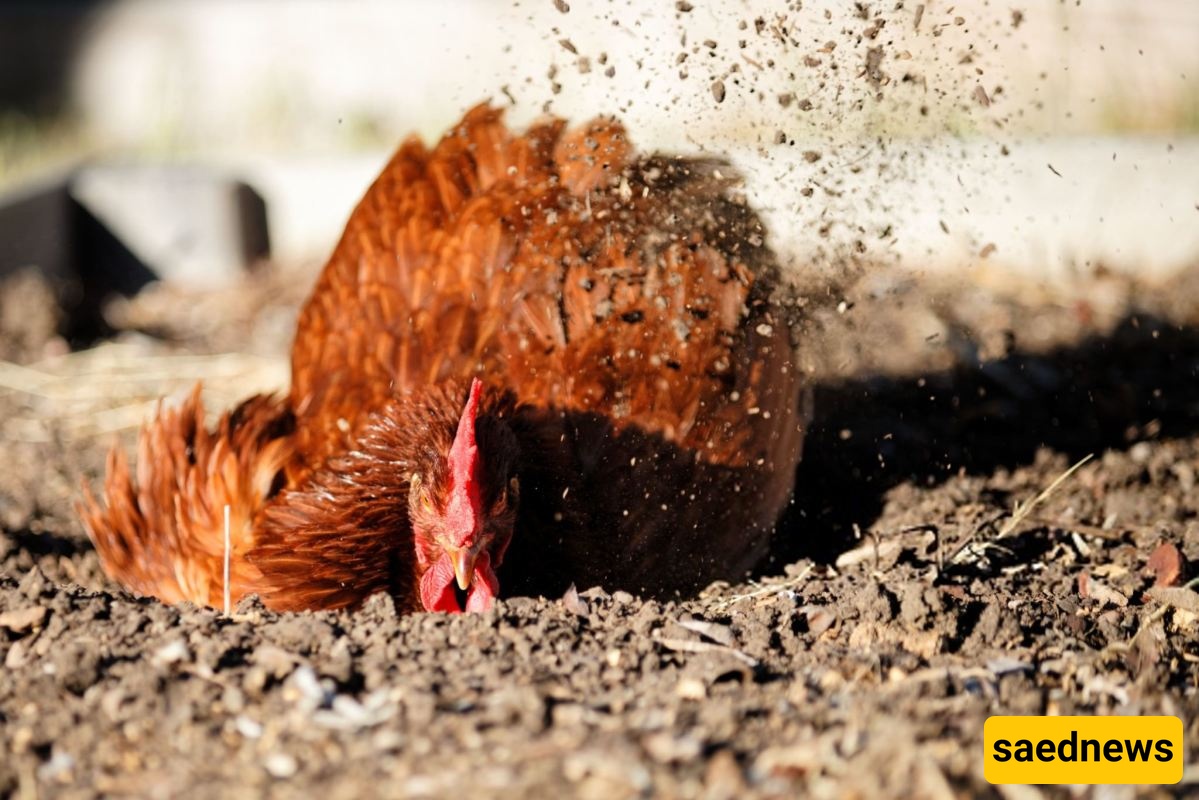
According to Saednews, Dust bathing is an instinctive behavior in which a bird uses its beak and feet to disturb loose, dry materials such as soil, sand, wood ash, or peat. It settles into the material, moves its body rhythmically, and works the particles deep into its feathers. Although it may look like play, dust bathing is actually a form of dry grooming in which dust absorbs excess oil and removes dirt from the feathers and skin.
This behavior is not exclusive to domestic chickens. Quails, turkeys, pheasants, partridges, and many wild bird species also take dust baths. In domestic chickens, the instinct is so deeply rooted that chicks begin displaying an incomplete version of the behavior during their first weeks of life, even without watching their mothers. They gradually develop the full sequence as they grow.
It is important to distinguish dust bathing from water bathing and soil consumption. Water bathing involves using water to clean feathers, while dust bathing relies on solid particles. Eating soil, on the other hand, is a feeding-related behavior associated with mineral intake and the digestive function of the gizzard. These behaviors should not be confused.
Poultry behavior studies divide dust bathing into a predictable sequence of movements:
Preparing the dust hollow: The chicken scratches and digs the ground with its beak and feet, creating a shallow depression when the bedding is suitable. Wet, hard, or coarse materials can prevent this stage.
Settling down and rubbing the body: The bird lies on its side or belly, rubbing its sides and back against the ground. This allows dust particles to penetrate the deeper layers of its feathers.
Rubbing the head and neck: The chicken pushes its head into the dust and rubs its neck against the bedding, cleaning areas that are difficult to reach through ordinary preening.
Shaking and arranging the feathers: Finally, the bird stands up, vigorously shakes its body, rearranges its feathers with its beak, and often stretches its wings and legs.
The entire process usually lasts between 5 and 30 minutes. In free-range flocks, several chickens often use the same dust-bathing area simultaneously or one after another.
The short answer to the question of why chickens take dust baths is that this behavior helps maintain feather and skin health, control external parasites, regulate body temperature, relieve stress, and support social interactions within the flock.
Each of these benefits has a biological explanation.
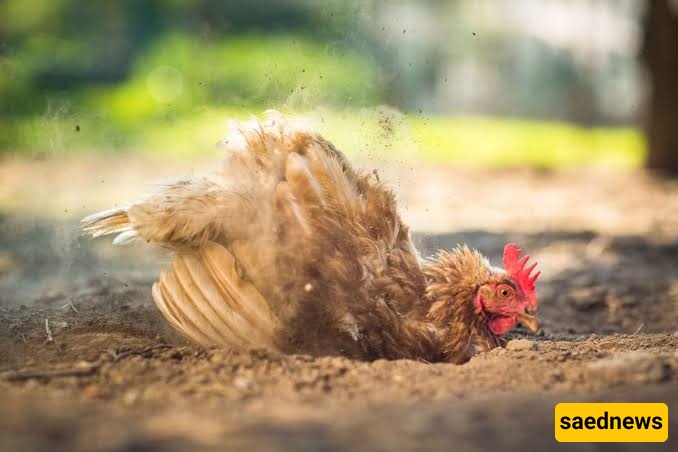
Chickens are vulnerable to lice, mites, ticks, and feather fleas. In warm and humid environments, infestations can spread throughout an entire flock within a few weeks.
Fine, dry dust particles reach the base of the feathers and the skin, absorbing surface oils that many parasites rely on to cling to their hosts. Dust also creates dry conditions and friction that make survival more difficult for certain external parasites.
When chickens shake their bodies, some of the dust particles and parasite eggs are dislodged from their feathers.
However, dust bathing is only part of preventive parasite management. It is not a substitute for treatment. Severe infestations require veterinary assessment and appropriate medication.
Chicken feathers have a complex structure consisting of a central shaft and thousands of smaller branches connected by tiny hooks.
When feathers become oily or wet, these connections can separate, reducing their insulating ability. Dry dust absorbs excess oil and surface moisture, allowing chickens to rearrange their feathers through preening.
Well-maintained feathers help chickens retain body heat during winter and protect their skin during warmer weather.
Unlike humans, chickens do not sweat. They primarily release excess body heat through respiratory processes and exposed body surfaces.
A thin layer of cool dust on the skin can provide temporary insulation and reduce heat absorption from the surrounding environment.
This explains why chickens also take dust baths during summer, particularly in shaded areas. Contrary to common assumptions, dust bathing is not exclusively a cold-weather behavior.
Bird skin contains numerous sensory nerve endings. When fine particles rub against the skin, they provide gentle tactile stimulation and may help remove surface debris and dead skin cells.
The physical contact also provides sensory enrichment that chickens naturally seek.
Birds that can immerse themselves in deep, soft bedding are better able to satisfy this behavioral need. Simple cages and wire flooring, by contrast, severely restrict or completely prevent this natural activity.
Behavioral research indicates that dust bathing is a rewarding activity for birds.
Studies involving opioid receptor blockers have found that inhibiting these receptors reduces the intensity and duration of dust bathing. This suggests that the behavior is associated with the brain's internal reward system and endorphin-related processes.
This finding is particularly important for animal welfare. Preventing chickens from dust bathing is not simply a matter of restricting a grooming activity; it also deprives them of an important behavioral and psychological need.
Prolonged restriction may contribute to abnormal replacement behaviors, including excessive feather pecking.
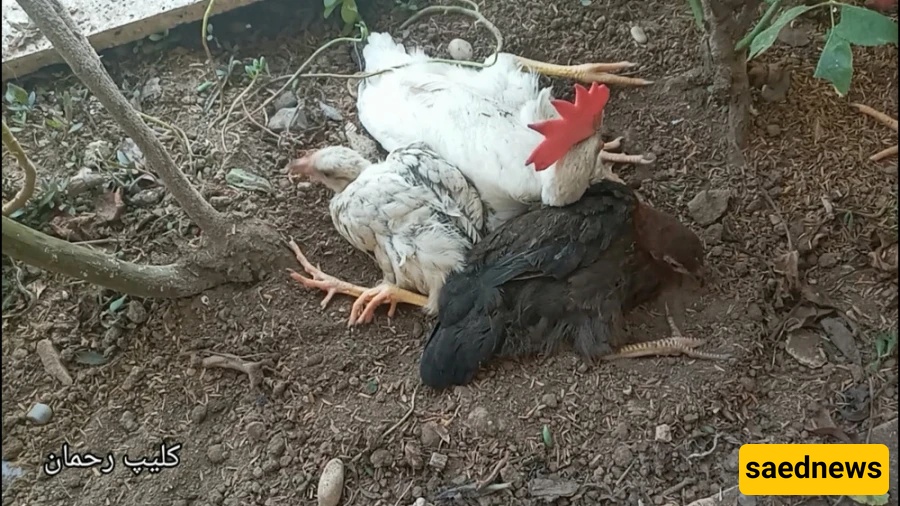
Dust bathing is often a group activity. One chicken may begin bathing, attracting other members of the flock to the same area.
This shared, relatively peaceful activity can contribute to social stability and reduce tension between birds.
Flocks with sufficient space and suitable bedding generally experience fewer aggressive interactions than those kept in overcrowded or unsuitable environments.
Dust bathing is not merely a learned activity. It is an instinctive behavior rooted in the bird's biological and behavioral development.
Chicks can display dust-bathing movements even when raised in isolation.
Consequently, an environment that does not allow dust bathing can lead to behavioral frustration. This may appear as restlessness, feather pecking, and deteriorating feather condition.
Providing appropriate dust-bathing opportunities is therefore an important part of responsible poultry management.
Chickens sometimes swallow small amounts of soil. This is a feeding-related behavior associated with mineral intake and the grinding function of the gizzard.
However, excessive or persistent soil consumption may indicate nutritional deficiencies, such as insufficient calcium or sodium, or potentially an underlying health problem. Veterinary evaluation may be necessary.
The distinction is straightforward:
Dust bathing: A grooming behavior that helps clean the feathers and skin.
Soil consumption: An actual feeding behavior involving the ingestion of soil.
To ensure that chickens can enjoy safe and effective dust baths, consider the following recommendations:
1. Choose suitable materials
Washed construction sand, dry soil, peat, or a mixture of sand and clay soil are suitable options. Wood ash is also commonly used, but it should be completely cool and free from partially burned charcoal.
2. Keep the bedding dry
Wet bedding loses much of its dust-absorbing function and may encourage fungal and bacterial growth.
3. Provide sufficient depth
A minimum depth of 10–15 cm of loose material is recommended so chickens can comfortably immerse themselves in the bedding.
4. Offer both shaded and sunny locations
Ideally, chickens should have access to both sunny and shaded dust-bathing areas, allowing them to choose according to weather conditions and personal preference.
5. Provide enough space
Allow sufficient room for every chicken to bathe without excessive competition. As a practical guideline, consider providing a dedicated bathing area or at least half a square metre of dust-bathing space per bird.
6. Avoid hazardous materials
Never use soil contaminated with pesticides, herbicides, used motor oil, or harmful chemicals. Wood ash containing plastic residues or other toxic substances is also dangerous.
If using diatomaceous earth, choose only food-grade material and exercise caution. Inhaling fine particles can damage the respiratory system of chickens and other birds.
7. Maintain regular hygiene
Keep the bedding dry, remove droppings regularly, and replace contaminated material when necessary.
Dust bathing is generally a positive sign of natural behavior and good environmental enrichment.
However, certain unusual behaviors may indicate an underlying problem.
Pay attention if a chicken:
Constantly and obsessively digs in only one particular spot.
Repeatedly pulls out or damages its own feathers.
Shows severe restlessness.
Consumes unusually large quantities of soil.
These signs may be associated with mineral deficiencies, serious parasite infestations, or environmental stress.
If such symptoms persist, veterinary assessment is recommended.
Dust bathing is far more than a playful activity. It is an essential natural behavior that supports feather maintenance, skin health, parasite control, temperature regulation, and psychological well-being.
Providing chickens with access to clean, dry, and suitable dust-bathing materials is a simple but important step toward improving their health, comfort, and overall quality of life.