SAEDNEWS: Many students pursue academic fields that do not align with their personal interests, strengths, or talents. This phenomenon, often referred to as academic major mismatch, can lead to declining motivation, reduced academic confidence, and lower levels of engagement in their studies.

According to Saednews, Choosing an academic major is one of the most life-shaping decisions a person makes. It influences not only future career opportunities but also the everyday learning experience, an individual's perception of their abilities, and even their mental well-being. However, a considerable number of students pursue academic fields that do not align with their interests, talents, or personal values. This situation can be described as academic major mismatch. Its consequences often appear in the form of declining academic motivation and reduced academic self-confidence. This article explores the psychological mechanisms behind these effects and presents practical strategies for breaking this cycle.
Academic major mismatch refers to a situation in which a student's individual characteristics—including interests, talents, cognitive abilities, personal values, and career expectations—do not sufficiently align with the nature, requirements, and culture of their chosen field of study.
This mismatch is not always immediately apparent. Sometimes, students spend months or even years before realizing that they may have chosen the wrong academic path.
Academic major mismatch is generally the result of several contributing factors:
Family pressure and social expectations: Many students choose their majors based on family preferences or society's perception of prestigious fields rather than their personal interests.
Insufficient information and unrealistic expectations: A superficial understanding of a major's actual content, specialized coursework, and career opportunities can lead to inaccurate expectations.
University entrance exam rankings and limitations: Selecting majors based primarily on examination rankings rather than personal suitability is one of the most common causes of academic mismatch.
Gender stereotypes and traditional beliefs: Ideas such as "male-dominated majors" or "female-oriented majors" can lead students away from fields that genuinely match their abilities and interests.
Financial and geographical limitations: Financial difficulties or the unavailability of a preferred major in a student's hometown may force them to choose an unsuitable alternative.
It is important to understand that academic mismatch is not an absolute label. Rather, it exists on a spectrum, ranging from partial compatibility to severe incompatibility between a student and their chosen field.
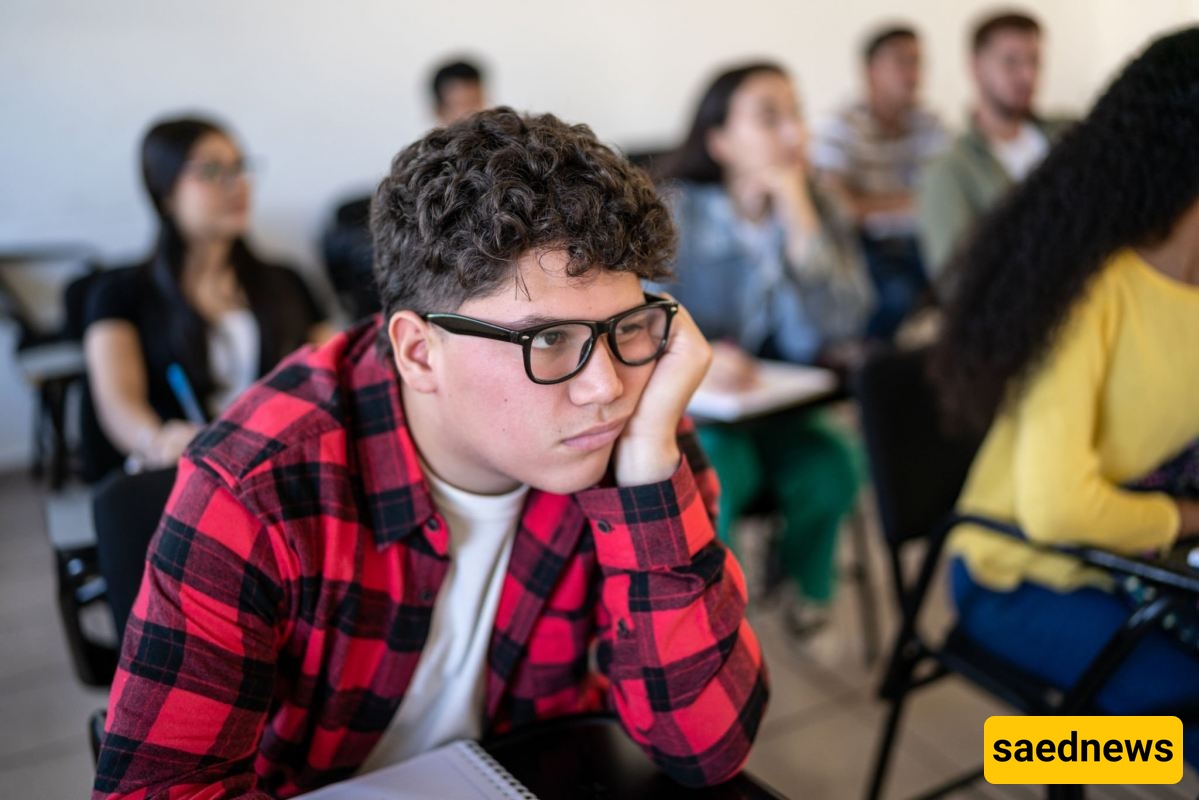
Before examining the psychological mechanisms involved, it is important to recognize the warning signs. Students pursuing an unsuitable academic major often experience several of the following symptoms:
Persistent reluctance to attend classes or study specialized subjects.
Chronic procrastination and repeatedly postponing academic assignments.
Declining academic performance despite having adequate intellectual abilities.
A sense of emptiness or meaninglessness when asking, "Why did I choose this major?"
Exam-related anxiety and fear of failure.
Constantly comparing themselves with classmates who genuinely enjoy their field of study.
Mental exhaustion, insomnia, and physical symptoms of stress.
These symptoms alone do not provide a definitive diagnosis. However, when several of them occur together and persist over time, they may indicate a significant mismatch between the student and their academic environment.
According to Self-Determination Theory, sustainable and high-quality academic motivation develops when three fundamental psychological needs are fulfilled: autonomy, competence, and relatedness.
An unsuitable academic major can undermine all three needs.
When students choose a major because of external pressure rather than personal preference, their sense of autonomy is compromised. Learning gradually becomes an imposed obligation rather than a voluntary activity.
At the same time, when the subject matter does not align with their natural abilities, students experience fewer opportunities to feel competent. They may begin to perceive themselves as less capable than their classmates.
Finally, a lack of shared interests with other students in the same field can limit opportunities to develop meaningful relationships and a sense of belonging.
As a result, intrinsic motivation is gradually replaced by extrinsic motivation. Students may study solely to achieve good grades, satisfy their families, or avoid criticism.
This type of motivation is fragile. It tends to collapse when students encounter difficulties, replacing deep and meaningful learning with superficial and short-lived learning experiences.
Academic self-confidence is largely influenced by self-efficacy, which refers to an individual's belief in their ability to successfully complete academic tasks.
According to psychological research, self-efficacy is influenced by four primary sources:
Mastery experiences (previous successes).
Vicarious experiences (learning through observing others).
Verbal persuasion (encouragement and feedback).
Emotional and physiological states.
An unsuitable academic major can negatively affect all four sources.
First, opportunities for successful experiences may decrease because students are working in a field that does not naturally match their abilities. They may need to invest considerably more effort than others just to achieve average results.
Second, successful role models are often students whose natural abilities and interests align with the major. Comparing themselves with these individuals can intensify feelings of inadequacy.
Third, negative feedback from the surrounding environment—including family criticism or being labeled as "untalented"—can reinforce harmful beliefs about personal abilities.
Finally, persistent anxiety and psychological tension can interfere with concentration, problem-solving, and other cognitive processes.
One particularly concerning issue is that students may begin attributing their failures to permanent personal shortcomings, thinking:
"I am simply not capable of succeeding in this field."
This pattern of thinking gradually erodes academic self-confidence and can make rebuilding it difficult, even when circumstances improve.

Education plays an important role in shaping an individual's identity.
Students who do not see their academic major as part of their authentic identity may begin asking a fundamental question:
"Why am I spending years of my life pursuing something I do not believe in or care about?"
This question can create an identity conflict, potentially leading to widespread loss of motivation, indifference toward future career prospects, and even a broader crisis of meaning.
In such circumstances, students may adopt two unhealthy coping strategies.
They may either complete their studies with minimal effort simply to obtain a degree, or devote considerable emotional energy to concealing their dissatisfaction and pretending to be happy with their academic situation.
Both approaches can intensify academic burnout.
The negative effects of an unsuitable academic major extend beyond the classroom.
Chronic stress caused by academic mismatch can contribute to:
Generalized anxiety.
Symptoms of depression.
Sleep and appetite disturbances.
Reduced concentration.
Declining overall mental well-being.
These consequences can further undermine academic performance, creating a vicious cycle in which psychological distress and academic difficulties continuously reinforce one another.
The process can be summarized through the following sequence:
A mismatch between the academic major and the student's interests and abilities.
Reduced intrinsic motivation and enjoyment of learning.
Less academic effort and lower-quality studying.
Declining grades and negative feedback.
Attributing failure to personal inability.
Reduced self-efficacy and academic self-confidence.
Increased anxiety and academic burnout.
The development of increasingly negative attitudes toward education and the future.
Understanding this cycle is important because it demonstrates that intervention at any stage can help change its direction.
Not all students experience academic mismatch in the same way.
Several factors can reduce its negative effects, including:
Emotional support from family members.
Having inspiring and supportive professors.
Flexibility within the educational system to change majors or select elective courses.
Individual psychological resilience.
Belief that abilities can develop through effort and experience.
Opportunities for extracurricular activities and practical skill development.
In contrast, social isolation, a lack of support, and fixed beliefs about intelligence—such as the assumption that intelligence is entirely innate and cannot change—can increase students' vulnerability to these negative effects.

If changing majors is not possible, students can redefine their field of study as a tool rather than an essential part of their identity.
Identifying elective courses, projects, and practical skills that overlap with personal interests can help restore a sense of purpose in education.
Breaking large academic objectives into smaller, manageable steps can help students regain experiences of success and strengthen their self-efficacy.
Keeping track of small achievements and personal progress can be particularly effective.
Students need to understand that:
"Struggling in this particular academic field does not mean that I am incapable."
This perspective shifts their thinking from permanent personal inadequacy toward recognizing a situational mismatch.
Such a change in perspective can significantly help restore academic self-confidence.
Academic and psychological counseling can help students make informed decisions about whether to:
Change their academic major.
Pursue a different career path.
Accept their current circumstances and develop strategies to adapt.
Professional guidance can help students evaluate their abilities, interests, and available opportunities more objectively.
Connecting education with extracurricular activities—such as volunteering, developing practical skills, small entrepreneurial projects, or artistic pursuits—can help students avoid defining their entire identity through their academic major.
It also allows them to develop self-confidence through multiple sources of achievement and personal fulfillment.
Preventing academic major mismatch should not be considered an individual responsibility alone.
Families can play a protective role by reducing pressure to choose specific prestigious fields and respecting their children's interests, abilities, and aspirations.
Educational institutions can also help prevent widespread academic mismatch by:
Expanding access to specialized academic counseling.
Providing realistic and comprehensive information about different fields of study.
Creating more flexible opportunities for changing majors.
Reducing the excessive influence of entrance examination rankings on academic choices.
Teaching students self-awareness and decision-making skills.
Investing in these areas can reduce significant psychological and economic costs in the long term.
Academic major mismatch is not a simple or isolated problem. It is a gradual process that begins with a lack of alignment between students' interests and abilities and, if left unaddressed, can lead to declining intrinsic motivation, weakened self-efficacy and academic self-confidence, identity conflicts, and psychological burnout.
One of the most concerning aspects of this process is that it often remains hidden. Students may blame themselves for years without recognizing that the underlying problem is the mismatch between their personal characteristics and their chosen academic field.
However, this outcome is not inevitable.
Recognizing the warning signs, understanding that struggling in a particular field does not necessarily indicate a lack of ability, seeking professional support, and rebuilding experiences of success can help interrupt this cycle at any stage.
Most importantly, choosing an academic major does not determine an individual's worth or potential. A person can pursue a field that does not fully match their interests and abilities while still achieving personal growth and success in other areas of life.
Recognizing this reality is the first step toward restoring academic motivation, rebuilding self-confidence, and developing a healthier relationship with education.
Suggested alternative titles:
How an Unsuitable College Major Can Undermine Students' Motivation and Confidence
The Psychological Consequences of Choosing the Wrong Academic Path
Academic Major Mismatch: Its Impact on Student Motivation, Confidence, and Mental Well-Being
When Your Major Doesn't Match Your Potential: Understanding Academic Motivation and Self-Confidence
The Hidden Cost of an Unsuitable Major: Academic Burnout and Loss of Self-Confidence