SAEDNEWS: Specialty bread flour is a type of wheat flour with higher protein and gluten content, designed for making yeast-leavened, high-volume breads such as baguettes and hamburger buns. In contrast, regular wheat flour is commonly used for traditional bread, cakes, and pastries.
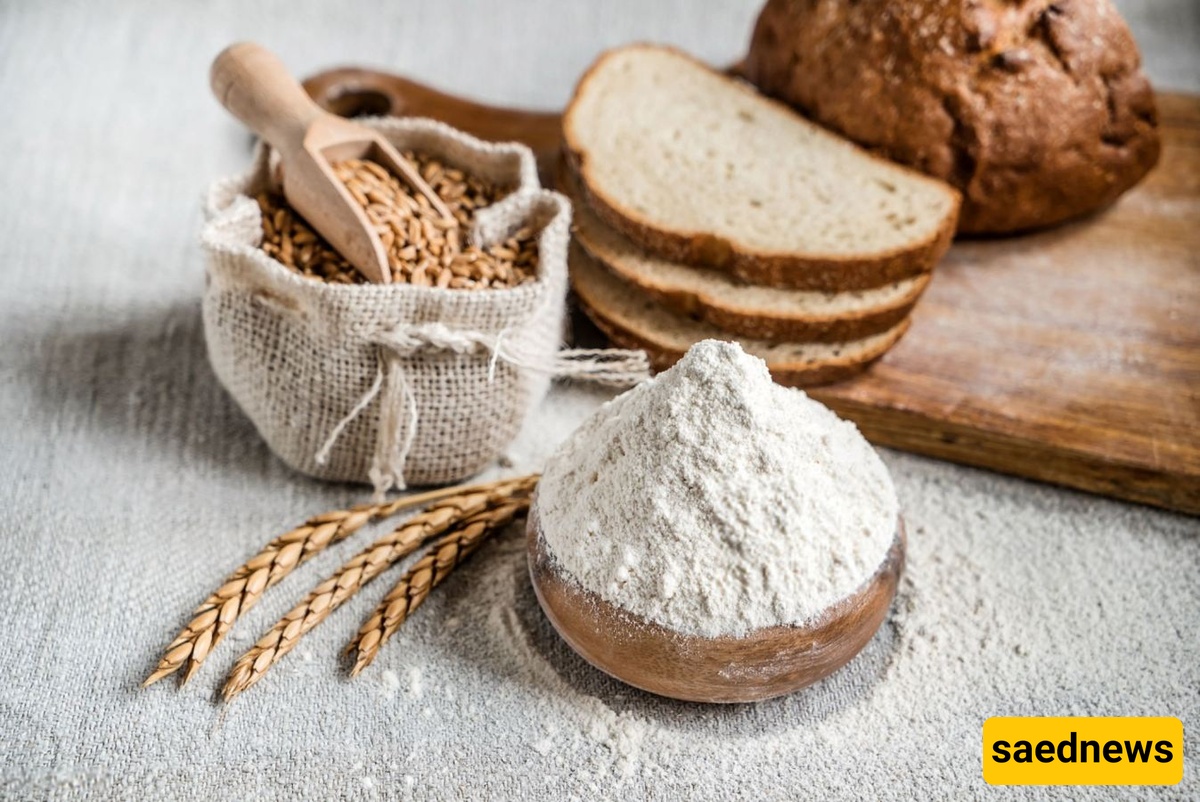
According to Saednews, In the baking industry, choosing the right flour is the first and most important step toward producing bread with the desired quality, texture, and flavor. Many bakers and baking enthusiasts use the terms “wheat flour” and “specialty bread flour” interchangeably, even though these two products differ significantly in composition, technical properties, and applications.
Wheat flour is a general term for all flour produced by milling wheat grains. Specialty bread flour, however, is a formulated flour specifically developed to produce large, light, airy breads such as baguettes, barbari bread, hamburger buns, and European-style breads. By the end of this article, you will understand how to choose the right flour for your intended baking needs.
Wheat flour is produced by grinding wheat grains. A wheat grain consists of three main parts: the bran (the outer layer), the germ (the reproductive part of the grain), and the endosperm (the starchy inner portion). The amount of bran and germ removed during milling determines the flour’s extraction rate, resulting in different types of flour.
In Iran, wheat flour is generally classified into the following categories:
Whole wheat flour: Contains all parts of the wheat grain. It is highly nutritious but produces denser baked goods.
Nool flour: Very white flour with a low extraction rate, approximately 18%.
Setareh flour: Has an extraction rate of around 52% and is commonly used in traditional bakeries.
Premium and bakery flour: Have moderate extraction rates and are suitable for traditional breads such as sangak and taftoon.
Hard wheat and soft wheat flour: Classified according to the type of wheat used and its protein content.
Therefore, “wheat flour” is an umbrella term that covers dozens of varieties depending on the wheat type, extraction rate, and milling process.
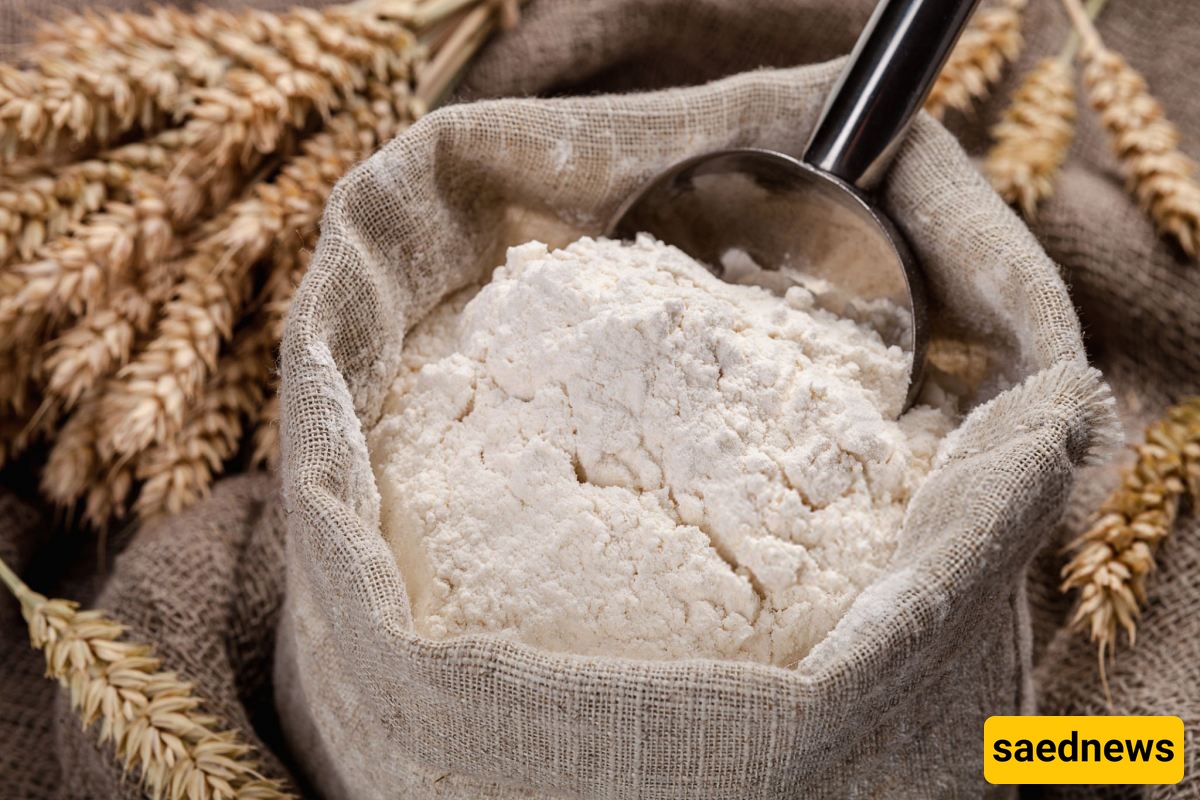
Specialty bread flour is a formulated flour designed for specific baking applications. It is made by blending different types of wheat flour, typically high-protein hard wheat with a controlled proportion of soft wheat, and adding ingredients such as enzymes, vital wheat gluten, barley malt flour, ascorbic acid (vitamin C), and emulsifiers.
This flour is engineered to provide the properties needed for large, airy breads, including suitable dough extensibility, the ability to retain gas during fermentation, a crisp crust, and a soft, spongy crumb.
An important point is that specialty bread flour is not necessarily a “pure” flour. Rather, it is an engineered blend developed to achieve consistent performance in industrial and professional bakeries. In other words, all specialty bread flour contains wheat flour, but not all wheat flour is suitable for use as specialty bread flour.
The fundamental difference lies in their composition. Wheat flour is a natural, single-ingredient product obtained by milling wheat. Specialty bread flour, on the other hand, is a formulated product that may contain two or more types of flour, enzymes, dough conditioners, and other functional ingredients.
In simple terms, every specialty bread flour is wheat-based, but not every wheat flour is specialty bread flour.
Protein content and gluten quality are among the most important technical factors when selecting flour.
Ordinary wheat flour typically contains 8–12% protein, depending on the variety. Specialty bread flour generally contains 11.5–13.5% protein and has strong, elastic gluten.
Gluten quality can also be evaluated using indicators such as the Falling Number, the W value (flour strength), and the P/L ratio (the balance between tenacity and extensibility). Specialty bread flour generally has a higher W value, which is important for extended fermentation and producing high-volume bread.
One of the most noticeable differences is the presence of permitted additives in specialty bread flour. These may include:
Alpha-amylase enzymes: Help release sugars that yeast can use during fermentation.
Ascorbic acid: Strengthens the gluten network.
Barley malt flour: Improves crust color and flavor.
Vital wheat gluten: Increases the protein content and strengthens the dough.
Emulsifiers such as mono- and diglycerides: Help delay staling and maintain bread softness.
Pure wheat flour generally does not contain these added ingredients, so bakers may need to incorporate them separately when preparing their own formulations.
Specialty bread flour can absorb more water because of its stronger gluten and developed protein structure. Its water absorption may be approximately 60–70%, compared with around 50–55% for ordinary wheat flour, although actual values depend on the flour and testing method.
Higher water absorption allows bakers to produce dough with greater hydration, potentially increasing loaf volume, extending shelf life, and improving production efficiency. Bread made with flour that absorbs more water may retain moisture longer and have a higher finished weight.
Specialty bread flour typically has a more uniform particle-size distribution and a cream-to-white color. This consistency helps water distribute more evenly throughout the dough, resulting in a more uniform bread texture.
Traditional wheat flour may have a coarser particle size and a more variable color, depending on its extraction rate and milling process.

Thanks to its strong gluten network and active enzymes, specialty bread flour can retain carbon dioxide more effectively. This allows the dough to rise properly during fermentation and helps produce bread with greater volume and a light, spongy texture.
Bread made with this flour may also stay fresh longer and resist staling. Ordinary wheat flour, particularly varieties made from soft wheat, generally performs less effectively when used for large, airy breads.
Wheat flour is used in a wide range of products, including traditional breads such as sangak, taftoon, and barbari, as well as pastries, cakes, biscuits, and various home-cooked dishes.
Specialty bread flour is specifically developed for high-volume and European-style baked goods, including:
Baguettes
Sandwich bread and toast
Hamburger buns
Pizza dough
Sub rolls and sandwich rolls
Breads requiring extended fermentation
From a nutritional perspective, whole wheat flour generally offers greater nutritional value because it contains dietary fiber, B vitamins, iron, and minerals found in the bran and germ.
Specialty bread flour often has a lower extraction rate and therefore contains less fiber. However, depending on its formulation, it may contain added nutrients, including certain vitamins.
Specialty bread flour is generally more expensive than ordinary wheat flour because it undergoes additional processing and may contain functional additives and specialized blends.
Nevertheless, its higher water absorption and potential to reduce production waste can make it cost-effective in industrial baking. Ordinary wheat flour is often the more economical choice for household use and traditional bakeries.
Start by identifying the type of product you want to make.
If you plan to produce baguettes, toast bread, or hamburger buns, specialty bread flour with a suitable protein content is generally the right choice. For traditional breads such as sangak or taftoon, Setareh or premium bakery flour may be sufficient.
Always check the flour label for key information, including protein content, the types of additives used, and the production date. Avoid purchasing unlicensed, unpackaged flour from unreliable sources, as it may contain unauthorized additives or contaminants.
One common misconception is that “specialty bread flour is simply higher-quality wheat flour.” This is not necessarily true. Flour quality is relative and depends on the intended product and baking method.
Another misconception is that additives are always harmful. In reality, permitted food additives used within approved limits can improve bread quality, consistency, and shelf life.
The main difference between wheat flour and specialty bread flour lies in their formulation, protein and gluten properties, water absorption, and intended applications. Wheat flour is a broad category that includes many varieties suitable for different foods, while specialty bread flour is formulated to deliver the strength, elasticity, and gas retention required for light, high-volume breads.
Choosing the right flour ultimately depends on the product you intend to make. Understanding these differences helps bakers achieve better results, improve consistency, and use ingredients more efficiently.