SAEDNEWS: F-22 Raptor: Key Features, Mach 2 Speed, Engine Power, Weapons, Stealth Technology, and Cost of America’s Fifth-Generation Fighter Jet
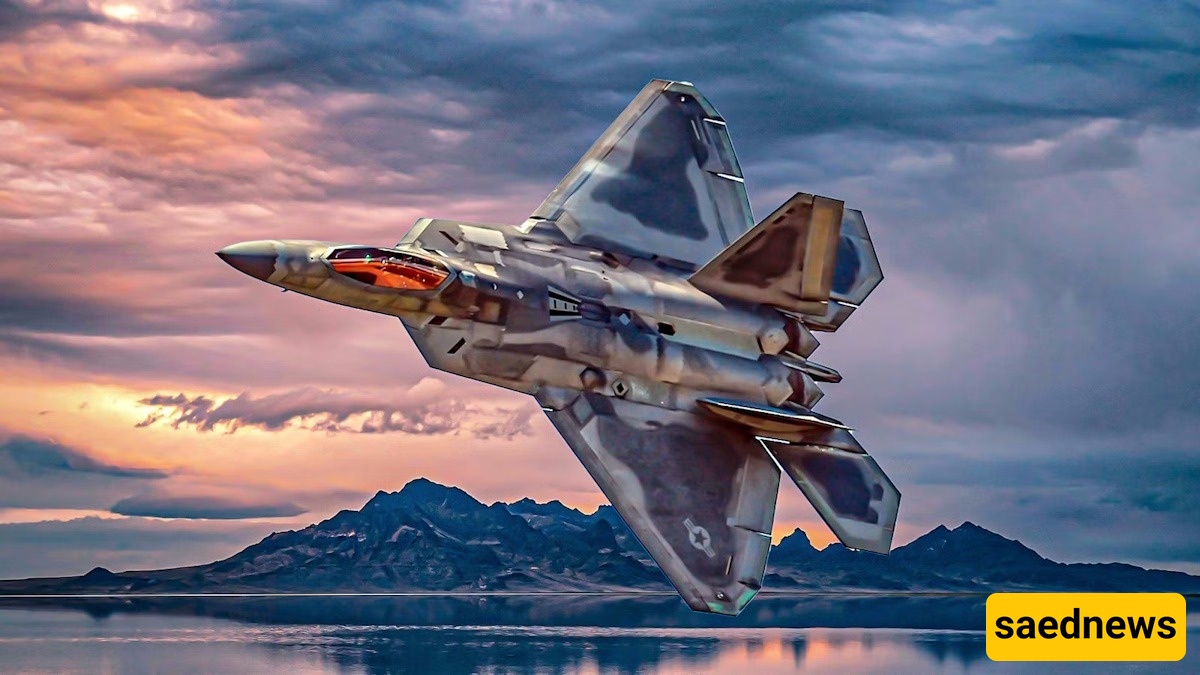
According to Saednews, The F-22 Raptor is one of the world’s most advanced fifth-generation stealth fighter jets, designed to achieve air superiority. This American fighter features two powerful engines, supersonic speed, supercruise capability, and advanced radar and electronic systems, making it a key component of the United States Air Force’s military capabilities.
The Lockheed Martin F-22 Raptor is a single-seat, twin-engine fighter developed to detect and engage airborne threats and maintain air superiority. It combines stealth technology, integrated avionics, and thrust-vectoring capabilities.
Specification | F-22 Raptor Details |
|---|---|
Manufacturer | Lockheed Martin and Boeing |
Generation | Fifth generation |
Primary mission | Air superiority |
Crew | One pilot |
Engines | Two turbofan engines |
Engine model | Pratt & Whitney F119-PW-100 |
Maximum speed | Approximately Mach 2 |
Length | Approximately 18.9 meters |
Wingspan | Approximately 13.6 meters |
Height | Approximately 5.1 meters |
Service ceiling | Above 50,000 feet |
Key features | Radar stealth and supercruise |
These figures are based on publicly available specifications published by the U.S. Air Force. For official details, consult the F-22 Raptor fact sheet on the U.S. Air Force website.
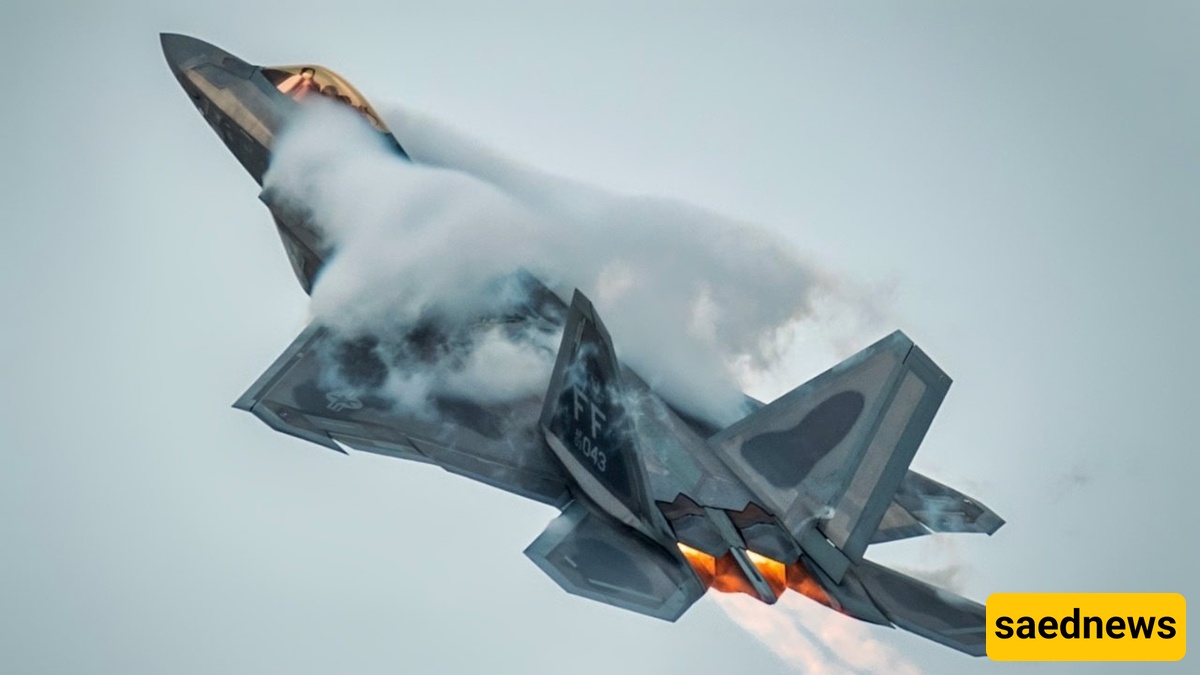
The U.S. Air Force lists the F-22 Raptor’s maximum speed at approximately Mach 2, meaning roughly twice the speed of sound. The precise speed varies with altitude, temperature, and flight conditions.
Some specialist sources report a maximum speed of approximately Mach 2.25. However, the official figure is the more appropriate reference when describing the aircraft’s published specifications.
One of the F-22’s most important capabilities is supercruise, which allows it to fly faster than the speed of sound without engaging its afterburners. This capability helps maintain high speeds while reducing the additional fuel consumption associated with continuous afterburner use.
The F-22 is powered by two Pratt & Whitney F119-PW-100 turbofan engines, each producing approximately 35,000 pounds of thrust.
These engines, combined with the aircraft’s aerodynamic design, enable supersonic flight and exceptional maneuverability.
Another important feature is its thrust-vectoring nozzle system, which directs engine thrust to help the pilot maintain control during demanding maneuvers.
The combination of powerful engines, advanced flight controls, and aerodynamic engineering allows the F-22 to change direction and flight attitude rapidly.
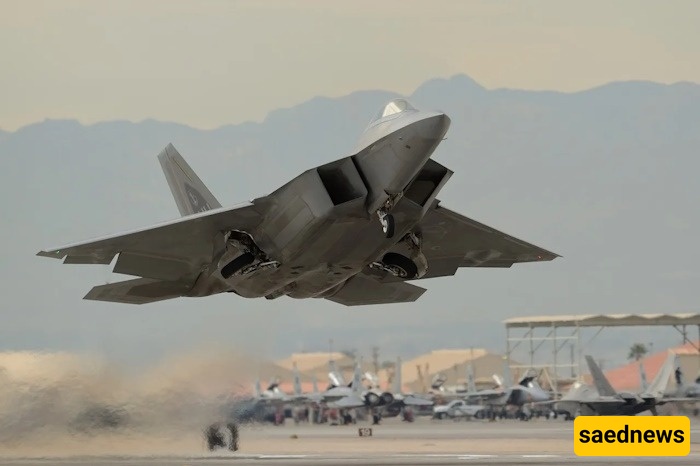
Radar stealth is one of the F-22 Raptor’s defining characteristics. Its airframe geometry, specialized radar-absorbent materials, and internal weapons bays help reduce its radar cross-section.
The purpose of these technologies is to make the aircraft more difficult for enemy radar systems to detect and track. However, stealth does not make an aircraft completely invisible. Detection depends on factors such as radar type, operating frequency, viewing angle, and operational conditions.
The F-22 also features integrated electronic systems that provide the pilot with information about the surrounding environment and potential threats.
The F-22 was designed primarily for air-superiority missions. It can carry several types of air-to-air missiles and selected precision-guided weapons for attacking ground targets. Many of its weapons are stored internally to preserve its stealth characteristics.
Its known weapons include:
AIM-120 AMRAAM: A medium- to long-range air-to-air missile used against airborne targets.
AIM-9 Sidewinder: A short-range air-to-air missile.
M61A2 20 mm cannon: An internally mounted cannon for close-range engagements.
Air-to-ground guided munitions: Compatible precision weapons that allow the F-22 to perform selected ground-attack missions.
The type and number of weapons carried depend on the mission configuration. The aircraft does not necessarily carry every compatible weapon simultaneously.
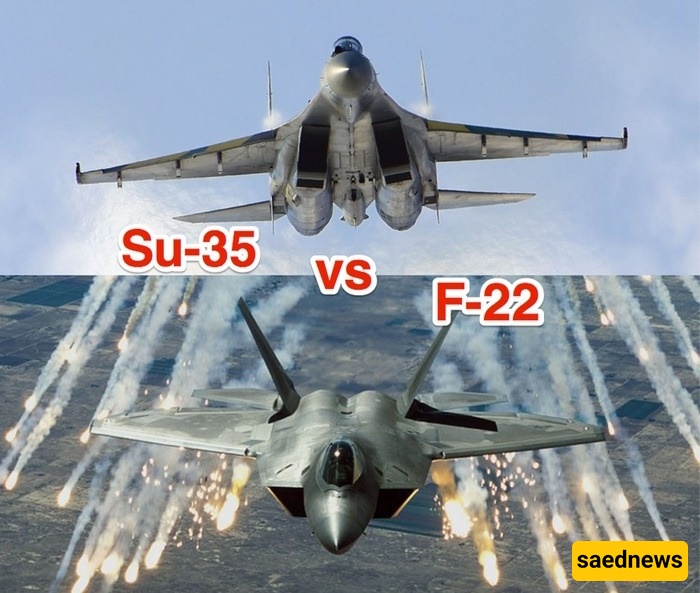
The F-22’s maneuverability results from a combination of aerodynamic design, powerful engines, thrust-vectoring nozzles, and advanced flight-control systems.
These features allow the aircraft to change its direction and flight attitude rapidly under suitable conditions.
Demonstrations at air shows showcase the F-22’s ability to perform tight turns, rapidly change its nose position, and maintain control at high angles of attack. However, individual maneuvers depend on speed, altitude, and flight limitations. Air-show performance should not be treated as a direct measure of combat outcomes.
The cost of the F-22 Raptor depends on how the figures are calculated. The production cost of an individual aircraft differs from the total cost of development, testing, support equipment, and maintenance.
The U.S. Air Force fact sheet lists a unit cost of approximately $143 million. This figure reflects the information published in that source and should not automatically be interpreted as the aircraft’s current market price.
F-22 production has ended, and the aircraft is not available for export sales to other countries. Consequently, historical unit-cost figures do not represent the price of an aircraft currently available for purchase on the open market.
The F-22 Raptor and F-35 Lightning II are both American fifth-generation stealth fighters, but they were developed for different operational priorities.
The F-22 was designed primarily to establish air superiority, while the F-35 is a multirole fighter intended to perform air-to-air combat, ground-attack missions, and intelligence collection and information sharing.
Feature | F-22 Raptor | F-35 Lightning II |
|---|---|---|
Generation | Fifth | Fifth |
Primary mission | Air superiority | Multirole operations |
Engines | Two | One |
Stealth capabilities | Yes | Yes |
Supercruise | Key operational capability | No equivalent operational supercruise capability |
Design focus | Air-to-air combat and air dominance | Diverse missions and information integration |
A meaningful comparison between the F-22 and F-35 requires more than speed or maneuverability alone. Sensors, weapons, stealth, mission requirements, and operational support all influence their effectiveness.
The F-22 Raptor is not part of Iran’s publicly known air force inventory. The aircraft remains in service with the United States Air Force, and U.S. export restrictions have prevented its sale to Iran.
Images and videos claiming to show F-22 aircraft in Iran should be assessed based on their original sources, recording dates, and independent evidence. A social media post alone is not sufficient to verify the aircraft’s presence in the country.
The F-22 Raptor is a fifth-generation fighter that combines radar stealth, two powerful engines, supersonic speed, supercruise, and advanced maneuverability to achieve air superiority.
Its published maximum speed is approximately Mach 2, while its integrated electronic systems, internal weapons bays, and thrust-vectoring engines contribute to its distinctive capabilities.
When evaluating the F-22 Raptor’s specifications, it is important to distinguish official data from specialist estimates and historical production-cost figures. The U.S. Air Force fact sheet is a reliable starting point for further technical information.