SAEDNEWS: Artificial intelligence is rapidly transforming radiology, with thousands of medical AI tools already in use or under review. Yet experts say the future is unlikely to be about replacing radiologists, but about combining machine precision with human experience and judgment.
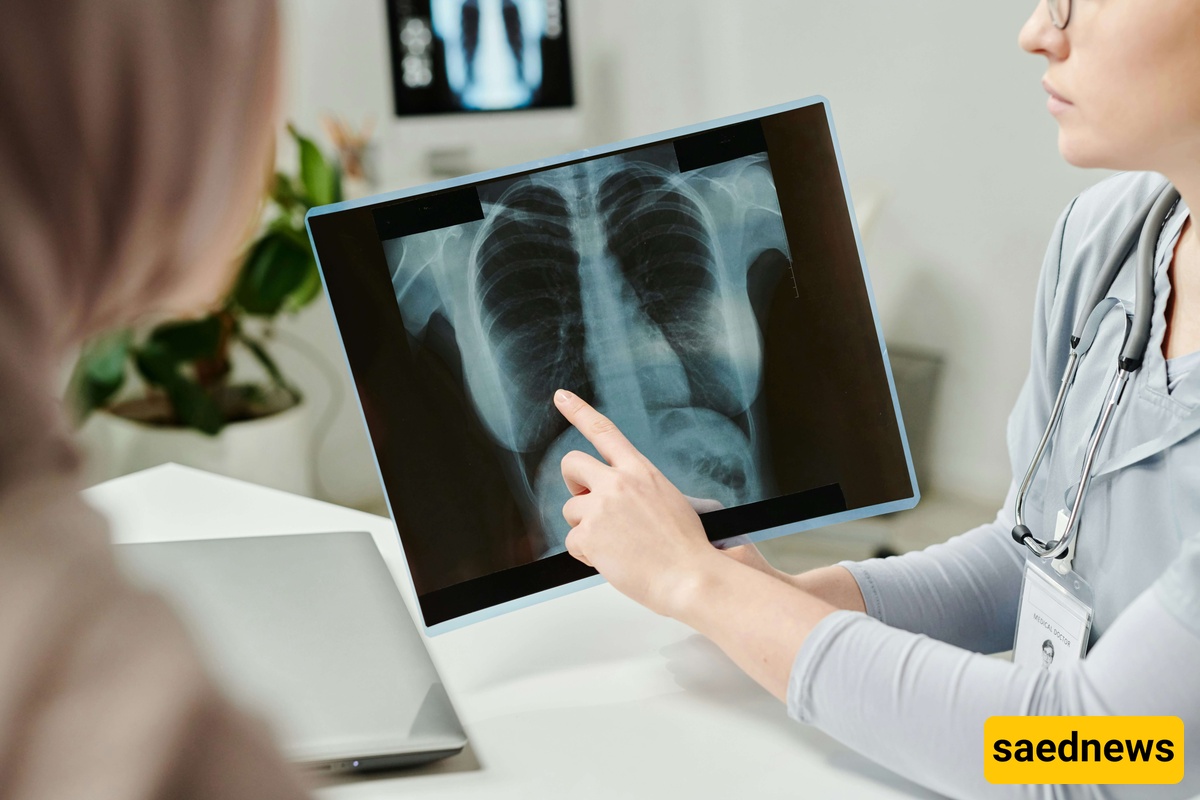
According to SaedNews: In 2016, Geoffrey Hinton, the Nobel-winning figure often called the “godfather of artificial intelligence,” predicted that computers would replace radiologists within five years. A decade later, that forecast has not come true. Radiology is still expanding, with the number of practitioners projected to rise by 26 percent or more over the next three decades.
Still, Hinton identified something important. Radiologists now work alongside computer systems capable of matching or even surpassing human performance on some tasks. Radiology has become medicine’s leading field for artificial intelligence, making it an important test case for the broader use of automated decision-making in health care.
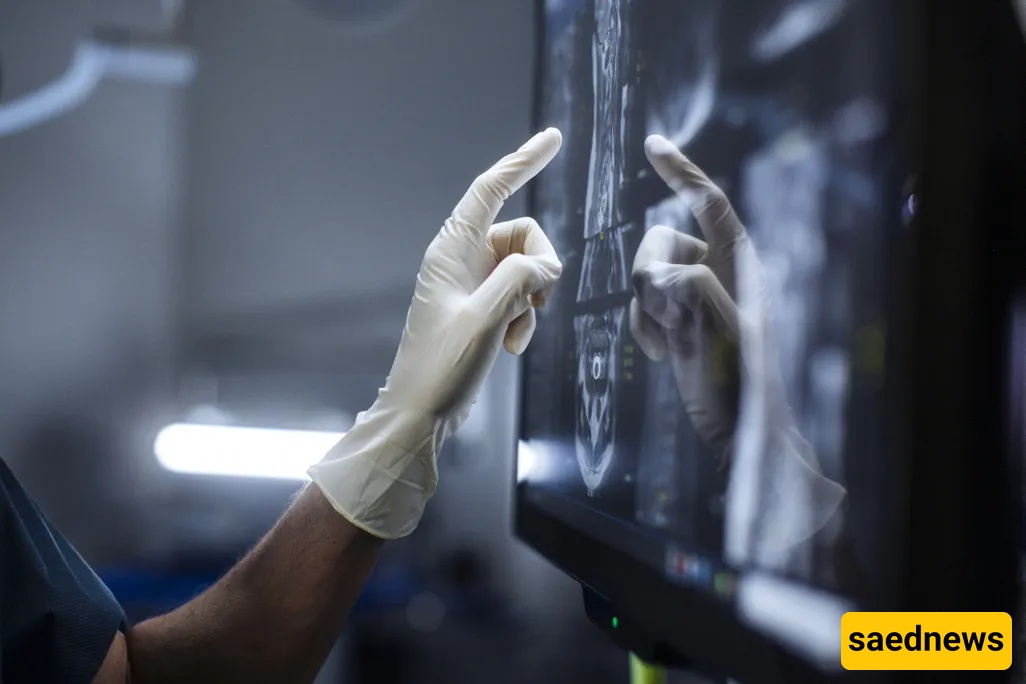
By early 2026, roughly three-quarters of the 1,400 AI-enabled medical devices cleared by the Food and Drug Administration were designed for radiology. Some help physicians work faster by preparing reports or flagging urgent images. Others can identify abnormalities that human eyes may overlook and can interpret certain images as well as, or sometimes better than, trained radiologists. An analysis of 43 clinical trials, for instance, found that AI-supported colonoscopies detected more polyps than conventional procedures.
The potential gains are significant because diagnostic imaging errors among humans are estimated at 3 to 5 percent, amounting to around 40 million mistakes globally each year. But replacing doctors with machines is not a simple solution. The central challenge is figuring out how AI’s technical accuracy can complement the experience and adaptability of physicians.
Designing that partnership is difficult. Even when AI performs more reliably than an experienced radiologist on a particular type of image, it will still make errors that a human might avoid, says Curtis Langlotz, a radiologist and director of Stanford University’s Center for Artificial Intelligence in Medicine and Imaging. Radiologists therefore have to assess AI decisions—most of which may be correct—while recognizing the unusual cases in which the system fails.
“This requires a whole mental rewiring,” says Paul Yi, section chief of intelligent imaging informatics at St. Jude Children’s Research Hospital in Memphis.
Doctors are already accustomed to overriding computer-generated warnings. Electronic medical records have long produced rule-based alerts about issues such as dangerous drug combinations, and physicians typically disregard about half of those warnings, Langlotz says. AI image-analysis systems create a different situation.
Modern radiology systems often rely on neural networks that can identify tumor types, trace lesions and perform other diagnostic tasks with high accuracy. Unlike straightforward rule-based programs, however, these systems are often described as “black boxes.” They generally do not explain how they reached their conclusions, leaving radiologists with a harder task when deciding whether an AI recommendation should be rejected.
Charles Kahn, editor of Radiology: Artificial Intelligence, says radiologists may find themselves questioning whether an apparent abnormality is genuine or whether they are overlooking something the AI has detected. That uncertainty makes the interaction particularly challenging.
Langlotz offers a hypothetical example: an AI system detects 95 percent of lung nodules on chest CT scans, compared with 90 percent detected by radiologists. That does not mean the machine should replace the physicians. A radiologist may still identify some of the 5 percent that AI misses because machine intelligence and human intelligence operate differently.
AI can inspect every pixel without fatigue or distraction and compare an image against an enormous collection of previous images. Physicians, meanwhile, draw on their understanding of disease to interpret findings in ways that AI cannot necessarily reproduce.
The challenge is ensuring that radiologists accept AI when it is correct while rejecting it when it is wrong. Nina Kottler, chief medical AI officer at Mosaic Clinical Technologies, says achieving that balance is possible but not necessarily easy.
Radiologists worldwide are therefore learning how to form effective human-AI teams. Part of that process involves addressing unconscious biases that can cause physicians either to depend excessively on AI or to reject its recommendations without sufficient reason. Doctors need to understand how reliable a system generally is while remaining capable of detecting its failures.
Langlotz says knowing something about how AI systems operate can help physicians recognize circumstances in which an algorithm may be misleading them.
When either a human or a machine makes a yes-or-no diagnostic mistake, there are two basic possibilities. A false negative fails to detect disease that is actually present, while a false positive indicates disease when none exists.
False positives can be particularly common when diagnosing uncommon diseases. Because most people examined do not have a rare condition, a diagnostic system has many opportunities to generate an incorrect alarm. Radiologists must therefore be able to override those false positives without dismissing the relatively uncommon occasions when the machine is actually correct. Excessive trust in either positive or negative AI findings is known as automation bias.
False negatives pose a different danger. An AI system might fail to recognize blood in a brain CT or MRI when bleeding is present. Accepting such an omission without question is known as automation complacency.
“These are both issues of letting the A.I. change the radiologist’s level of suspicion without realizing it,” Kottler says. Over time, physicians may place too much confidence in machine conclusions. One study found that even experienced radiologists experienced substantial declines in mammography accuracy when their interpretations were influenced by incorrect AI predictions.
Distrusting AI creates the opposite problem. People can naturally remain skeptical of unfamiliar technology, particularly when it has been portrayed as a threat to their employment. AI systems can also make strange mistakes that differ from typical human errors. An obviously silly false positive, Kottler says, may lead a physician to conclude that the system is simply not intelligent and dismiss its useful findings as well.
Kottler proposes tracking how frequently radiologists agree with their AI systems and intervening when their behavior appears excessively trusting or skeptical. If a radiologist accepts AI recommendations 99 times out of 100 despite a system that is only 95 percent accurate, she says, that physician may need to be approached about the discrepancy.
Simply telling doctors that an AI system is 95 percent accurate is not sufficient. Training is necessary so physicians understand where a system is likely to fail. For example, they may need to know that a particular tool can be wrong on 30 percent of scans when the patient moved during imaging.
Yet more than a quarter of physicians who participated in a 2026 American Medical Association survey said they had received no AI training, while only 11 percent reported receiving extensive training.
Kottler also favors systems that provide confidence estimates rather than only yes-or-no answers. Radiologists cannot realistically be expected to understand every technical detail of the growing number of AI systems they will encounter, especially as those tools become more numerous and complex.
“We are just at the very beginning of understanding how to optimize the human/machine system,” Langlotz says. For radiologists, the key lesson remains close to the point he made nearly a decade ago in response to Hinton’s prediction: AI itself is not necessarily going to eliminate radiologists. Instead, radiologists who know how to use AI may ultimately replace those who do not.