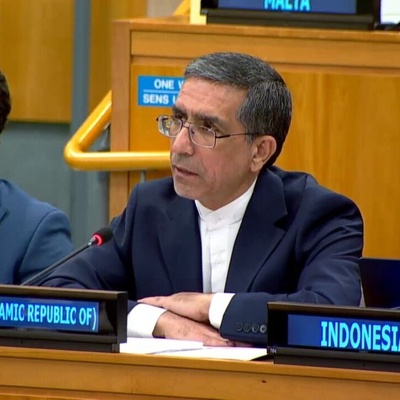
SAEDNEWS: Iran’s Ambassador and Chargé d’Affaires to the United Nations, Gholamhossein Darzi, says the Islamic Republic has faced a coordinated campaign over the past year involving military attacks, attempts to fuel domestic unrest and exploit it for specific purposes, unilateral sanctions, and escalating economic pressure.
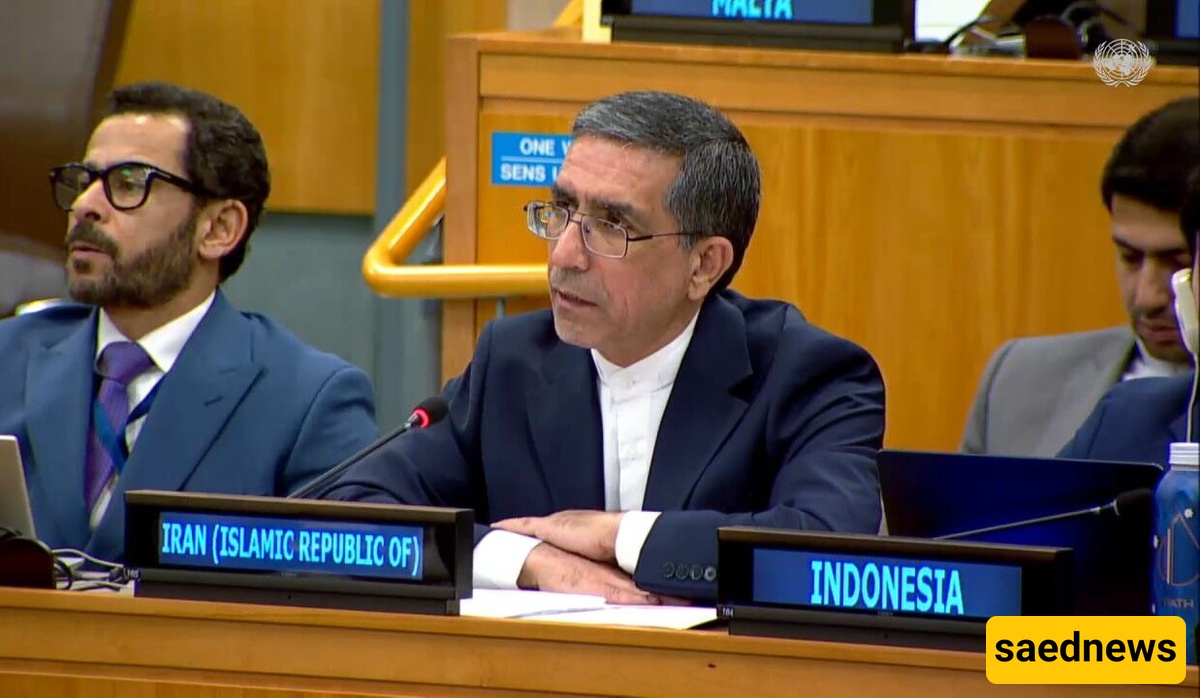
According to Saednews, Iran has strongly opposed a draft United Nations resolution addressing its human rights situation, accusing Canada and several Western countries of using human rights concerns to advance political objectives.
Iranian Ambassador and Chargé d’Affaires to the United Nations, Gholamhossein Darzi, delivered the remarks on Wednesday, November 18, 2026, during the Third Committee meeting in New York, ahead of a vote on the proposed resolution.
In his statement, Darzi described the initiative as politically motivated and selective, arguing that it was intended to exert pressure on Iran rather than genuinely promote human rights.
He said country-specific resolutions of this nature contradict the UN Charter's principles of sovereign equality, non-interference and impartiality. According to the Iranian diplomat, repeatedly introducing such measures undermines international cooperation, weakens trust and deepens political divisions among member states.
Darzi argued that previous annual resolutions had failed to improve the human rights situation in Iran or address what Tehran considers serious violations resulting from military aggression and unilateral sanctions.
He maintained that these initiatives have instead contributed to the politicization of the UN human rights system and reinforced what Iran views as Western double standards.
The ambassador also referred to developments over the past year, accusing foreign actors of pursuing a coordinated campaign against Iran through military operations, economic pressure, unilateral sanctions and attempts to destabilize the country.
He further claimed that American officials had acknowledged efforts to create instability and undermine Iran's political system. Darzi said peaceful economic protests had been exploited and transformed into violent unrest with external involvement.
According to him, the most significant external threats to the Iranian people's right to life and security had originated beyond the country's borders.
A major part of Darzi's address focused on civilian casualties during military attacks against Iran.
He specifically referred to the attack on Shajareh Tayyebeh School in Minab earlier this year, in which at least 168 schoolchildren and teachers were reportedly killed.
The Iranian diplomat criticized the countries sponsoring the draft resolution for failing to address the incident, despite their stated commitment to protecting children's rights.
He also mentioned Makan Nassiri, a child who was reportedly directly hit by a missile and whose remains were never recovered. Darzi highlighted the suffering of the child's mother, who has been unable to bury her son.
Referring to the two wars of aggression against Iran, he stated that more than 5,000 people, including 254 children and 251 women, had lost their lives.
He accused Western governments of remaining silent about these casualties while expressing strong criticism of Iran's human rights record.
Darzi also condemned attacks attributed to the United States and Israel against Iranian civilians and civilian infrastructure.
He listed industrial facilities, bridges, hospitals, airports, transportation networks, cultural heritage sites, sports facilities and energy infrastructure among the targets.
The ambassador argued that military actions, blockades and unilateral sanctions had seriously affected the Iranian population's access to healthcare, education and an adequate standard of living.
He described the Western response as hypocritical, arguing that governments criticizing Iran had failed to demonstrate the same level of concern over civilian suffering caused by military operations and economic restrictions.
Darzi added that many of these actions could constitute war crimes and crimes against humanity under international law, including international humanitarian law.
Addressing Iran's engagement with international human rights institutions, Darzi said Tehran had participated constructively in the Universal Periodic Review process and cooperation with human rights treaty bodies.
He stressed that Iran had made efforts to engage with international mechanisms in good faith and on the basis of mutual respect.
However, he questioned the legitimacy of certain monitoring mechanisms established without Iran's consent, arguing that they contributed to what he described as fabricated allegations and narratives designed to justify external pressure.
Concluding his statement, the Iranian ambassador urged all UN member states committed to the principles of the UN Charter and impartial international cooperation to vote against the draft resolution.
He said rejecting the measure would represent opposition to the politicization of human rights, discriminatory approaches and the use of UN institutions as instruments of political pressure.
Darzi emphasized that a negative vote would uphold impartiality, consistency and the equal application of international law.
He concluded by stating that the Iranian people would not allow foreign powers or politically motivated international resolutions to determine their country's future.