SAEDNEWS: A planet only 25 light-years from Earth has been reclassified as a likely rocky super-Earth and now appears to orbit within its star’s habitable zone. Scientists caution that this does not prove the presence of water or life, but the new measurements make GJ 3378b a compelling target for future observations.
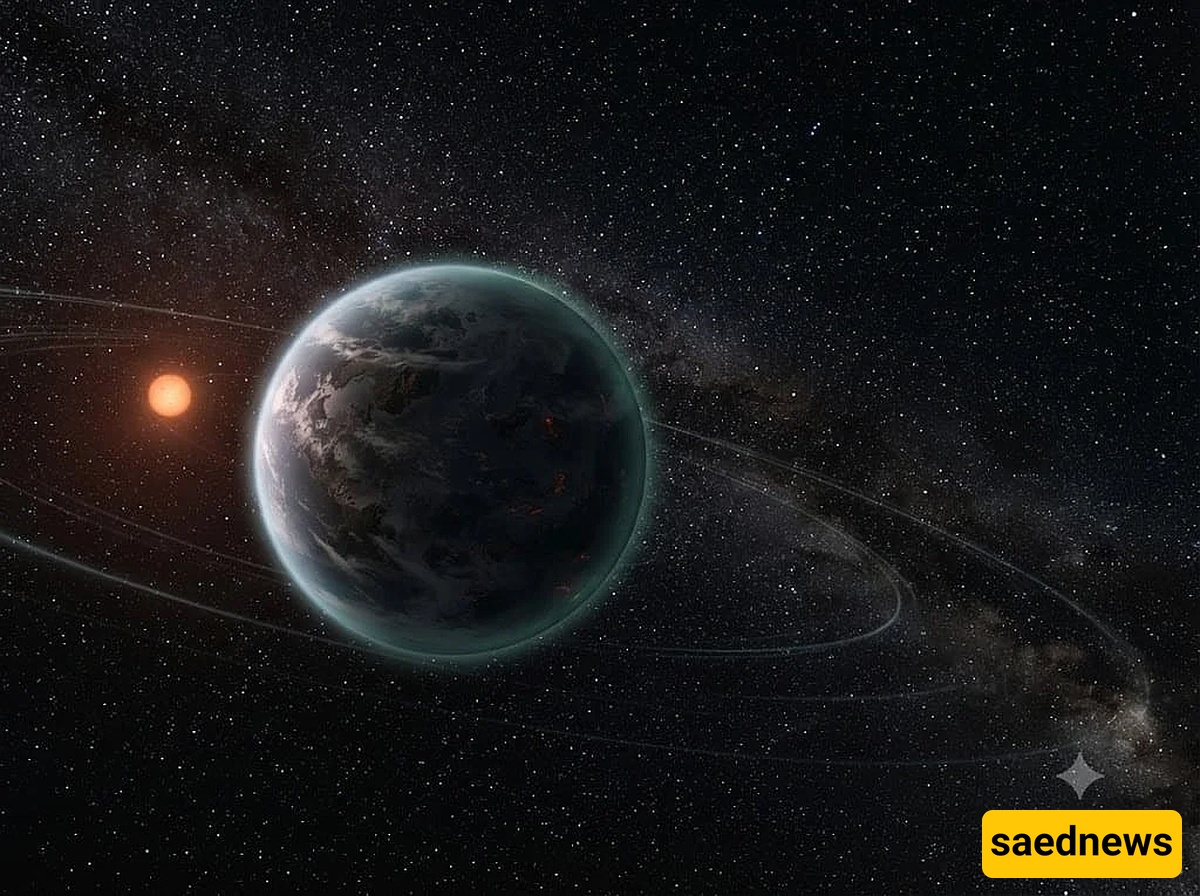
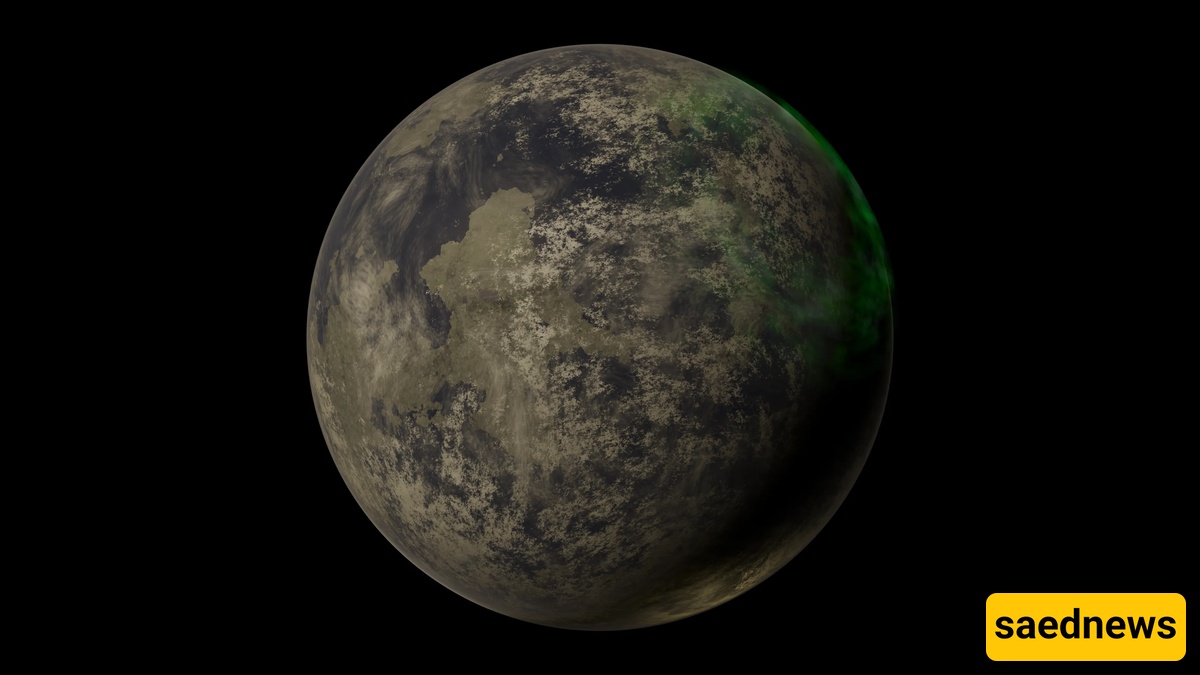
According to SaedNews: A nearby planet that once appeared to be a possible mini-Neptune has suddenly become much more intriguing. New measurements suggest that GJ 3378b is only about 2.3 times as massive as Earth, placing it in the category of rocky super-Earths rather than the larger, potentially gas-rich worlds scientists initially thought they were looking at.
The change is more than a matter of classification. The revised measurements also indicate that the planet completes an orbit around its star every 21 days, rather than the previously estimated 25 days. That adjustment puts GJ 3378b inside the habitable zone of its host star — the region where temperatures could, under the right atmospheric conditions, allow liquid water to remain on a planet’s surface.
And that is what makes this distant world particularly interesting.
GJ 3378b is located about 25 light-years from Earth, relatively close on the enormous scale of the galaxy. It was identified in 2024 by French astronomers using the Canada-France-Hawaii Telescope at Mauna Kea Observatory. At the time, measurements indicated a mass of roughly 5.26 Earths, leading researchers to place it among worlds commonly described as mini-Neptunes.
A closer look has now changed that picture.
American researchers revisited the existing data and combined them with new observations from two other telescopes. Their analysis produced a substantially lower estimate for the planet’s mass: approximately 2.3 times that of Earth. That figure makes a rocky composition much more plausible and places the planet among the class known as super-Earths.
The planet circles a red dwarf in the constellation Camelopardalis, or the Giraffe. Red dwarfs are the most common type of star in the Milky Way, and many of the exoplanets discovered in recent years orbit these small, relatively faint stars.
Their dimness creates an important difference from our own solar system. Because a red dwarf produces far less energy than the Sun, its habitable zone lies much closer to the star. A planet therefore has to orbit at a much smaller distance than Earth does from the Sun to receive a comparable level of energy.
In the case of GJ 3378b, researchers estimate that the planet receives about 90 percent of the radiation Earth gets from the Sun.
That sounds promising, but it comes with a major warning: being inside a habitable zone does not automatically make a planet habitable.
The atmosphere is crucial. Surface pressure, atmospheric composition, the presence of a magnetic field and the behavior of the host star can all determine whether liquid water could actually survive on the surface.
The star itself may be the biggest problem.
Red dwarfs can produce powerful stellar flares and energetic stellar winds, particularly during periods of heightened activity. Over long periods, charged particles and high-energy radiation from such a star can erode the atmosphere of a nearby planet. In the worst-case scenario, the atmosphere could potentially be stripped away.
That leaves astronomers with two very different possibilities.
If GJ 3378b lost a substantial portion of its atmosphere in the past, its position in the habitable zone might not translate into a life-friendly environment. But if the planet managed to retain its atmosphere, its conditions could be considerably more favorable than scientists can currently determine.
For now, neither possibility can be confirmed or ruled out.
There is another obstacle: observing the planet’s atmosphere directly is difficult with existing technology.
NASA’s James Webb Space Telescope has become an important tool for studying the atmospheres of some exoplanets. One of the techniques it uses is transmission spectroscopy. When a planet passes directly in front of its star from Earth’s perspective, some starlight travels through the planet’s atmosphere. Different molecules absorb specific wavelengths, leaving chemical fingerprints that astronomers can analyze.
GJ 3378b does not make such a transit from our viewpoint.
As a result, the straightforward version of this technique cannot be used to examine its atmosphere, meaning the James Webb Space Telescope cannot simply determine whether the planet has an atmosphere or what that atmosphere contains.
Astronomers therefore have their eyes on future observatories.
One of the most significant possibilities is NASA’s Habitable Worlds Observatory, a planned space telescope expected to launch in the 2040s. Its goal would include studying nearby rocky planets with much greater precision and potentially searching for chemical signatures associated with life, known as biosignatures.
If the mission proceeds as expected, GJ 3378b could become one of the worlds worth investigating in greater detail.
That matters because dozens of new exoplanets are discovered every year, but only a relatively small number are close enough to Earth for scientists to hope to study their properties in detail with future technology.
GJ 3378b now combines several characteristics that make it especially noteworthy: it is only 25 light-years away, it is likely rocky rather than a gas-rich mini-Neptune, and its revised orbit places it within the habitable zone of its red-dwarf star.
Still, calling it an “Earth twin” would go far beyond the evidence.
There is currently no confirmed detection of water on GJ 3378b, and there is no evidence that life exists there. Even the presence of an atmosphere remains unknown.
What has changed is the scientific picture of the planet. A world once considered a likely mini-Neptune may instead be a rocky super-Earth receiving a substantial amount of energy in the habitable zone of a nearby star.
That combination is enough to make GJ 3378b an intriguing candidate for future exploration — and a reminder that sometimes, a second look at old data can reveal a completely different world.