SAEDNEWS: Japanese researchers have developed a compact plasma-based system that can transform nitrogen from the air inside a future lunar habitat into plant-available fertilizer.
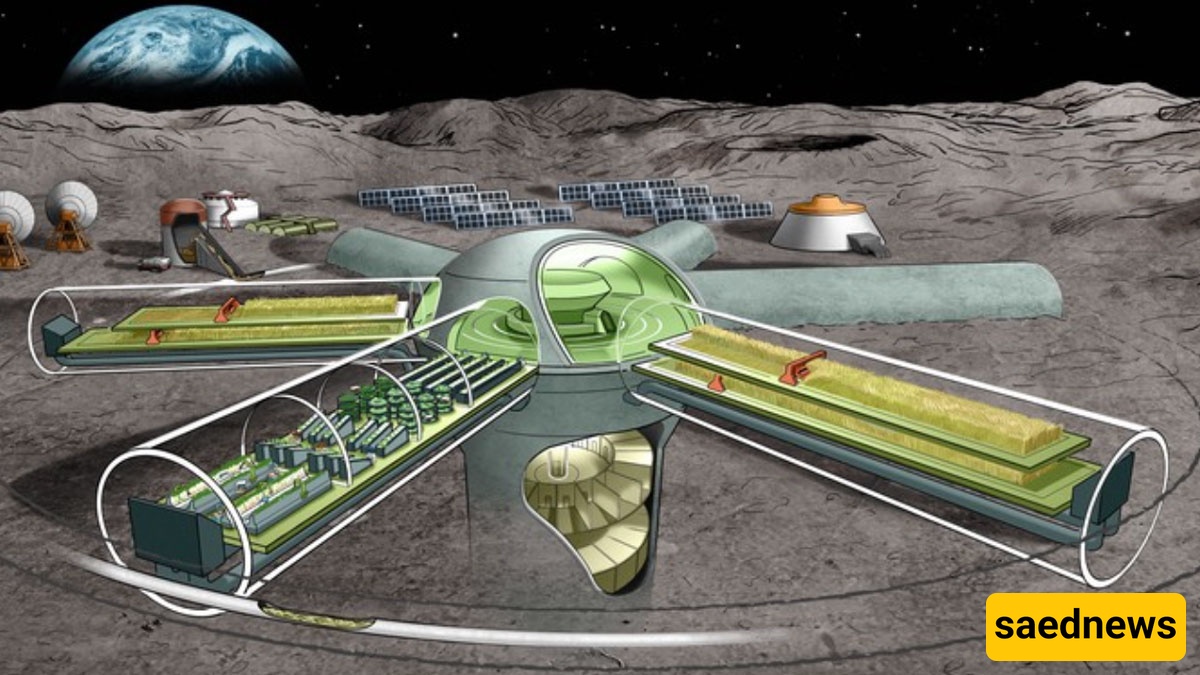
According to SaedNews: The dream of growing food on the Moon has always faced one stubborn problem: the Moon has plenty of dust and rock, but almost none of the ingredients that make ordinary farmland fertile.
Now, researchers in Japan have found a potentially important way around that obstacle—and their experiment involved something surprisingly familiar: rice.
A team from Tohoku University and the Japan Aerospace Exploration Agency (JAXA) has developed a compact plasma device capable of taking nitrogen from the air inside a lunar habitat and converting it into a form that can eventually become fertilizer for plants.
The idea could have major implications for any future attempt to establish a long-term human presence on the Moon.
If people are ever going to live there permanently, providing shelter and oxygen will not be enough. They will also need a reliable source of food. Shipping every kilogram of fertilizer and agricultural material from Earth would add another costly burden to missions that are already extraordinarily difficult.
The Japanese researchers are exploring a different possibility: use resources already available inside the habitat, recycle them, and turn them into something useful for agriculture.
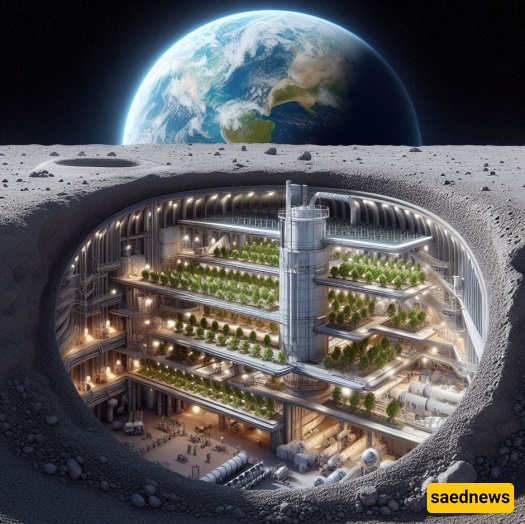
At first glance, lunar regolith might seem like a natural starting point for farming. The Moon is covered in a thick layer of dust and tiny fragments of rock known as regolith.
But calling it “soil” can be misleading.
Unlike fertile Earth soil, lunar regolith contains almost none of the organic matter and microorganisms that support plant growth. It is also extremely poor in nitrogen compounds that plants need.
The Moon has another enormous disadvantage: it essentially has no stable atmosphere.
A future lunar greenhouse would therefore have to be enclosed and pressurized, with its atmosphere artificially supplied and maintained. That apparent limitation could actually provide an opportunity.
The nitrogen contained in the air inside a sealed habitat could become a valuable agricultural resource.
Instead of constantly bringing fertilizer from Earth, astronauts could potentially recover nitrogen from their own habitat environment and turn it into fertilizer again and again.
That is where the new plasma technology comes in.
The researchers designed a compact plasma system that consumes less than 100 watts of electricity. Its job is to process nitrogen from habitat air and convert it into dinitrogen pentoxide, or N₂O₅.
When the resulting compound dissolves in water, it produces nitrate.
That matters because nitrate is a form of nitrogen that plant roots can readily absorb.
According to the researchers, the system achieves a nitrogen-to-nitrate conversion efficiency of close to 100 percent, making it potentially attractive for environments where energy, equipment and transported supplies are all limited.
The basic concept is straightforward: instead of sending fertilizer from Earth, a lunar settlement could repeatedly recycle nitrogen already present in its enclosed environment and turn it into a resource for growing crops.
That could reduce the amount of heavy agricultural cargo that future missions would need to transport from Earth.
But the researchers wanted to know whether the resulting fertilizer could actually make the Moon’s barren material more suitable for plants.
So they moved on to an experiment involving simulated lunar soil and rice seedlings.
The researchers created a material designed to reproduce characteristics of lunar soil. They then treated it with nitrate-rich water before planting rice seedlings.
The results suggested that the treatment did more than simply provide nitrogen.
The chemistry of the simulated lunar soil also changed in a direction that was much more favorable to plant growth.
Lunar regolith is naturally highly alkaline. In the experiment, its pH was initially about 9.09—far outside the preferred range for most plants.
After treatment with nitrate-rich water, the pH fell to 6.76.
That change is significant because a less alkaline environment can make previously trapped mineral nutrients more accessible to plants.
The researchers observed that important minerals, including calcium, magnesium and potassium, were released from the mineral structure of the simulated regolith.
At the same time, the amount of aluminum ions—which can harm plant roots—was reduced.
In other words, the treatment appeared to alter the simulated lunar soil itself, rather than simply adding fertilizer to an otherwise unsuitable growing medium.
The real test came with time.
Three months after planting, rice grown in the treated simulated lunar soil was performing substantially better than rice that had received only ordinary water.
By the fourth month, the plants had reached the panicle-forming stage—the stage at which rice begins developing the structures that will produce grains.
That does not mean lunar agriculture is ready to begin tomorrow. The experiment used simulated lunar soil rather than an actual lunar farm, and many obstacles remain before crops could realistically be grown in a permanent Moon habitat.
But the result provides an important indication: after chemical treatment, a material modeled on lunar regolith can support key stages of rice development.
And the experiment produced another unexpected finding.
The researchers found that directly spraying the generated gas onto plant leaves activated a series of hormonal pathways associated with the plants' natural defense mechanisms.
The treated plants subsequently showed greater resistance to disease, suggesting that the technology might offer an additional benefit beyond fertilizer production.
The researchers also observed changes in the plants' physical structure.
The stems became shorter and thicker.
That could be particularly useful on the Moon.
Because lunar gravity is much weaker than Earth's, plants may have a tendency to grow excessively tall while producing thinner, more fragile stems. Such plants could be more vulnerable to bending or breaking.
Shorter, sturdier stems could therefore be advantageous in a low-gravity agricultural environment.
Permanent greenhouses on the Moon remain a long way off. Building them would require solutions to numerous problems involving energy, radiation, temperature control, water, atmospheric management and reliable food production.
Still, the Japanese research highlights an increasingly important principle in space exploration: technologies designed for environments beyond Earth can also address problems back home.
A system that turns recycled nitrogen into fertilizer could potentially have applications in terrestrial agriculture, particularly if it can contribute to lower-carbon fertilizer production, reduced energy consumption and more sustainable farming practices.
The appeal is especially clear in space, where transporting heavy supplies over enormous distances is extremely expensive. But on Earth, reducing the resources required to produce agricultural inputs could also have environmental value.
The larger vision is striking.
One day, astronauts may be able to take the air inside their habitat, extract useful nitrogen from it, transform that nitrogen into plant nutrients and use those nutrients to grow food in otherwise barren lunar material.
In that scenario, the Moon's dust would no longer be simply a problem to overcome. It could become part of a closed agricultural system.
The Japanese experiment does not prove that humans are ready to establish rice farms on the Moon. But it does show how several difficult pieces of the puzzle could potentially fit together: recycled air, locally produced fertilizer, chemically modified lunar material and crops adapted to an unusual environment.
And perhaps the most intriguing possibility is that the technology developed for an eventual lunar settlement may find its first major use much closer to home.
The path to feeding people on the Moon could, unexpectedly, help researchers rethink how we produce food on Earth.