SAEDNEWS: Where was Cyrus the Great from, and what religion did he follow? Explore the life story of the Achaemenid king, including his wife, successor, and enduring legacy in the history of ancient Iran.
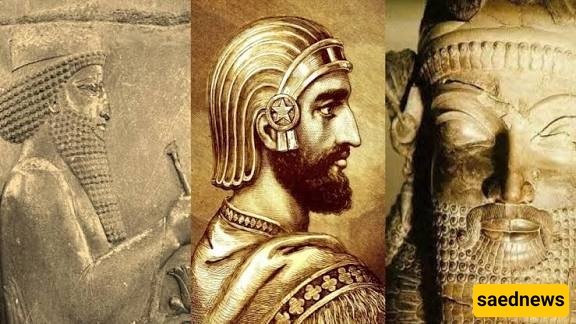
According to Saednews historical sources, the birth of Cyrus the Achaemenid dates to around 579 BC. He became king around 559 BC, at an estimated age of 20 to 30, and ruled for nearly 30 years until his death around 530 BC, probably at the age of 50 to 60. Cyrus was described as a noble and virtuous man who avoided discrimination among followers of different religions and placed justice at the center of his rule. His grandfather was Astyages, while his father, Cambyses I, together with his mother, Mandane, helped create the circumstances that enabled Cyrus to rise to power.
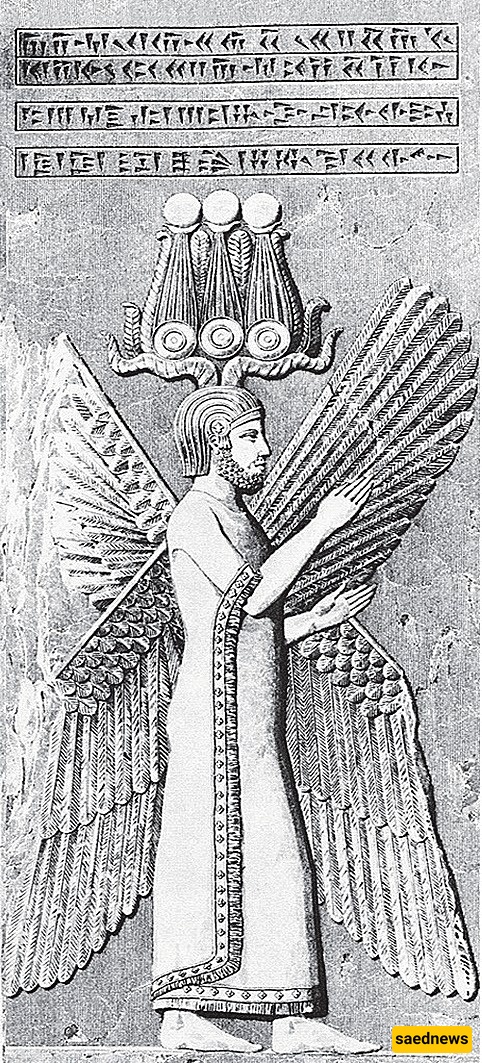
A frequently asked question about Cyrus is where he came from and which tribe he belonged to. Historical accounts identify him as a member of the Persian people, one of the Iranian peoples who lived on the Iranian Plateau.
Cassandane, the daughter of Pharnaspes and an Achaemenid princess, was the wife and lifelong companion of Cyrus the Great. She is generally described as his only wife and, as queen, held considerable status and influence within his empire, although women in the patriarchal society of ancient Iran did not have a formal role in directly governing political affairs.
Cassandane was the mother of Cyrus's children, including Cambyses II, Bardiya, Atossa, and Artystone, all of whom later held important places in history. The name Roxana is not identified as a child of Cyrus in reliable historical sources and appears only as a possibility in some accounts; this claim has not been confirmed.
Cassandane's loyalty and companionship with Cyrus have been emphasized in later accounts. According to these traditions, her death caused Cyrus profound grief, and a period of public mourning was observed in Babylon.
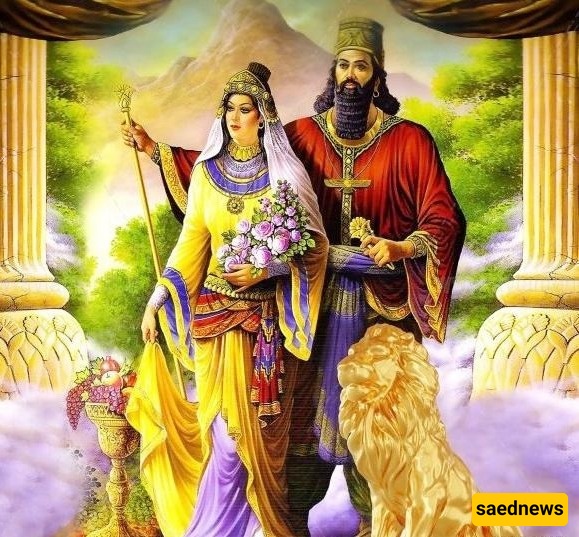
Cassandane is described in some sources as the mother of Cyrus's children, including Cambyses II, Bardiya, Atossa, Artystone, and Roxana. However, the identification of Roxana as a daughter of Cyrus is uncertain and is not confirmed by reliable historical evidence. Cyrus and Cassandane's family played an important role in the subsequent history of the Achaemenid Empire.
In the Quran, verses 83–98 of Surah Al-Kahf describe Dhul-Qarnayn as a powerful and just ruler who, with God's assistance, achieved victories across different regions of the world.
The theory that Dhul-Qarnayn was Cyrus the Great was proposed by some interpreters, including Abul Kalam Azad. This identification is based on perceived similarities such as justice, extensive conquests, and respect for different religions. However, Allameh Tabatabaei discussed this identification in Tafsir al-Mizan only as a possibility and did not explicitly confirm it.
Other works, including Tafsir al-Munir, have also examined the theory. There is no definitive scholarly consensus, and some interpreters have identified Dhul-Qarnayn with Alexander the Great or another historical figure.
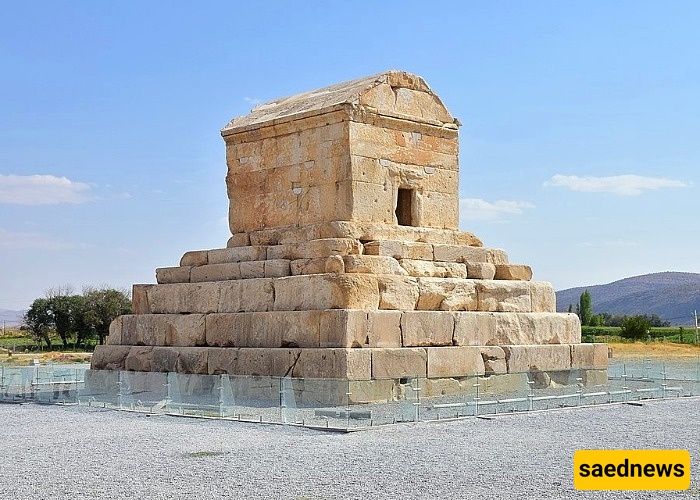
The tomb of Cyrus the Great is located at the Pasargadae archaeological site in Fars Province, on a plain surrounded by mountains, approximately 80 kilometers northeast of Shiraz.
The tomb, which may have been constructed before Cyrus's death, consists of seven stone platforms placed above one another. The burial chamber has walls approximately 1.5 meters thick and a gabled roof, giving the structure considerable strength and architectural beauty.
The monument is approximately 11 meters high. Its architecture combines elements associated with Iranian, Egyptian, Elamite, Mesopotamian, and Greek traditions of Asia Minor. White-to-yellowish limestone blocks, possibly obtained from the Sivand area, were fitted together without mortar and reinforced with specialized metal clamps.
There is no definitive evidence establishing the personal religion of Cyrus the Great. However, historical sources frequently emphasize his tolerance toward and respect for followers of different religions.
Some believe that Cyrus followed the guidance of local religious authorities in religious matters, while others consider him a Zoroastrian and point to the existence of fire temples and places of worship as possible evidence.
Others argue that Cyrus followed the religious traditions of ancient Iran and worshipped deities associated with figures such as Ahura, Mithra, and Anahita. Some sources have also suggested that he may have encountered Zoroaster, although this claim is not firmly established.
Following the conquest of Babylon, Cyrus restored temples and is widely associated with a policy of religious accommodation.
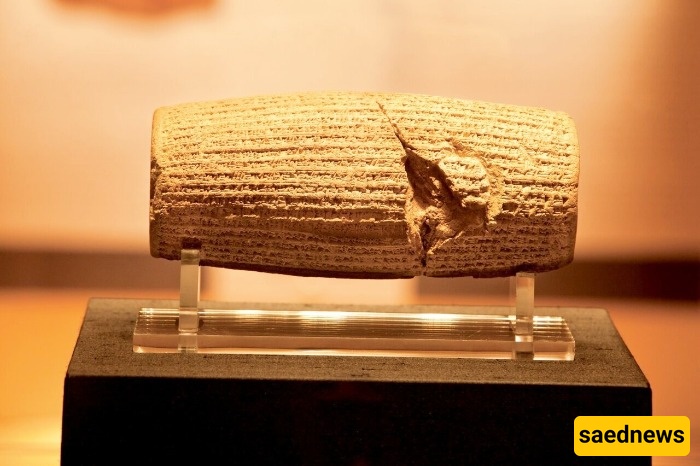
The Cyrus Cylinder is one of the most significant surviving historical artifacts associated with Cyrus the Great. It was produced after Cyrus's conquest of Babylon in 539 BC and is written in Babylonian cuneiform.
The text presents Cyrus as a legitimate ruler and describes measures concerning the restoration of temples, religious practices, and displaced populations. The cylinder has subsequently become an important symbol in modern discussions of Cyrus's rule, justice, religious tolerance, and governance.
In Iran's unofficial calendar, 7 Aban (October 29) is observed by some people as Cyrus the Great Day. The date is associated with Cyrus's entry into Babylon and is commemorated by various groups.
Although Cyrus the Great Day is not included in Iran's official national calendar, some groups have called for its recognition. Every year, people gather at Cyrus's tomb in Pasargadae to commemorate his legacy.
Herodotus and some other Greek sources state that Cyrus was killed in a battle against the Massagetae, a people associated with the northeastern regions of the Iranian world, around 530 BC.
Other accounts, including the version attributed to Xenophon, describe a different manner of death. As a result, historians disagree about the exact circumstances surrounding Cyrus's death, although approximately 530 BC is generally accepted as the date of his death.