SAEDNEWS: The Constitutional House of Tabriz is a historic museum located near the Tabriz Bazaar in the Rasteh-Kucheh neighborhood. Built in the Qajar architectural style, it was once the private residence of Mehdi Kouzeh-Kanani. The building was registered as a national heritage site of Iran in 1975 and became publicly owned in 1988.
According to Saed News Tourism Service, Tabriz is one of the major cities in East Azerbaijan Province. Over many years, the city suffered repeated damage from earthquakes. However, the devastating earthquake that occurred in 1193 AH (approximately 1779 AD) completely destroyed much of the city, burying many historical structures beneath tons of soil. Only buildings with strong foundations survived. After this disaster, efforts were made to rebuild Tabriz in a more organized and developed way. During this period, urban planning received special attention for the first time, leading to the creation of beautiful streets such as Tarbiat Street and Imam Khomeini Street, among the oldest streets in the city.
The growth and development of Tabriz continued rapidly, and the city became Iran’s second most important center in terms of economy and industry. It was also chosen as a residence for crown princes during the Qajar dynasty. Therefore, the existence of numerous historical houses in Tabriz is not surprising. Around 300 historical houses have been identified in the city, while archaeologists estimate that the number could reach nearly 800. Interestingly, new historical houses are still occasionally discovered beneath layers of soil.
Among these remarkable structures is the Constitutional House of Tabriz, one of the city’s oldest and most significant historical residences from the era of the Constitutional Revolution. Visitors interested in history and culture can explore this remarkable landmark and discover the stories behind Iran’s democratic movement.
It was one of the most important gathering places for constitutional activists and revolutionary figures such as Sattar Khan and Bagher Khan.
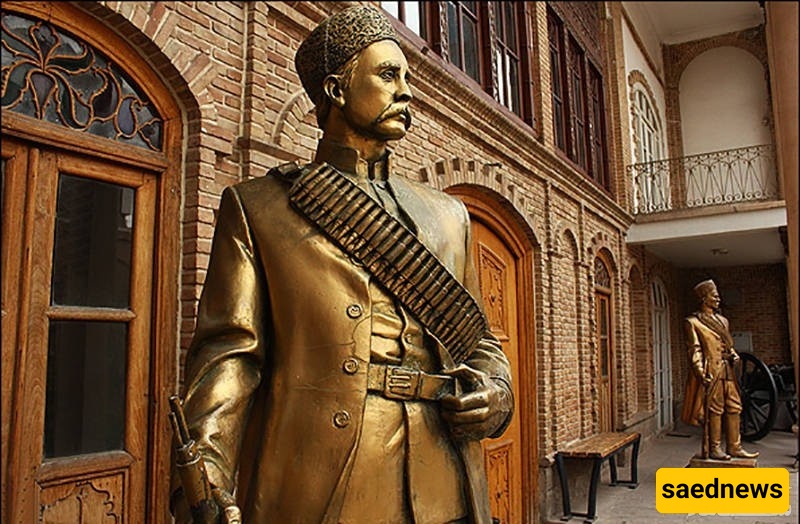
Visitors can explore valuable historical objects and statues representing key figures of the Constitutional Revolution.
The museum houses important documents and personal belongings of the leaders of the constitutional movement.
Tabriz has experienced a long and eventful history. During the Qajar period, the city reached great prosperity and became known as one of Iran’s most important and progressive cities. In modern times, it has remained a major economic and industrial center.
Over the past two centuries, Tabriz has played a significant role in Iran’s social, cultural, and industrial developments. The city became a major force in preserving the Constitutional Revolution and preventing its suppression.
The Constitutional House of Tabriz stands as a symbol of this historic movement. Many influential figures of the revolution gathered in this house, including Sattar Khan and Bagher Khan. In 1996, the building was converted into the Constitutional Museum of Tabriz.
The first owner of this historic house was Haj Mehdi Kouzeh-Kanani, also known as Abolmele, a respected merchant and supporter of freedom. The building was constructed in 1868 (1247 AH) by architect Haj Vali Memar.
After Mohammad Ali Shah Qajar ordered the bombardment of the Iranian Parliament, Haj Mehdi Kouzeh-Kanani offered his house in 1908 (1287 AH) as a meeting place and headquarters for constitutional supporters. The building soon became a center for leading figures of the movement in Azerbaijan, including Sattar Khan, Bagher Khan, Thiqat al-Islam Tabrizi, Haji Mirza Aqa Farshi, and Haj Mehdi himself.
The Constitutional Museum was established in 1996 after renovations were made to the halls and rooms, and historical documents from the Constitutional Revolution were displayed.
Following World War II and the Soviet occupation of Azerbaijan in 1945–1946 (1324–1325 AH), the house was also used as a meeting place for leaders of the Azerbaijan Democratic Party.
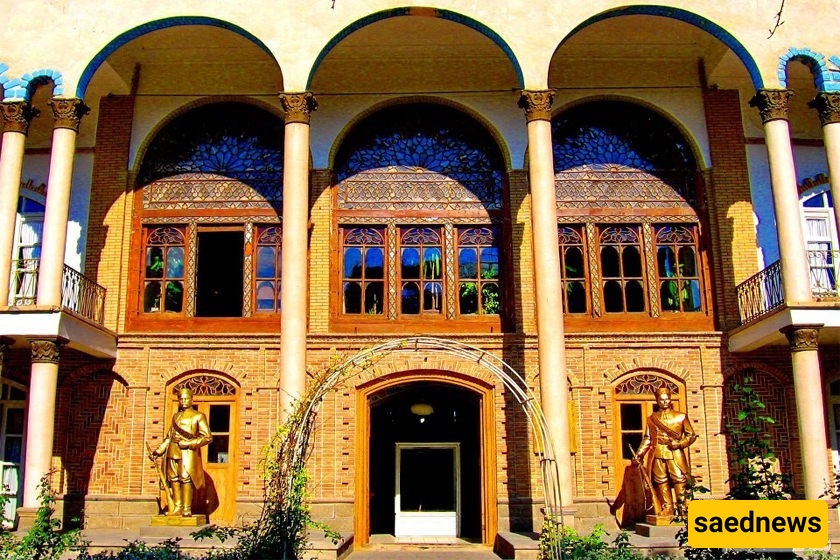
This beautiful building covers an area of approximately 1,300 square meters and consists of two floors constructed with stone, brick, and adobe. Its architect, Haj Vali Memar, designed the house in the architectural style of the Qajar era after returning to Iran following years of living in Russia.
The first floor contains six rooms, while the second floor includes a large hall measuring 6 by 9 meters and six additional rooms connected to the main corridor.
One of the most attractive sections of the house is the second-floor hall and the room overlooking the courtyard. Its wooden lattice doors and windows are decorated with colorful stained glass. The skylight of the hall is supported by four columns with plasterwork capitals, and the interior is decorated with mirrors and colored glass.
The building reflects many characteristics of Qajar architecture, including:
Elegant decorative designs
Skylights and traditional panoramic structures known as Kolāh Farangi
Plaster-covered columns and capitals
Carved wooden doors
Traditional Orosi windows
These architectural elements demonstrate the creativity and artistic skills of Iranian craftsmen.
All windows of the house are traditional Orosi windows, which rise vertically instead of opening on hinges. Their red, green, and white glass pieces add exceptional beauty to the building.
Throughout the museum, visitors can see statues of important figures such as:
Sattar Khan
Bagher Khan
Thiqat al-Islam Tabrizi
Haj Ali Khatayi
Zeynab Pasha, the only known woman who actively participated in the Constitutional Revolution
The museum walls display framed photographs of Mozaffar al-Din Shah Qajar, Mohammad Ali Shah Qajar, and groups opposing the constitutional movement.
Visitors can also view historical equipment, including the gelatin printing machine used for producing constitutional announcements and secret publications.
Other valuable items preserved in the museum include:
The Constitutional Revolution carpet
Personal belongings of constitutional leaders
Historical documents related to the movement
Sattar Khan’s personal pistol, a Russian 10-shot Mauser handgun with its leather cover
Personal items belonging to Bagher Khan and other activists
The basement of the historic house contains around 500 books, including approximately 300 books related to constitutionalism, while the rest focus on history and art.
The museum displays various historical documents connected to the Constitutional Revolution and World War II.
At the entrance of the building, visitors are welcomed by two large statues of Sattar Khan and Bagher Khan, creating the impression that these national heroes are still protecting the ideals of Iran’s Constitutional Revolution.
Among the museum’s most important exhibits are:
Sattar Khan’s handgun
The Constitutional Revolution carpet
The gelatin printing machine used for printing underground publications
Personal belongings of constitutional leaders
Historical photographs and documents
The original Constitutional Decree
Throughout the museum, visitors can also find statues and busts of many prominent individuals who played important roles in the Constitutional Revolution.
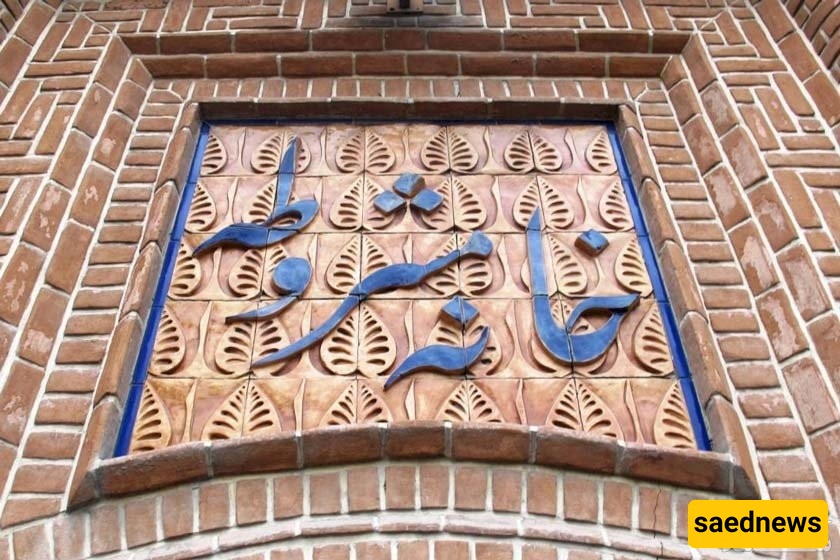
The Constitutional House of Tabriz is located in one of the city’s oldest neighborhoods, known as Rasteh Koocheh, west of the historic bazaar and opposite the Jameh Mosque.
Visitors traveling by private car are advised to park away from Tarbiat Street and enter the old market area from the western side. Facing the Jameh Mosque, they will find a historic building with an entrance sign identifying it as the Constitutional House.
The museum is easily accessible by public transportation as well as private vehicles, making it one of the most popular historical attractions in Tabriz.