SAEDNEWS: Jared Kushner’s two-hour Cairo meeting with Hamas and senior representatives from Egypt, Qatar and Turkey focused on preserving the Gaza ceasefire framework, but also exposed major differences over disarmament, Israeli commitments and the future administration of Gaza.
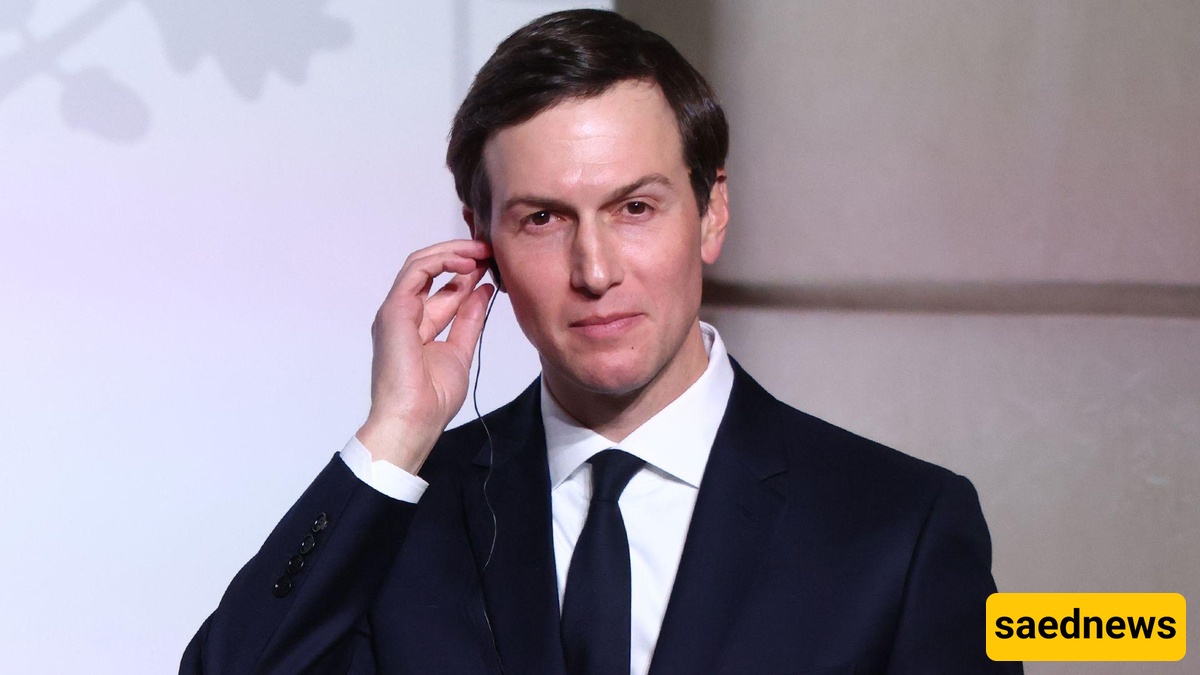
According to SaedNews: Following repeated Israeli obstacles to the Gaza ceasefire process and the disruption of what was presented as a roadmap for completing the truce, a series of diplomatic efforts has recently sought to revive discussions over the plan. The most prominent was a two-hour meeting in Cairo involving US envoy Jared Kushner, senior Peace Council officials Tony Blair and Nikolay Mladenov, and a Hamas delegation led by Khalil al-Hayya, with senior representatives of the three mediating countries—Egypt, Qatar and Turkey—also present.
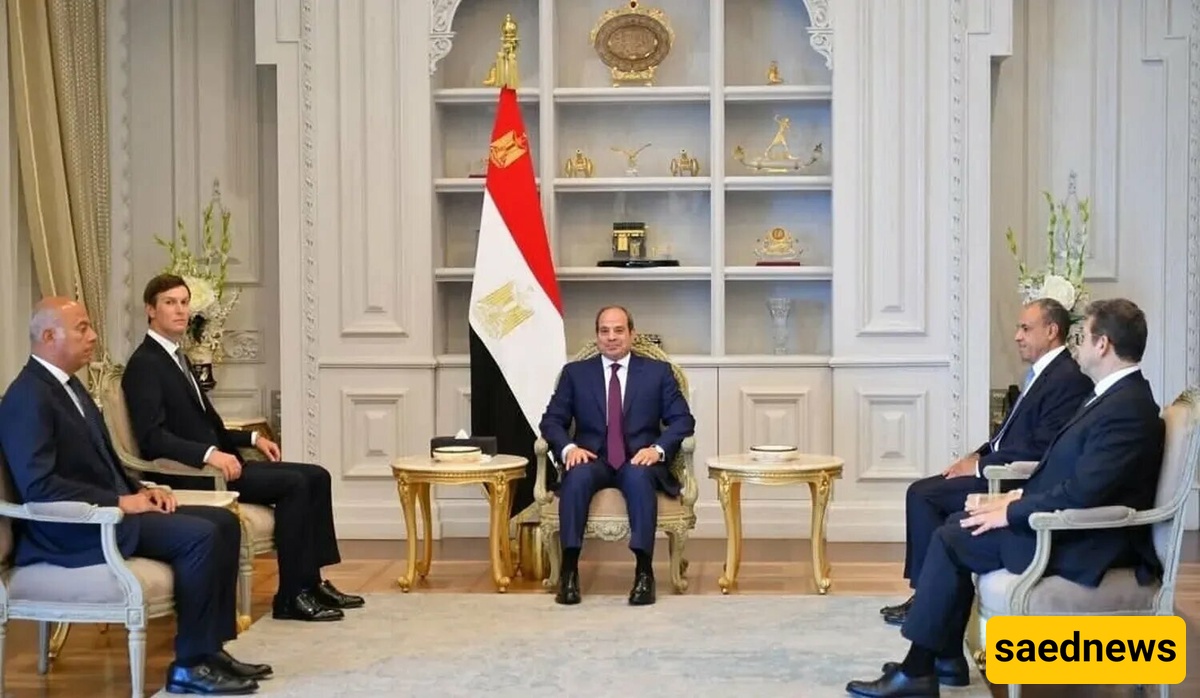
Although little information about the talks has been made public, Al Jazeera examined their outcome and possible next developments through 10 main points.
First: The atmosphere of the meeting indicated that Washington’s priority was preserving the 20-point plan and Resolution 2803 concerning the Gaza ceasefire. The US understands that Israel is entering an exceptional electoral period, with Benjamin Netanyahu’s Likud party and governing coalition under considerable pressure and seeking an election victory.
Kushner also understands that Netanyahu’s route to winning votes runs through continued Palestinian bloodshed, according to this assessment. He therefore does not want the Gaza war settled, at least before Israel’s election.
Second: Kushner’s central objective, following a direct instruction from Trump, was to prevent the collapse of the so-called Gaza roadmap and the 20-point agreement announced last year, particularly after a significant escalation in Israeli attacks on the Gaza Strip that could create conditions for renewed war.
The reported escalation includes more assassinations, wider attacks, continued destruction of homes and civilian infrastructure, and rising civilian casualties, amid Israeli calls for further killings of Palestinians in both Gaza and the West Bank. This included a recent statement by Itamar Ben-Gvir, Israel’s far-right national security minister, calling for the killing of at least 30 to 40 Palestinians a day.
Under this Israeli equation, the blood of Palestinians has effectively become an electoral card: the more bloodshed, the greater the electoral advantage, according to the analysis.
The positions of Israeli officials led many observers and analysts to conclude that the Cairo meeting involving Kushner was intended primarily to contain the deterioration rather than clear the way toward a final settlement.
Meanwhile, Hamas, through its negotiating delegation, reiterated its intention to hand responsibility for administering Gaza to a technocratic committee. The movement said it would not obstruct the committee’s work and called for facilitating its entry into the Gaza Strip and removing Israeli checkpoints established along its route.
Third: The meeting highlighted conflicting priorities between the Palestinian and American sides. Kushner believes Hamas should take the first step by beginning the disarmament of itself and Gaza. He regards that as a prerequisite before asking Israel to fulfill its own commitments, particularly a phased withdrawal from the Gaza Strip.
The approach adopted by Kushner, Tony Blair and Mladenov was based on the idea that the ball is now in Hamas’s court, with Hamas’s disarmament taking priority before negotiations on the other provisions of the agreement begin. The analysis argues that this position clearly departs from the agreement’s wording in favor of Israel.
Fourth: Hamas again affirmed its commitment to the Gaza ceasefire plan announced last year and the roadmap that followed it. It stressed, however, that the agreement must be implemented according to its actual provisions, without selective standards, through an agreed order of priorities under the supervision of mediators and according to a gradual, step-by-step approach.
Fifth: Kushner said, while emphasizing Trump’s Gaza ceasefire plan, that he would work to implement all 20 of its provisions. He also claimed that Washington opposed plans to displace Gaza’s population and was committed to opening a political horizon for resolving the Palestinian issue. The analysis describes that commitment as unclear and suggests it may conceal another plan.
Observers warn that the US may once again be attempting to sell illusions, spread misinformation and employ deception—an approach they say successive American administrations have used whenever confronting the Palestinian issue.
Sixth: In addition to meeting Hamas leaders, Kushner offered them assurances, claiming that their political role would remain acceptable and preserved after they disarmed, dismantled their infrastructure and fully demilitarized the Gaza Strip.
This position apparently suggests that Kushner does not oppose Hamas being integrated into the Palestinian political system afterward. Gaza, however, would not remain under Hamas rule, at least for the foreseeable future and during the transitional period.
In effect, Kushner appears to have presented Hamas with a clearer American equation: political survival in exchange for the disappearance of its military role. That raises the question of whether Washington’s position toward Hamas has genuinely changed or whether this is a tactic intended to draw the movement into accommodation and an endless cycle of concessions.
Seventh: In response to the new development in relations between Hamas and the Trump administration, Hamas also responded to the US proposal, pledging to continue along this path and not deviate from it. The movement called for greater American efforts, particularly to rescue and implement the ceasefire agreement, and expressed readiness to facilitate the mission of the committee responsible for administering Gaza under the agreed conditions.
Eighth: As in previous instances, the Palestinian Authority, the Palestine Liberation Organization and the Ramallah-based leadership as a whole were neither direct nor indirect parties to the talks, and no role was assigned to them. Washington did not even send a representative to brief them on its thinking, plans, or the results of the visit and efforts by its envoys.
Ninth: Kushner explicitly told Palestinians and mediators not to bet on Israel’s elections or place too much hope in their outcome. His message was that Israel is united in its position toward Gaza regardless of who holds power, and that whatever happens in the election, the Gaza issue will not fundamentally change.
Tenth: Kushner’s meeting with Khalil al-Hayya appears to fit a broader American approach centered on direct negotiations with the main parties that possess power, influence and weapons on the ground, rather than with those negotiating on their behalf.
In this context, Trump had proposed during his meeting several weeks earlier with Lebanese President Joseph Aoun that a US channel for direct negotiations with Hezbollah be opened, but Hezbollah rejected the proposal.
It remains unclear what the high-level direct channel between the US and Hamas will ultimately produce, just as it is uncertain where Hamas will end up in implementing an agreement that Israel repeatedly violates.
It is also not yet clear how Hamas would participate in formal Palestinian elections. Further developments concerning Gaza, as well as verification of American claims, remain to be seen, particularly claims that, according to the analysis, have demonstrated Washington is effectively representing Israel and entering negotiations to secure concessions for it.