SAEDNEWS: Analysts say the upcoming Washington–Tehran agreement does not address core issues and merely returns both sides to a pre-war status quo, overlooking a conflict that caused over 7,500 deaths and major economic losses.
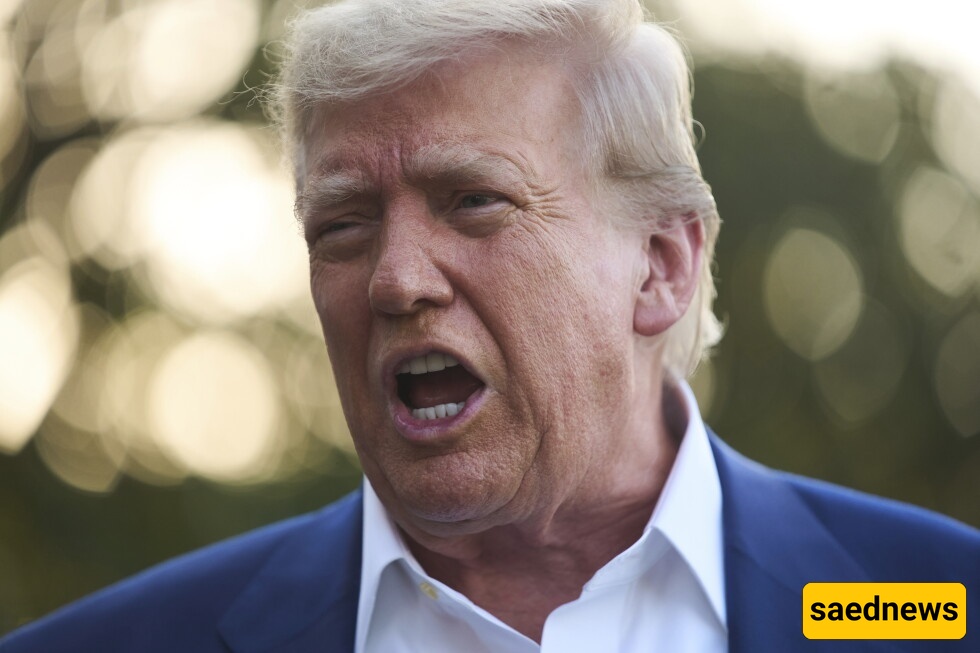
According to the policy section of the Saed News website, citing Ettela'at, after dozens of failed starts and diplomatic deadlocks, the United States and Iran have finally reached a framework agreement to halt a two-month war, stabilize the global energy market, and resume nuclear negotiations. Donald Trump, the US President, described the agreement on the Truth Social network as a step toward peace in the Middle East, while simultaneously warning that any violation by Tehran would be met with a military response. However, an analysis of the agreement shows that reality differs significantly from the White House’s claims.
While the signing ceremony of the agreement is scheduled for Friday, its general parameters have been outlined by both sides as follows:
US concession: Suspension of the naval blockade of Iranian ports by the United States Navy.
Iranian concession: Full reopening of the Strait of Hormuz for maritime traffic within the next 30 days.
Ceasefire extension: Formal extension of the April 8 ceasefire for another 60 days (which, according to Tehran, also includes the battlefield between Israel and Hezbollah in Lebanon).
Financial issue: Iran insists on the release of billions of dollars of its frozen assets, a claim that Washington has not yet officially confirmed.
On the surface, stopping the war is a victory for all parties, but the cost of this four-month conflict has been enormous. More than 7,500 people have been killed. In the United States, Trump’s popularity has dropped due to a sharp rise in gasoline prices, and Iran has lost weeks of oil revenue.
Even Gulf countries such as the UAE, Qatar, Saudi Arabia, and Kuwait were not spared from missile and drone attacks, while US European allies faced an unprecedented fuel cost crisis.
In reality, this agreement is not a diplomatic success; rather, it is a return of the calendar to the day before the war began—when the Strait of Hormuz was open, gasoline in the US was priced at $3 per gallon, and the two countries were negotiating sanctions. Trump and Iran are essentially wiping the slate clean and pretending that the past four months never happened.
Assuming both sides adhere to the ceasefire, Washington and Tehran have 60 days to reach a nuclear agreement. However, a review of their demands shows a deep and dangerous gap:
Duration of enrichment suspension:
Trump administration: Complete suspension for at least 20 years
Iran: Limited suspension for only 10 years
Fate of uranium stockpiles:
US: Complete and unconditional destruction of enriched uranium stockpiles
Iran: Only dilution of uranium to lower enrichment levels
Funds release and sanctions lifting:
US: Gradual release tied to nuclear verification
Iran: Immediate access to frozen funds and lifting of sanctions
Is it possible to reach such a complex agreement in 60 days? History shows that the Obama administration needed three years and multiple extensions to reach a similar agreement on centrifuge limitations and enrichment levels. The idea that Donald Trump, with his well-known impatience, could manage such a lengthy and delicate process appears highly unlikely.