SAEDNEWS: A serious confrontation between Iran and the United States erupted early today in the Persian Gulf. The incident escalated from tanker movements in the Strait of Hormuz to U.S. drone strikes and an Iranian missile response targeting U.S. bases in Kuwait and Bahrain.
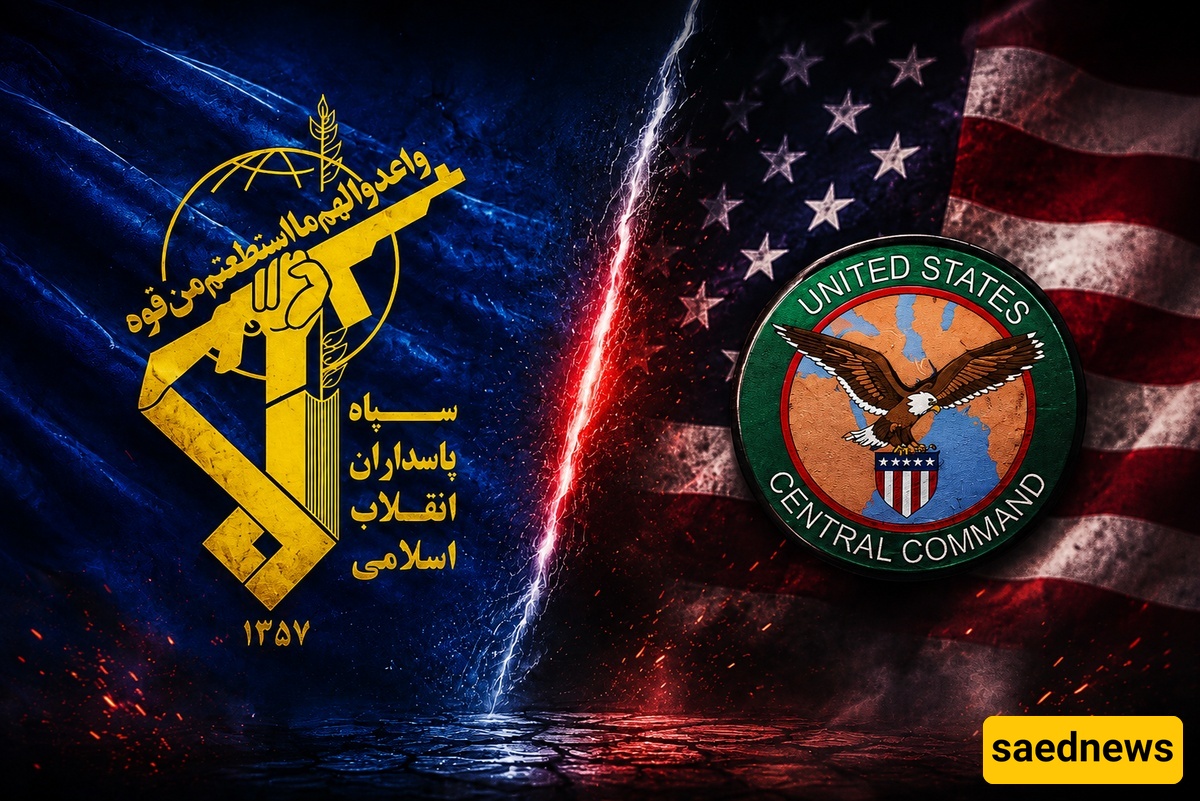
According to Saed News political desk, a chain of events began shortly after midnight when four oil tankers entered the Strait of Hormuz.
The U.S. Central Command (CENTCOM) stated that American forces initially intercepted several Iranian drones and missiles in the region. According to the U.S. military, American forces then targeted Iranian radar positions in the city of Gurk and on Qeshm Island to prevent threats to maritime navigation. The U.S. military further claimed that Iran responded by launching seven ballistic missiles toward American bases in Kuwait and Bahrain. CENTCOM released a video asserting that six of the missiles were intercepted and that no damage was inflicted on the U.S. Fifth Fleet headquarters in Bahrain or on American personnel.
On the other hand, Iran's Islamic Revolutionary Guard Corps (IRGC) presented a different account of how the confrontation began. In an official statement, the IRGC claimed that at 1:30 a.m., four oil tankers, allegedly under U.S. direction, attempted to leave the Strait of Hormuz illegally. According to the statement, the IRGC Navy stopped one tanker while the others were forced to turn back. The IRGC further stated that approximately one hour later, American drones struck two telecommunications towers in Qeshm and Sirik. In response, the IRGC Aerospace Force reportedly launched ballistic missiles at Kuwait's Ali Al Salem Air Base and facilities associated with the U.S. Fifth Fleet in Bahrain. The statement concluded with a warning that any repetition of such incidents could lead to the complete closure of the Strait of Hormuz to oil and gas exports.
According to Saad News' analysis, the overnight exchange of fire reflects a significant shift in the nature of confrontations in the Persian Gulf. Previously, encounters were largely limited to radio warnings or close-range interceptions of vessels. However, direct strikes on telecommunications infrastructure and the rapid missile response against military installations in neighboring Arab states suggest that both sides now have a lower threshold for escalation in response to perceived border or maritime provocations.
A key observation is that the confrontation quickly expanded from air and maritime domains to land-based facilities and military bases. This development indicates that any miscalculation involving tanker movements could extend beyond a routine maritime incident and rapidly draw regional military installations into the conflict.
Iran's warning regarding the possible closure of the Strait of Hormuz also carries major implications for the global economy. The Persian Gulf remains one of the world's most important energy corridors, and markets recognize that any disruption to shipping through the strait could have a direct impact on fuel prices and broader economic conditions.
By rapidly issuing statements and presenting competing narratives, both sides have sought not only to shape events on the battlefield but also to influence public opinion. In the coming days, the reactions of host nations with U.S. military bases—particularly Kuwait and Bahrain—as well as decisions made by major shipping companies regarding transit through the Strait of Hormuz, will help determine whether the tensions subside or lead to broader changes in maritime traffic patterns across the Persian Gulf.