SAEDNEWS: The media narrative circulated since yesterday afternoon by Iran International and accounts affiliated with it is being described as a new scenario in the process of attempting to assassinate the commander of the IRGC Aerospace Force. This method is considered a classic approach used by intelligence services.
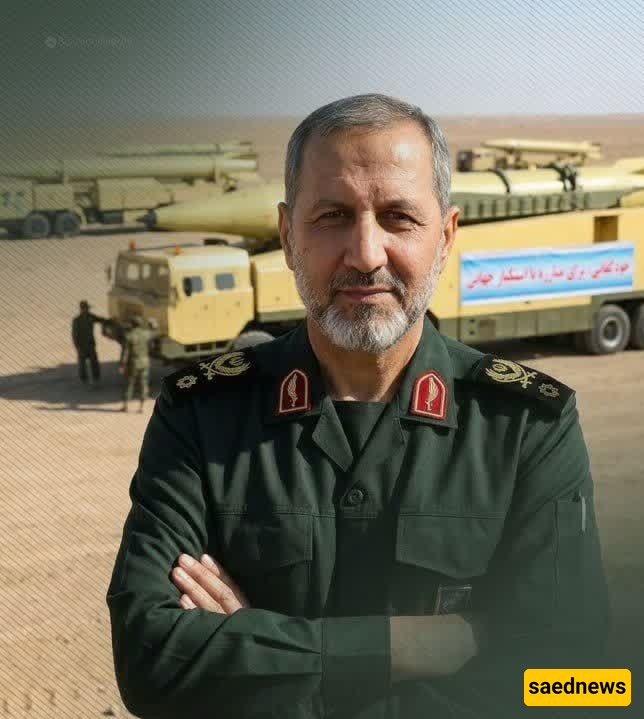
According to SAEDNEWS, the news line that began circulating today through Iran International and accounts allegedly linked to the intelligence services of the Zionist regime represents a new scenario in the ongoing attempts to assassinate Brigadier General Majid Mousavi, commander of the Aerospace Force of the Islamic Revolutionary Guard Corps.
This approach is described as a classic intelligence tactic for targeted operations: by spreading a false narrative about the “absence” or “weakness” of a commander, they wait for the target to react—either through denial, a change in appearance patterns, or an official statement. Such reactions can then become clues that help intelligence services complete the puzzle of tracking movements and identifying locations and timings of field presence.
First and foremost, the coordinated media campaign itself is presented as evidence of the depth of the heavy blows that this commander and the forces under his command have inflicted on the Zionist regime. According to the report, those who are unable to confront him on the battlefield have turned to preparations for character assassination and physical assassination in order to eliminate symbols of resistance.
At the same time, these efforts are described as reflecting the failure of Israel to locate and track this commander.
The report also claims that these media outlets and the services behind them are unable to understand the realities on the ground.
Command Structure Without a Vacuum
According to the report, commanders such as General Mousavi operate within a structure in which up to seven levels of replacements are already defined. Experience has shown that the possible loss of individuals within organizations such as the IRGC does not weaken deterrence. Instead, new forces quickly step forward, tightening the pressure on the enemy. The report compares this to the situation following the assassination of Hajizadeh.
The article further claims that the Israeli regime and the media supporting it fail to understand the difference between their worldview and that of what it calls the “Army of Islam.”
A Clash of Two Views on Life and Death
The report references a Qur’anic description of the Children of Israel as “the most eager of people for life,” arguing that such a perspective limits existence to material life alone and leads to fear of death, which in turn drives secretive tactics and assassinations.
In contrast, the article presents the concept of martyrdom as a worldview in which death is not seen as the end. According to this perspective, fighters move toward martyrdom willingly and believe that nothing occurs outside divine will. From this viewpoint, victory exists whether one kills or is killed in the path of God.
This ideological contrast, the report argues, is the primary reason the enemy struggles to predict the behavior of what it calls the resistance front.
Two Paths, Two Outcomes
The article concludes by arguing that those who cling only to material life may escape physical death temporarily but ultimately face emptiness, depression, suicide, or lonely endings in nursing homes. It claims that divine promises do not foretell a good ending for those who deny the existence of another world.
According to the report, true misfortune awaits not necessarily in this world but in the afterlife for those who rely on crime, assassination, and deception while believing they can bend divine will in their favor.
In summary, the article argues that the current media campaign by Iran International has not achieved the reaction it sought. Instead, it says the episode once again demonstrates that the confrontation is ultimately a clash between two fundamentally different views of life and death—one that relies on assassination and media narratives, and another that claims to pursue its goals without resorting to improper methods.