SAEDNEWS: Natural waterfalls have always been a point of interest for nature lovers and tourists in every region. When a waterfall has a special and unique feature, it attracts even more attention. In this article, we will get acquainted with one of these distinctive waterfalls.
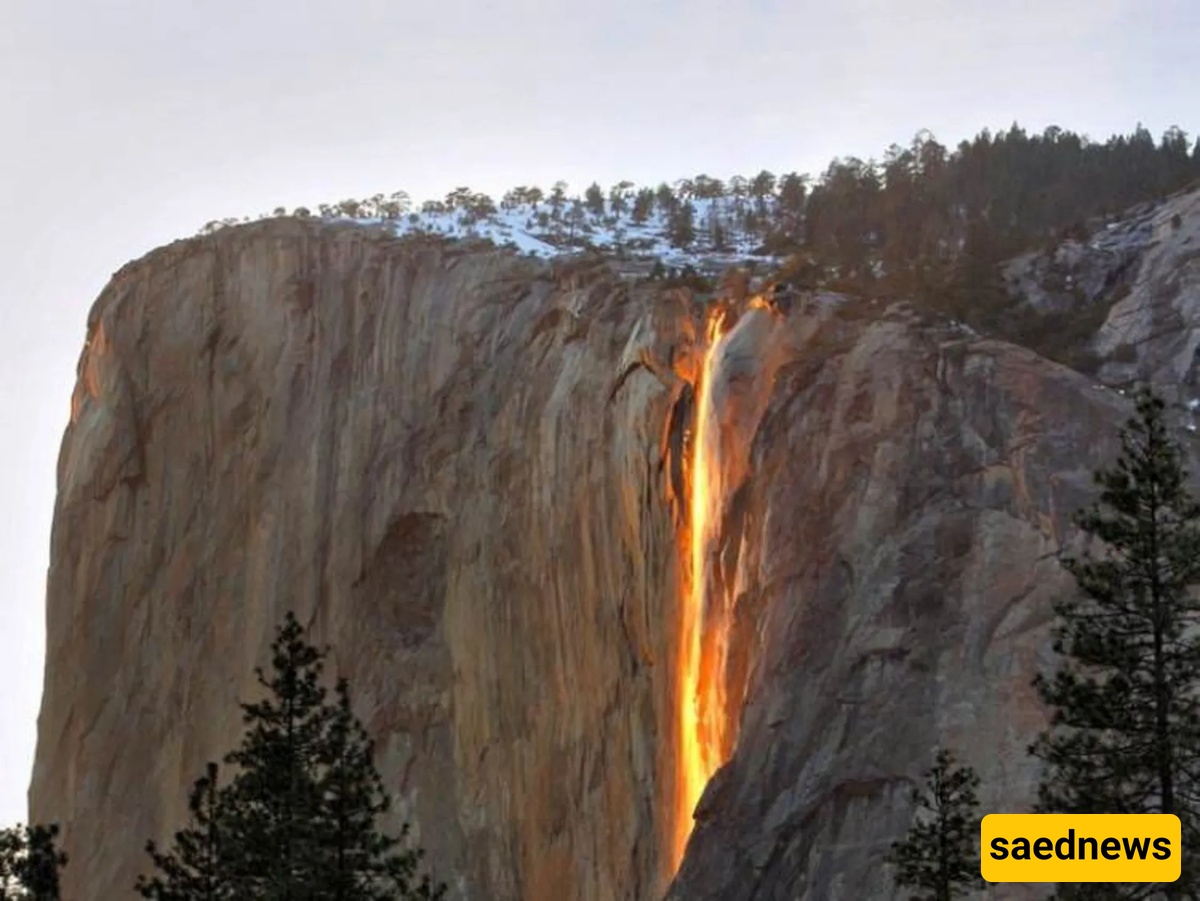
According to the tourism service Saed News, Horsetail Fall in Yosemite National Park in the state of California creates a striking and spectacular view. This waterfall is a seasonal cascade that flows during winter and early spring, plunging down the eastern side of El Capitan.
The cliffs of El Capitan are composed of granite, forming one of the most magnificent and awe-inspiring granite formations in Yosemite National Park. On its own, Horsetail Fall is not particularly remarkable and appears quite ordinary—a narrow stream of water formed by melting snow that drops about 480 meters down the face of El Capitan.
However, in late February, if the weather is clear and sunny, at sunset the last rays of the sun reflect off the waterfall. This reflection causes the water to glow in a deep red, molten color, making the waterfall resemble flowing volcanic lava. Each year, hundreds of photographers and thousands of visitors gather in the area to witness this extraordinary natural display just before sunset, as daylight gradually fades. This breathtaking phenomenon lasts less than ten minutes.
For this remarkable event to occur, several conditions must be met. First, Horsetail Fall must be flowing, meaning temperatures must be relatively warm so that compacted snow at the top of the cliff melts and feeds the waterfall. Since the waterfall is primarily supplied by melting snow, very cold weather prevents its flow because the snow remains frozen.
In autumn, the sun’s rays strike Yosemite Valley at a similar angle to February, but at that time of year there is usually no water flowing to catch and reflect the sunlight.
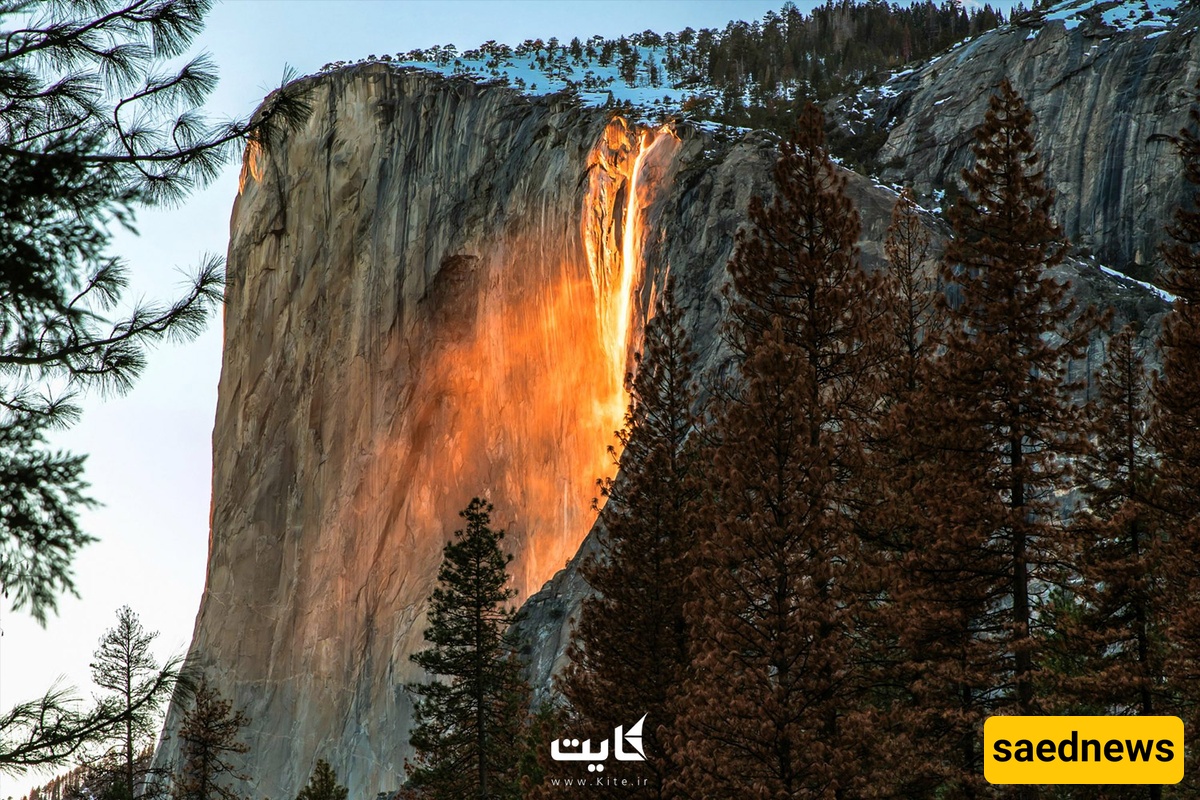
Second, the sky must be completely clear at sunset. No clouds, rain, or snow can obstruct the sunlight; otherwise, the rays will not reach the waterfall. Fortunately, winter weather in the region is highly variable. Even if the morning is cloudy or rainy, conditions can still clear up by sunset.
Yosemite Valley was discovered by Europeans in 1851, but this natural phenomenon was not mentioned at the time. It is likely that no one observed the waterfall under the right combination of timing and weather conditions. The phenomenon was first captured in a photograph in 1973 by professional climber and photographer Galen Rowell, yet it remained relatively unknown until it gained global fame in the age of the internet.